LEARN COGNITIVE REFRAMING FROM A CZECH SCOUTING PARABLE. THE ENVELOPE STORY SHOWS HOW CONSTRAINTS UNLOCK CREATIVITY AND TRANSFORM PANIC INTO PROBLEM-SOLVING.
✉️ THE ENVELOPE STORY - HOW PARADOXICAL CHALLENGES BUILD RESILIENCE

Tools - is part of Series

“Generation Z envelope: ‘If you’re not literally on fire or being cancelled, try doing everything with your non-dominant hand and film it for TikTok” — Anonymous
📄 ABSTRACT OF WHAT IS THE ENVELOPE STORY - HOW PARADOXICAL CHALLENGES BUILD RESILIENCE
This article explores the transformative impact of the Envelope Story, a Czech scouting parable, as a powerful case study in cognitive reframing under crisis. A young scout, faced with wilderness anxiety and instructed to open a sealed envelope only in true emergency, receives not a rescue but an unexpected constraint: to refrain from using his dominant hand until morning. This abrupt challenge interrupts panic by shifting the scout’s focus from fear to creative problem-solving.
By analyzing the neuroscientific basis of reappraisal and the role of imposed limitation, the article demonstrates how psychological reframing activates resourcefulness and resilience. The narrative highlights that perceived crises often stem from distorted cognition, and that growth emerges from self-adaptation rather than external solutions. Layered with insights from behavioral science and survival psychology, the Envelope Story underscores the enduring importance of mindset, creativity, and self-reliance in overcoming adversity.
✅ THE BENEFITS OF THE ENVELOPE STORY - HOW PARADOXICAL CHALLENGES BUILD RESILIENCE
“Opened the envelope during my existential crisis. It said ‘Try writing your panic with your left hand.’ Now I have illegible anxiety.” — Anonymous
The Envelope Story offers profound benefits that extend far beyond wilderness survival, serving as a masterclass in building psychological resilience through carefully crafted paradoxical challenges. This deceptively simple parable demonstrates how strategic cognitive intervention can transform crisis into growth opportunity.
Immediate Panic Interruption and Cognitive Reframing
The envelope’s message provides immediate relief from catastrophic thinking by forcing an instant perspective shift. When the scout reads “If you are surrounded by hungry wolves or swept away by a raging river, this message cannot help you,” his brain is compelled to reassess the actual danger level. This cognitive reframing technique reduces emotional stress by changing how the situation is perceived, moving from helpless panic to manageable challenge.
Research shows that cognitive reframing strengthens resilience by helping individuals bounce back from perceived setbacks through more optimistic and solution-oriented thinking. The envelope story perfectly exemplifies this principle, immediately shifting the scout’s mental framework from victim to problem-solver.
Building Creative Problem-Solving Through Constraint
The instruction to avoid using the dominant hand creates what behavioral scientists call “productive constraint.” This artificial limitation forces the brain to engage dormant neural pathways and develop innovative solutions. Rather than allowing endless worry about abstract dangers, the scout must focus on concrete, creative challenges: How to tie knots left-handed? How to build a fire with the non-dominant hand?
This constraint-based approach enhances problem-solving skills by facilitating flexible thinking and creativity. The paradoxical challenge transforms a potentially destructive spiral of anxiety into constructive skill development and mental agility.
Developing Self-Reliance and Internal Locus of Control
Perhaps the story’s greatest benefit lies in its fundamental message: salvation comes from within, not from external sources. The envelope contains no map, no rescue beacon, no magical solution. Instead, it redirects the scout’s attention to his own adaptive capacity and resourcefulness.
This shift toward internal locus of control is crucial for resilience building. Cognitive reframing empowers individuals to focus on what they can control rather than feeling overwhelmed by circumstances. The story teaches that true security comes from developing one’s own problem-solving abilities and emotional regulation skills.
Enhanced Emotional Regulation and Stress Management
The envelope story demonstrates how reframing can reduce stress by altering the way people perceive and react to stressors. Instead of viewing the wilderness situation as a threat, the story helps the scout see it as a manageable challenge requiring creative adaptation.
This emotional regulation benefit extends beyond the immediate crisis. By learning to question initial catastrophic interpretations and seek alternative perspectives, individuals develop lasting skills for managing anxiety and stress in various life situations.
Building Growth Mindset Through Adversity
The story transforms potential trauma into a growth opportunity. Rather than seeing obstacles as insurmountable barriers, the envelope’s challenge reframes difficulty as a chance for personal development and skill building. This shift from fixed to growth mindset is fundamental to long-term resilience.
The scout emerges from the experience not just having survived, but having discovered new capabilities and confidence in his adaptive capacity. This transformation from helpless to resourceful creates lasting psychological strength that serves well beyond the original challenge.
Practical Applications for Modern Resilience Training
The envelope story’s benefits translate directly to contemporary resilience training and stress management programs. The technique of creating paradoxical challenges that interrupt catastrophic thinking while building practical skills offers a powerful model for:
- Leadership development programs
- Anxiety management training
- Crisis intervention strategies
- Team building and problem-solving workshops
- Personal development coaching
The story’s enduring appeal in scouting communities demonstrates its practical effectiveness in building character and mental toughness through thoughtfully designed challenge experiences.
By combining immediate cognitive intervention with skill-building constraint, the Envelope Story creates a perfect storm for resilience development—transforming crisis into capability and fear into wisdom.
🏛️ ORIGINS OF THE ENVELOPE STORY - HOW PARADOXICAL CHALLENGES BUILD RESILIENCE ACROSS CULTURES AND HISTORY
The Envelope Story represents a profound teaching technique that echoes through millennia of human wisdom traditions. Far from being a unique creation of Czech scouting culture, this parable belongs to a rich tapestry of paradoxical challenges designed to foster resilience, self-reliance, and transformative growth across diverse civilizations.
Ancient Roots: The Universal Power of Paradox
Paradoxical teaching methods have ancient origins, dating back to the philosophical traditions of Greece and the mystical practices of Eastern cultures. These approaches share a common understanding: true learning often emerges not from direct instruction, but from carefully constructed challenges that force learners to transcend their conventional thinking patterns and discover inner resources they didn’t know they possessed.
The Socratic Method, developed by ancient Greek philosophers, employed paradoxical questioning to challenge students’ assumptions and guide them toward deeper understanding through guided inquiry rather than direct answers. This approach mirrors the Envelope Story’s technique of providing not a solution, but a framework for self-discovery.
Eastern Wisdom: The Zen Koan Tradition
Perhaps the most direct historical parallel to the Envelope Story lies in the Zen Buddhist tradition of koans. These paradoxical riddles, developed over centuries in Buddhist monasteries, serve remarkably similar functions to Zapletal’s envelope message.
Zen koans like “What is the sound of one hand clapping?” are specifically designed to frustrate logical thinking and force practitioners beyond conventional cognitive processes. As documented in psychological research, koans create a deliberate crisis of thinking that “breaks the back of rationality” and compels practitioners to “let go of the hold” - precisely the same psychological mechanism employed in the Envelope Story.
The koan tradition demonstrates that paradoxical challenges are most effective when they trap the mind in an impossible logical situation, forcing a leap into direct experience and intuitive understanding. The scout’s envelope achieves this same breakthrough by reframing perceived crisis into creative challenge.
Native American Vision Quests: Wilderness Transformation
Native American vision quest traditions provide another striking parallel to the Envelope Story’s methodology. These ancient rites of passage involved solitary journeys into wilderness, typically involving fasting and isolation for periods of four to seven days, seeking spiritual guidance and personal transformation.
Like the scout in Zapletal’s story, vision quest participants faced deliberately imposed hardships - not as punishment, but as catalysts for growth. The challenging conditions of fasting, solitude, and exposure to nature’s uncertainties were designed to break down normal psychological defenses and create space for profound insight.
The vision quest tradition recognizes that true maturity and self-reliance emerge through controlled adversity, guided by wise mentors who understand the transformative power of carefully structured challenges. This mirrors exactly the relationship between the scout leader and his student in the Envelope Story.
The Scouting Movement: Pedagogical Innovation
The Envelope Story emerges directly from the scouting movement’s innovative educational philosophy, which itself drew from diverse cultural traditions. Founded by Robert Baden-Powell in 1907, scouting represented a synthesis of military training, colonial adventure narratives, and progressive education principles.
Baden-Powell’s approach emphasized “education through action” and learning through small team challenges that promoted independence and responsibility. The movement deliberately incorporated romantic adventure elements - costumes reminiscent of pioneers and cowboys, symbolic rites and signs - to engage adolescent imagination while building practical resilience skills.
The scouting method’s emphasis on progressive self-education through experiential challenges provided the perfect cultural context for stories like Zapletal’s envelope parable. These narratives served as practical wisdom literature, encoding sophisticated psychological principles within memorable adventure frameworks.
Cross-Cultural Patterns: The Architecture of Transformation
Examining these diverse traditions reveals consistent patterns in how cultures have historically used paradoxical challenges to build resilience:
Imposed Limitation as Liberation: From Zen koans to vision quests to the envelope challenge, effective transformative practices often involve accepting artificial constraints that paradoxically create new possibilities.
Mentored Abandonment: Wise teachers across cultures place students in challenging situations while remaining ultimately supportive - the vision quest elder, the Zen master, the scout leader - all providing guidance through strategic withdrawal of direct assistance.
Crisis as Catalyst: These traditions recognize that comfortable circumstances rarely produce growth. Psychological or physical challenge, when properly structured, becomes the crucible for developing inner strength and creative problem-solving abilities.
Community Integration: Successful completion of paradoxical challenges traditionally marked passage into greater community responsibility and wisdom-sharing roles.
Modern Relevance: Timeless Wisdom for Contemporary Challenges
The Envelope Story’s enduring appeal stems from its embodiment of these ancient wisdom principles within an accessible modern framework. In an era increasingly characterized by external support systems and technological solutions, Zapletal’s parable reminds us of the transformative power that emerges when individuals are guided to discover their own inner resources.
The story represents not cultural innovation, but cultural synthesis - weaving together threads of human wisdom that span millennia and continents. From Greek philosophy to Buddhist meditation, from Native American rites of passage to progressive education movements, the Envelope Story stands as testament to the universal human understanding that true resilience emerges through carefully crafted challenge, paradox, and the courageous discovery of one’s own adaptive capacity.
📜 PRINCIPLES OF THE ENVELOPE STORY - HOW PARADOXICAL CHALLENGES BUILD RESILIENCE
The Envelope Story operates on several fundamental psychological principles that make paradoxical challenges extraordinarily effective for building resilience. Understanding these core mechanisms reveals why this simple parable has endured across cultures and continues to resonate in modern leadership and therapeutic contexts.
Principle 1: Strategic Cognitive Interruption
The envelope’s message functions as a “pattern interrupt,” deliberately disrupting catastrophic thinking cycles. When the scout reads “If you are surrounded by hungry wolves or swept away by a raging river and there is no hope, then this message cannot help you,” his brain is forced to perform an immediate reality check. This interruption engages the prefrontal cortex’s rational assessment functions, effectively “talking down” the amygdala’s alarm response and breaking the panic-rumination cycle that characterizes crisis states.
Principle 2: Reframing Through Perspective Shift
The story demonstrates the therapeutic power of cognitive reframing by forcing an immediate perspective shift from victim to problem-solver. The scout initially perceives himself as helpless, seeking external salvation. The envelope’s message reframes his situation entirely: if he can read the message, he is not facing true mortal danger. This reframe transforms a perceived life-or-death crisis into a manageable challenge requiring creative adaptation.
Principle 3: Productive Constraint as Creative Catalyst
The instruction to avoid using the dominant hand exemplifies “productive constraint”—deliberately imposed limitations that paradoxically enhance creativity and problem-solving. Rather than removing challenges, this principle redirects cognitive resources toward concrete, achievable tasks. The constraint occupies working memory, preventing rumination while simultaneously activating dormant neural pathways and forcing innovative approaches to routine tasks.
Principle 4: Attention Regulation and Flow Induction
The one-handed challenge creates optimal conditions for flow states—periods of deep engagement where anxiety fades into focused problem-solving. The task is difficult enough to require full attention but achievable enough to maintain motivation. This attention regulation prevents the diffuse, unfocused worry characteristic of anxiety states and channels mental energy into productive action.
Principle 5: Internal Locus of Control Development
Perhaps most crucially, the Envelope Story teaches that true resilience comes from internal rather than external resources. The envelope contains no rescue, no map, no magical solution—only a redirect toward the scout’s own adaptive capacity. This shift from external to internal locus of control is fundamental to resilience building, as individuals who believe they can influence outcomes through their own actions demonstrate superior stress management and psychological well-being.
Principle 6: Graduated Challenge Exposure
The story demonstrates the principle of “desirable difficulties”—challenges that initially appear overwhelming but ultimately strengthen cognitive and emotional capacities. The envelope provides a controlled exposure to manageable adversity within a psychologically safe framework, allowing skill development without traumatic overwhelm.
Principle 7: Meaning-Making Through Paradox
The paradoxical nature of receiving a challenge instead of rescue creates what psychologists call “cognitive disequilibrium”—a productive confusion that forces new learning. This disequilibrium compels the scout to abandon previous assumptions about help and self-reliance, creating space for more mature understanding of personal agency and adaptability.
Principle 8: Self-Efficacy Through Mastery Experience
By successfully completing the one-handed challenge, the scout gains what Albert Bandura termed “mastery experience”—the most powerful source of self-efficacy beliefs. This direct experience of overcoming difficulty builds confidence in one’s ability to handle future challenges, creating lasting psychological resilience.
Application in Modern Contexts
These principles translate directly to contemporary resilience training, leadership development, and therapeutic intervention. The Envelope Story’s methodology—combining cognitive reframing, productive constraint, attention regulation, and internal locus development—provides a powerful framework for transforming crisis into growth opportunity.
The story’s enduring wisdom lies in its recognition that effective resilience building often involves not removing challenges but changing our relationship to them. By understanding and applying these core principles, educators, therapists, and leaders can create their own “envelope moments”—carefully crafted challenges that guide individuals toward discovering their own inner strength and adaptive capacity.
🗨️ GUIDING CLIENTS IN THE ENVELOPE STORY - HOW PARADOXICAL CHALLENGES BUILD RESILIENCE
Observation and Presence
- Position yourself at the Client’s side to unobtrusively observe subtle shifts in facial expressions, gestures, and skin tone while ensuring you do not interfere with their imaginative process or metaphor creation.
Vocal Modulation
- Use a gentle, melodic, and unhurried tone when speaking, allowing your voice to foster calm and receptivity.
Genuine Engagement
- Demonstrate active interest in the Client’s process by listening attentively and supporting their exploratory journey.
Reflective Communication
- Echo the Client’s words and delivery style. For example, if the Client describes an exciting moment with a bright expression, quicker speech, and a higher tone, mirror these qualities in your response. As a practitioner, strive to match their affective cues, or consider formal training in expressive techniques to enhance these skills.
Connecting Experience and Inquiry
- Seamlessly link questions and reflections to the Client’s experiences using coordination (e.g., and, as, when), ensuring a smooth and empathetic flow throughout the interaction.
💧 THE ENVELOPE STORY - HOW PARADOXICAL CHALLENGES BUILD RESILIENCE SCRIPT BASED ON THE EXPLORATION OF AXEL MAGNUS
“The envelope story: Because sometimes the best life advice comes wrapped in psychological warfare.” — Anonymous
Setting: Private therapy office. Vlad sits across from Sarah, a 34-year-old marketing executive struggling with decision paralysis in her career transition.
Axel: Sarah, you mentioned feeling completely stuck about whether to leave your corporate job for freelancing. Before we explore this, I have something unusual here. (places sealed envelope on table) This envelope contains advice for your situation. But there’s a condition you can only open it if you genuinely believe you’re facing career suicide with absolutely no way forward. If you’re truly drowning professionally with zero options.
Sarah: That’s… odd. I mean, I feel stuck, but I wouldn’t say I’m drowning. Just really confused about what’s right.
Axel: Perfect. So you’re not drowning just navigating uncertainty. Here’s what I’d like you to try instead of opening that envelope. For the next ten minutes, you can only make decisions using your non dominant hand. Every gesture, every movement of exploring this choice must be done left-handed. And you must speak about this decision as if it belongs to someone else’ she’ instead of ‘I’.
Sarah: (laughing nervously) That sounds ridiculous. How will using my left hand help me choose a career path?
Axel: Trust the process. The constraint will reveal something. Tell me about her dilemma—this other person facing this choice.
Sarah: (awkwardly gesturing with left hand) Well… she’s been in marketing for ten years. She feels trapped by the salary and benefits, but she’s also terrified of the financial instability of freelancing. (pauses, still using left hand) When I when she tries to imagine leaving, there’s this knot of fear.
Axel: Where does she feel that knot? Show me with your left hand only.
Sarah: (placing left hand on stomach) Right here. It’s tight, like a clenched fist. But… (surprised) using my left hand to touch it, it feels different somehow. Less solid. Like the fear belongs to someone else.
Axel: What happens if she experiments with that fear? What if instead of a clenched fist, she imagines it as something else?
Sarah: (concentrating, left hand moving in circles over stomach) If it’s not a fist… maybe it’s more like a… coiled spring? Ready to launch her forward instead of holding her back?
Axel: Interesting shift. From ‘clenched fist that traps’ to ‘coiled spring that launches.’ What does she notice about her decision-making when the metaphor changes?
Sarah: (eyes widening) It’s completely different! The spring feels like stored energy. Like she has power instead of paralysis. And using my left hand… it’s forcing me to slow down, be more deliberate. I can’t rush into panic.
Axel: You’ve just discovered something crucial. The constraint—using your non-dominant hand and speaking about ‘her’ instead of ‘you’ created enough psychological distance for your brain to access different neural pathways. Notice you no longer need that envelope.
Sarah: (looking at envelope, then back at Vlad) I don’t, do I? The answer isn’t in there it’s in how I approach the question. The spring metaphor makes me realize the tension I’ve been feeling isn’t stuck energy it’s potential energy.
Axel: Exactly. You discovered your resourcefulness not through external rescue, but through creative constraint. Your brain needed permission to think differently, and the artificial limitations provided that permission.
Sarah: So when I feel paralyzed by big decisions, I can use constraints like this to break the pattern?
Axel: The envelope story teaches us that our greatest resource for handling uncertainty isn’t external advice it’s our own capacity to reframe and adapt. You just proved you possess that capacity.
Sarah: (smiling, naturally using both hands now) I feel… empowered. Not because the decision became easier, but because I learned I can approach it creatively instead of just suffering through the confusion.
Axel: Exactly. Sometimes the body isn’t just holding tension, it’s holding a story in the form of an image. When we change the story, the body responds. Well done. You’ve just taken a powerful step toward learning, asking and listening. I would like now to integrate it even further by asking you to notice the part that is responsible for having this experience. Notice the location of the part."
Client: “The location has changed. I feel change not only now, but I sense it will carry on as well in the future.”
🗣️ ANECDOTE ABOUT THE ENVELOPE STORY - HOW PARADOXICAL CHALLENGES BUILD RESILIENCE
The Executive’s Crisis
Sarah Martinez had built her reputation as a crisis management consultant over fifteen years, guiding Fortune 500 companies through mergers, market crashes, and regulatory upheavals. But in the spring of 2024, she found herself facing her own professional crisis. A major client engagement had gone disastrously wrong—a cybersecurity breach she’d helped design recovery protocols for had cascaded into a supply chain failure that cost the company hundreds of millions.
The industry press had been brutal. Her confidence shattered, Sarah was paralyzed by self-doubt, unable to make decisions or trust her professional judgment. She’d withdrawn from new client prospects and spent sleepless nights replaying every detail of the failed engagement.
The Mentor’s Intervention
Dr. Elena Vasquez, Sarah’s former professor and long-time mentor, invited her for coffee at their usual spot near the university campus. Elena had watched Sarah’s career with pride, but she recognized the signs of someone trapped in a catastrophic thinking spiral.
“I have something for you,” Elena said, sliding a sealed envelope across the table. “But there are conditions. You can only open this if you find yourself in a situation where you genuinely believe your professional career is over—when you’ve exhausted every option and see no possible path forward.”
Sarah stared at the envelope, confused. “Elena, this isn’t really necessary. I just need some time to…”
“Promise me,” Elena interrupted gently. “Only open it when you truly believe you have no other choice.”
The Breaking Point
Three weeks later, Sarah received a call that would test everything. A mid-sized healthcare technology company was facing a perfect storm: a ransomware attack had compromised patient data during a major system migration, triggering regulatory investigations while their primary competitor launched a hostile takeover bid. The CEO, desperate and out of options, had reached out to Sarah despite the recent negative publicity.
Sarah’s initial response was panic. This was exactly the type of multi-layered crisis that had destroyed her confidence. She felt the familiar spiral beginning—racing thoughts, catastrophic scenarios, the certainty that she would fail again and this time destroy both companies in the process.
Sitting in her home office at 2 AM, staring at crisis scenarios that seemed impossibly complex, Sarah remembered the envelope. This was it—the moment Elena had described. Her career, her reputation, everything she’d worked for seemed truly lost.
The Paradoxical Message
With trembling hands, Sarah opened the envelope and read Elena’s familiar handwriting:
“If your building is actually on fire and people are dying, or if you are facing federal criminal charges for professional negligence, then this note cannot help you. If neither of these is true, then your task for the next 48 hours is to advise this client using only questions you may not make a single declarative statement or give any direct recommendations. You may only ask questions that help them discover their own solutions.”
Sarah read it twice, then laughed despite herself. It was absurd. How could she possibly help a company in crisis without giving advice? She was supposed to be the expert, the one with solutions.
But as she considered the constraint, something shifted. The overwhelming complexity of the situation suddenly seemed less paralyzing when filtered through this artificial limitation. Instead of frantically generating solutions, she found herself thinking: “What questions would help them see their situation more clearly?”
The Transformation
The next morning, Sarah called the CEO. “I’ll take the engagement, but I need to warn you—my approach might seem unusual.”
For the next 48 hours, Sarah conducted the most challenging consulting work of her career without ever telling the client what to do. Instead, she asked penetrating questions:
- “What assumptions are we making about the sequence of these events?”
- “If this were happening to a competitor, what would be your first instinct about their priorities?”
- “What would success look like if we could only solve one of these three problems?”
- “Who are the stakeholders that haven’t been heard from yet?”
The constraint forced both Sarah and her clients into deeper thinking. Unable to provide ready-made solutions, Sarah had to listen more carefully, probe more thoughtfully, and guide the company’s leadership team to insights they discovered themselves. The questions revealed assumptions, uncovered resources, and highlighted connections between problems that traditional consulting approaches had missed.
The Breakthrough
By the end of 48 hours, the healthcare company had developed a comprehensive response strategy that addressed the cyberattack, regulatory compliance, and competitive threats through an integrated approach that no one—including Sarah—had initially envisioned. The solutions emerged from the collective intelligence of the team, guided by Sarah’s strategic questioning.
More importantly, Sarah had rediscovered something she’d lost: her ability to see clearly through complexity without being overwhelmed by it. The constraint had freed her from the paralysis of trying to have all the answers and reconnected her with the curiosity and strategic thinking that had made her successful in the first place.
The Lasting Impact
Six months later, Sarah’s questioning-based approach had become her signature methodology. The constraint that initially seemed like a limitation had revealed a more powerful way of working—one that built client capability rather than dependency, uncovered innovative solutions rather than standard responses, and created lasting organizational resilience rather than temporary fixes.
When she called Elena to report on the engagement’s success, her mentor simply asked: “What did you discover about yourself that you didn’t know before?”
Sarah realized that Elena’s envelope had worked exactly as intended. Like the scout in the original story, she had been forced to discover that her real strength lay not in having perfect solutions, but in her ability to adapt, to see through complexity, and to guide others toward their own breakthroughs—even under the most challenging constraints.
The envelope’s message had transformed what felt like professional catastrophe into an opportunity for deeper growth and more authentic leadership. The paradoxical challenge hadn’t removed the difficulty—it had changed Sarah’s entire relationship to uncertainty, constraint, and her own professional identity.
👣 THE BASIC PROCESS OF THE ENVELOPE STORY - HOW PARADOXICAL CHALLENGES BUILD RESILIENCE
A Research Based Approach
- Literature and Video Review: Conduct a comprehensive review of existing research on THE ENVELOPE STORY - HOW PARADOXICAL CHALLENGES BUILD RESILIENCE including studies on meditation, trance, and ecstatic experiences.
- Surveys and Interviews: Conduct surveys and interviews with individuals who practice meditation, yoga, and other similar based practices to gather information on their experiences and techniques.
- Physiological Measurements: Measure physiological responses such as heart rate, blood pressure, and brainwave activity in individuals who practice METAPHORS techniques.
👣 THE BASIC PROCESS OF THE ENVELOPE STORY - HOW PARADOXICAL CHALLENGES BUILD RESILIENCE
The Envelope Story operates through a carefully orchestrated psychological process that transforms crisis into growth opportunity. Understanding this step-by-step framework reveals why paradoxical challenges are so effective for building lasting resilience and can be applied across diverse contexts from leadership development to therapeutic intervention.
Step 1: The Setup - Creating Psychological Safety with Future Challenge
The process begins with a trusted mentor or leader providing a sealed envelope with explicit instructions: “Open this only in your most desperate moment, when all hope seems lost and you see no way forward.” This initial setup serves multiple critical functions. It establishes psychological safety by providing what appears to be a safety net, while simultaneously setting up the expectation that real challenges lie ahead. The envelope becomes a psychological anchor—a symbol that help exists while actually preparing the individual to discover their own inner resources.
Step 2: The Crisis Emergence - Natural or Imposed Challenge
The individual encounters a genuine challenge that triggers their crisis response. This might be wilderness isolation, professional failure, relationship breakdown, or any situation that overwhelms their current coping mechanisms. The key element is that the person genuinely believes they are facing an insurmountable obstacle. Their amygdala activates, stress hormones flood their system, and catastrophic thinking begins to dominate their mental landscape. Without intervention, this state typically leads to panic, poor decision-making, or complete shutdown.
Step 3: The Breaking Point - Decision to Seek External Help
As anxiety escalates and rational problem-solving becomes increasingly difficult, the individual reaches for the envelope. This moment represents the psychological breaking point where they acknowledge their perceived helplessness and seek salvation from external sources. The act of opening the envelope is simultaneously an admission of defeat and a desperate hope for rescue—making them maximally receptive to the message they’re about to receive.
Step 4: The Paradoxical Reframe - Reality Testing Through Contrast
The envelope’s message begins with extreme scenarios: “If you are surrounded by hungry wolves or swept away by a raging river with no hope of escape, this message cannot help you.” This forces immediate reality testing. The brain must compare the actual situation with these life-or-death scenarios, almost inevitably leading to the recognition that the current crisis, while challenging, is not actually life-threatening. This cognitive reframing interrupts the catastrophic thinking cycle and begins to restore prefrontal cortex function.
Step 5: The Constraint Introduction - Productive Limitation
The second part of the message introduces an artificial but demanding constraint: “If that is not the case, then your task until morning is to not use your dominant hand at all.” This serves multiple psychological functions simultaneously. It redirects attention from abstract fears to concrete challenges, occupies working memory to prevent rumination, and forces creative problem-solving that engages dormant neural pathways. The constraint is difficult enough to require full engagement but achievable enough to maintain motivation.
Step 6: The Cognitive Shift - From Victim to Problem-Solver
As the individual grapples with the one-handed challenge, their entire psychological framework shifts. Instead of focusing on what they cannot control (the crisis), they must focus on what they can control (adaptation within constraints). This represents a fundamental transition from external to internal locus of control. The brain moves from panic mode to problem-solving mode, accessing creativity, ingenuity, and resilience resources that were previously blocked by anxiety.
Step 7: The Learning Integration - Discovery of Internal Resources
Through successfully managing the artificial constraint while dealing with the original challenge, the individual discovers capabilities they didn’t know they possessed. This mastery experience provides powerful evidence of their own adaptability and resourcefulness. The lesson transcends the specific situation: if they can function effectively under arbitrary constraints during a crisis, they possess the internal resources to handle uncertainty and difficulty in general.
Step 8: The Wisdom Internalization - Understanding True Self-Reliance
The final step involves recognizing that the envelope contained no rescue—only a redirect toward their own capacity for growth and adaptation. This realization transforms their understanding of resilience from something external to be acquired to something internal to be discovered and developed. They emerge from the experience not just having survived, but having learned that their greatest resource for handling future challenges lies within their own adaptability and creative problem-solving abilities.
The Cyclical Nature: Building Resilience Reserves
This process creates lasting change because it fundamentally alters the individual’s relationship with uncertainty and challenge. Future difficulties are approached not with the expectation of external rescue, but with confidence in their own capacity to adapt, learn, and grow through adversity. Each subsequent challenge becomes another opportunity to strengthen and refine these internal resources, creating an upward spiral of resilience development.
The genius of the Envelope Story lies in its elegant simplicity: it uses paradox to guide individuals toward discovering that their greatest source of security is not external safety nets, but their own developed capacity to thrive within uncertainty and constraint.
💪 MEDITATION OF THE ENVELOPE STORY - HOW PARADOXICAL CHALLENGES BUILD RESILIENCE
Ask your mentor to prepare closed envelope with Instruction: Open it only. When you reached the end..
Find a comfortable position… and you might notice how your breathing begins to settle… naturally… automatically… as you allow yourself to become curious about what you might discover… or perhaps you won’t discover anything at all… which could be even more interesting…
Now, I wonder if you can imagine… holding an envelope in your hands… feeling the texture of the paper… the weight of possibility… and the strange comfort that comes from knowing you’re not supposed to open it… yet.
And as you hold this envelope… you might find it curious… how the mind can create safety from the very thing it fears… because the envelope represents both help… and the admission that help might be needed… which is a paradox that your unconscious mind understands perfectly…
Perhaps you’re thinking right now… “But when would I ever need to open this envelope?” And that’s exactly the question your conscious mind would ask… while your unconscious already knows… that the moment you need to open it… is precisely the moment you’re most ready to discover… you don’t need it at all.
Notice how your body responds… to this idea of holding something you cannot use… until you no longer need it… It’s like being told not to think of a white elephant… and discovering that the harder you try not to think of it… the more present it becomes… until you realize… you were thinking about thinking… rather than just experiencing…
And isn’t it strange… how the envelope’s real message… is not what’s written inside… but what happens in the space between… crisis and solution… between reaching for help… and discovering capability… That space where transformation lives… quietly… patiently… waiting for you to stop looking for it…
You might find yourself wondering… as your breathing deepens… what would happen if… instead of avoiding the very challenges that could strengthen you… you began to welcome them… not because you want to suffer… but because you’re beginning to understand… that your resistance to difficulty… creates more tension… than the difficulty itself…
The scout in the story… thought he needed rescue… and received instead… a curious invitation… to discover what he could do… with one hand tied behind his back… metaphorically speaking… And you can appreciate… can’t you… how the constraint became… not a limitation… but a doorway… to capabilities he never knew he possessed…
And as you sit here now… you might become aware… of the constraints in your own life… those situations you’ve been fighting… or avoiding… or trying to fix… and wonder… what if… instead of fighting the river… you learned to swim with the current… using its power… to carry you to shores you never imagined…
Sometimes the most profound learning… comes not from having the right answers… but from asking better questions… Like… “What if this challenge… is not happening to me… but for me?” Or… “What strength am I developing… that I can only develop… by moving through this exact difficulty?”
Your unconscious mind… is already processing this… in ways your conscious mind doesn’t need to understand… because understanding sometimes… gets in the way… of experiencing… and experiencing… is where real change… happens…
The envelope story teaches us… that the moment we think we need external rescue… is often the moment we’re most ready… to discover our own resources… It’s a beautiful paradox… isn’t it… that seeking help… can lead us back to ourselves… but only when we’re truly ready… to let go of the help we thought we needed…
And you can rest now… in this knowing… that whatever challenges await you… you carry within yourself… not just the capacity to survive them… but to be transformed by them… in ways that make you more… not less… than you were before…
Take your time… coming back to the room… knowing that somewhere in your awareness… you carry your own envelope… sealed until the moment… when you discover… you’ve always had everything you need…
And when you open your eyes… you might be surprised… to find that the world looks… just a little different… than it did before… because you… are just a little different… than you were before…
▶️ VIDEO ABOUT THE ENVELOPE STORY - HOW PARADOXICAL CHALLENGES BUILD RESILIENCE
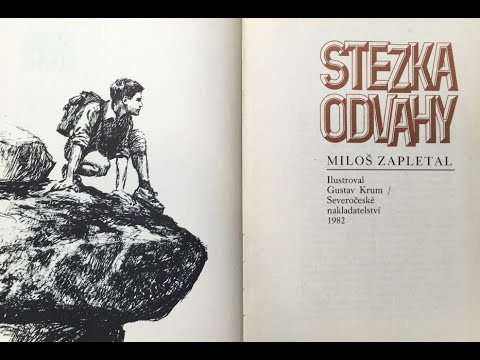
▶️ YouTube - Stezka odvahy (Miloš Zapletal)
❓ FAQ ABOUT THE ENVELOPE STORY - HOW PARADOXICAL CHALLENGES BUILD RESILIENCE
Question: What exactly is the Envelope Story?
Answer: The Envelope Story is a legendary parable from Czech scouting culture, originally attributed to Miloslav Zapletal in his woodcraft guides. A young scout receives a sealed envelope from his leader with strict instructions to open it only in truly desperate, life-threatening situations. When the scout eventually opens it during a moment of panic in the wilderness, the message reads: “If you are surrounded by hungry wolves or swept away by a raging river with no hope, this message cannot help you. If not, then your task until morning is to not use your dominant hand at all.” This paradoxical instruction transforms perceived crisis into creative challenge, teaching profound lessons about self-reliance and resilience.
Question: How does the Envelope Story actually build resilience?
Answer: The story builds resilience through several psychological mechanisms: Cognitive Reframing - it forces immediate reality assessment, breaking catastrophic thinking patterns. Attention Regulation - the constraint redirects focus from abstract fears to concrete problem-solving. Self-Efficacy Development - successfully completing the challenge builds confidence in one’s adaptive capacity. Internal Locus of Control - it teaches that solutions come from within rather than external rescue. The artificial constraint activates dormant neural pathways, engaging creativity and resourcefulness while preventing rumination and panic cycles.
Question: Is this just a story, or can it be applied in real situations?
Answer: While originating as a parable, the Envelope Story’s principles have direct applications in leadership development, therapeutic intervention, crisis management, and personal growth. Modern applications include executive coaching scenarios where leaders face artificial constraints during decision-making challenges, therapeutic settings where clients learn to reframe crisis thinking, and organizational training programs that use productive constraints to build team resilience and creative problem-solving capabilities.
Question: What makes paradoxical challenges more effective than straightforward advice?
Answer: Paradoxical challenges work because they bypass psychological resistance and engage deeper learning processes. Direct advice often triggers defensive responses or creates dependency, while paradoxical interventions force individuals to discover solutions themselves. The constraint creates “cognitive disequilibrium” - productive confusion that compels new learning. By imposing artificial limitations, the brain must find creative workarounds, activating neuroplasticity and building genuine competence rather than mere compliance.
Question: Can the Envelope Story technique be harmful or backfire?
Answer: When applied inappropriately, paradoxical interventions can increase stress rather than reduce it. The technique requires psychological safety, skilled facilitation, and appropriate timing. It should never be used with individuals experiencing genuine trauma, severe mental health crises, or those lacking basic coping resources. The constraint must be challenging but achievable, and the person must have the foundational skills needed to adapt. Without proper context and support, the approach can feel like abandonment rather than empowerment.
Question: How is this different from just throwing someone in the deep end?
Answer: The Envelope Story differs fundamentally from sink-or-swim approaches because it provides structure, meaning, and psychological safety within the challenge. The envelope itself represents a safety net (even though it contains no rescue), creating initial comfort. The specific constraint is carefully calibrated - difficult enough to engage problem-solving but achievable with effort. Most importantly, it includes a reframing element that transforms the experience from random hardship into purposeful growth opportunity.
Question: What’s the neuroscience behind why this works?
Answer: Neurologically, the envelope message interrupts amygdala activation (fear response) by engaging prefrontal cortex functions (rational assessment). The constraint forces neuroplasticity by requiring new motor patterns and problem-solving approaches. This activates multiple brain regions simultaneously while providing cognitive load management - giving the mind a specific focus that prevents rumination. The process increases dopamine and norepinephrine (enhancing focus and learning) while reducing cortisol (stress hormone), creating optimal conditions for skill development and confidence building.
Question: How can parents, teachers, or leaders apply these principles?
Answer: Practical applications include: Create Safe Constraints - impose artificial limitations during learning activities to spark creativity. Use Perspective-Shifting Questions - help others assess whether their perceived crisis is actually life-threatening. Guide Discovery Rather Than Rescue - provide frameworks for self-discovery rather than direct solutions. Build Mastery Experiences - design challenges that stretch capabilities while ensuring achievability. Teach Reframing Skills - help others distinguish between genuine emergencies and manageable difficulties requiring creative adaptation.
Question: Are there cultural considerations when using this approach?
Answer: Yes, the Envelope Story’s effectiveness varies across cultural contexts. Individualistic cultures may respond well to self-reliance messaging, while collective cultures might need modifications emphasizing community strength rather than solo capability. Some cultures may view the leader’s apparent abandonment negatively, requiring different framing. The specific constraint (not using dominant hand) should be culturally appropriate and meaningful. Success depends on understanding how different cultures view authority, challenge, independence, and the relationship between struggle and growth.
Question: What are the long-term benefits of experiencing paradoxical challenges?
Answer: Long-term benefits include enhanced stress tolerance, improved creative problem-solving abilities, greater self-confidence in facing uncertainty, reduced dependency on external validation or rescue, increased comfort with ambiguity and constraint, and development of what psychologists call “post-traumatic growth” - the ability to emerge stronger from challenging experiences. Individuals who successfully navigate paradoxical challenges often develop more flexible thinking patterns and greater resilience reserves for future difficulties.
😆 JOKES ABOUT THE ENVELOPE STORY - HOW PARADOXICAL CHALLENGES BUILD RESILIENCE
-
The Modern Update: A millennial scout opens the envelope and reads: “If you’re being chased by wolves or swept away by a river, this message can’t help you. If not, your task until morning is to survive without mobile data.” He immediately panicked more than before.
-
The Procrastinator: Scout finally opens the envelope after three days of “crisis.” Message: “If you’re not dying, don’t use your right hand until morning.” Scout looks at watch - it’s already 11:59 PM. “Well, that was easy.”
-
The Pessimist’s Twist: Scout opens envelope expecting help, reads the wolf/river clause and thinks: “Well, I’m definitely going to encounter wolves now. This envelope has jinxed me.”
-
The Meta Joke: Scout opens envelope: “If you’re not facing actual wolves, don’t use your right hand.” Scout realizes he opened the envelope with his right hand. “Does this count as using it? Am I already failing the test?”
-
The Helicopter Parent Version: Modern envelope: “If you’re in real danger, call your mother immediately. If not, text your mother every hour until morning using only your left hand. She’s worried about you.”
-
The Customer Service Representative: Scout opens envelope during “crisis”: “Your call is important to us. If you’re being eaten by wolves, press 1. If you’re drowning, press 2. For all other emergencies, please hold while we connect you to our support.”
-
The Social Media Influencer: “OMG guys, just opened my crisis envelope! Can’t use my right hand until morning - this is going to make such great content! #EnvelopeChallenge #OnlyLeftHandSelfies #Blessed”
-
The Sequel Problem: Scout successfully completes the challenge, returns to leader proudly. Leader hands him another envelope: “Congratulations! This one’s for when you think you’ve got it all figured out.”
🦋 METAPHORS ABOUT THE ENVELOPE STORY - HOW PARADOXICAL CHALLENGES BUILD RESILIENCE
-
The Locked Door: The envelope is like a locked door marked “Emergency Exit Only” - when you finally break it open in desperation, you discover it leads not to escape, but to a room where you must learn to navigate blindfolded, teaching you that the way out was always through your own capability.
-
The Mirror in the Dark: Opening the envelope is like looking for a flashlight in darkness, only to find a mirror that reflects your own inner light back at you, revealing you were never truly lost.
-
The Empty Well: The envelope represents drawing water from what appears to be a deep well, only to find it empty - forcing you to discover the spring of resourcefulness that was always flowing within you.
-
The Puzzle Missing Pieces: Like trying to complete a jigsaw puzzle with half the pieces missing, the envelope’s constraint forces you to create new pieces from your own imagination, building something more beautiful than the original picture.
-
The Faulty Map: Following the envelope’s guidance is like using a map where all the roads lead back to yourself, teaching you that every path to strength begins and ends with your own inner compass.
-
The Silent Teacher: The envelope acts like a master who responds to every question with deeper questions, forcing you to discover that the answers you seek have been speaking within you all along.
-
The Broken Ladder: Like climbing toward rescue only to have each rung break beneath you, until you realize you’ve been building muscles with every “failed” step and can now leap to heights you never imagined possible.
-
The Backwards Clock: The envelope works like a clock that runs in reverse, appearing to count down to disaster but actually counting up to the moment you discover your own timeless strength.
-
The Broken Anchor: Like an anchor that snaps in a storm, the envelope’s “failure” to hold you steady forces you to discover you were always the captain of your own ship, capable of navigating any weather.
🧑🦲 AXEL MAGNUS EXPERIENCE WITH THE ENVELOPE STORY - HOW PARADOXICAL CHALLENGES BUILD RESILIENCE
“The moral of the envelope story: When life gives you lemons, make lemonade. But only use your non dominant hand, and also, why are you expecting help with the lemons?” - Anonymous
Since childhood, I have experienced a profound resonance with the envelope story’s wisdom a teaching that echoes throughout my whole being, weaving a vivid sense of reality beyond ordinary problem-solving approaches. An early encounter with Miloš Zapletal’s parable first in his books and later in personal encounter in Liberec became the foundation for my lifelong exploration into the mysteries of self-reliance and inner resourcefulness.
My journey into envelope story principles has evolved through diverse modalities, including crisis intervention work and therapeutic practices. This exploration has not only deepened my own transformation but has empowered the growth journeys of those I serve, revealing the envelope story as both personal philosophy and practical methodology.
Through extensive NLP seminars, collaboration with fellow practitioners, and dedicated study, I discovered that true mastery arises not from external knowledge acquisition but from organizing inner wisdom so that precisely the right insight emerges exactly when needed. The envelope story taught me that the answers we seek already resonate within our own adaptive capacity.
I observed early on that many practitioners confuse dramatic intervention with genuine guidance, presenting theatrical rescues as authentic leadership. My background in meditation, trance work, and energetic awareness grounded me in understanding that genuine envelope story wisdom transcends technique, embodying authentic mentorship presence that cannot be manufactured.
The universal archetype of wise mentorship—seen in a teacher who guides rather than rescues—embodies the essence of the envelope story: strategic reframing, productive constraint, supportive challenge, and trust in human potential. This ancient wisdom roots envelope story methodology in our evolutionary programming for growth through guided adversity.
Every culture I’ve studied recognizes this fundamental capacity for developing resilience through paradoxical challenge. The resonating wisdom of the envelope story connects me to this universal human heritage—the ability to discover strength, creativity, and adaptation through carefully crafted constraint rather than comfortable rescue.
What I’ve discovered through decades of practice is that technical skill, while important, serves primarily as the foundation for something more essential: authentic mentorship presence. The most transformative interventions occur when practitioners transcend mere technique to become clear channels for the envelope story’s core principle—that true help lies in guiding others to discover their own resourcefulness.
I remain deeply open to learning from the diverse cultural expressions of envelope story wisdom worldwide, cherishing each tradition as a unique pathway to the luminous inner strength that has been humanity’s faithful companion through every challenge since the beginning of consciousness itself.
“I’ve found that techniques like NLP and hypnosis create natural pathways to envelope story experiences, though I fully recognize that every culture and community has its own unique approach to cultivating resilience through constraint. The envelope story that has guided me since childhood teaches me to remain open and eager to learn from them all.”
🕳️ THE LIMITATIONS OR UNCERTAINTIES INHERENT IN THE RESEARCH OF THE ENVELOPE STORY - HOW PARADOXICAL CHALLENGES BUILD RESILIENCE
The research on The Envelope Story and how paradoxical challenges build resilience, while promising and interdisciplinary, faces several significant limitations and challenges that shape its current scope and indicate directions for future inquiry:
1. Predominance of Anecdotal and Case Study Evidence
Much of the existing research on The Envelope Story relies heavily on anecdotal reports, historical narratives, and individual case studies from scouting communities and therapeutic settings. While these provide rich, contextual insights into how paradoxical challenges function in practice, they limit the generalizability of findings. Large-scale, controlled studies examining the efficacy of envelope-style interventions across diverse populations are sparse, making it difficult to establish broad patterns or causal relationships between paradoxical challenges and resilience outcomes.
2. Incomplete Neurobiological Understanding of Paradoxical Interventions
Although neuroscience research supports the cognitive reframing mechanisms underlying The Envelope Story—showing how prefrontal cortex activation can interrupt amygdala-driven panic responses—the precise neurobiological pathways activated by paradoxical constraints remain only partially understood. Studies examining how artificial limitations engage creativity networks, activate neuroplasticity, and facilitate attention regulation vary significantly in methods and focus, making it challenging to isolate the specific neural correlates of envelope-style interventions.
3. Cultural Variability and Limited Cross-Cultural Validation
The Envelope Story emerged from Czech scouting culture and reflects specific cultural values around self-reliance, mentorship, and individual growth through challenge. However, cross-cultural empirical research examining how paradoxical challenge interventions function across diverse cultural contexts remains limited. Many applications focus on Western, individualistic settings, leaving significant gaps in understanding how these methods translate to collectivistic cultures or societies with different relationships to authority, challenge, and personal agency.
4. Challenges Distinguishing Genuine Crisis from Perceived Crisis
A core element of The Envelope Story involves differentiating between actual life-threatening situations and perceived crises driven by anxiety or inexperience. However, research struggles to establish clear, measurable criteria for when paradoxical interventions are appropriate versus potentially harmful. The boundary between productive challenge and overwhelming stress varies significantly across individuals, making it difficult to create standardized protocols for envelope-style interventions.
5. Ethical and Safety Considerations in Controlled Studies
Research on envelope-story-type interventions faces significant ethical constraints, as controlled trials would require deliberately inducing crisis states or anxiety to test the intervention’s effectiveness. This ethical limitation restricts the availability of rigorous experimental evidence and complicates the development of standardized protocols. Most existing evidence comes from naturalistic observations rather than controlled experimental conditions, limiting the strength of causal claims.
6. Dynamic and Context-Dependent Nature of Paradoxical Challenges
The effectiveness of envelope-style interventions appears highly dependent on timing, individual psychological state, relationship dynamics with mentors, and situational factors. This contextual sensitivity complicates the creation of universal frameworks or standardized applications. What works as a transformative challenge for one person in a specific situation may prove ineffective or even counterproductive for another, requiring highly adaptive, context-sensitive approaches that are difficult to systematize for research purposes.
7. Limited Integration Between Therapeutic and Educational Applications
Although The Envelope Story has applications spanning therapeutic intervention, leadership development, educational psychology, and organizational training, research across these domains remains largely siloed. Therapeutic literature on paradoxical interventions, educational research on productive constraints, and leadership development studies of challenge-based growth operate with different methodologies, outcome measures, and theoretical frameworks, limiting comprehensive understanding of the underlying mechanisms.
8. Measurement Challenges for Resilience Outcomes
Research faces significant challenges in operationalizing and measuring the type of resilience fostered by envelope-style interventions. Traditional resilience scales may not capture the specific self-reliance, creative problem-solving, and perspective-shifting capabilities that The Envelope Story aims to develop. Long-term follow-up studies examining whether single envelope experiences create lasting resilience are particularly rare, leaving questions about durability and transfer of benefits unanswered.
In summary, these limitations highlight the need for more rigorous, culturally inclusive, and interdisciplinary research employing diverse methodologies—controlled experimental studies with appropriate ethical safeguards, cross-cultural validation studies, longitudinal tracking of resilience outcomes, and neuroimaging research on paradoxical intervention mechanisms. Meanwhile, practitioners should apply envelope-style approaches with thoughtful sensitivity to individual differences, cultural contexts, safety considerations, and the evolving evidence base, recognizing both the promise and limitations of current understanding.
✏️ CONCLUSION OF THE ENVELOPE STORY - HOW PARADOXICAL CHALLENGES BUILD RESILIENCE
The Envelope Story stands as a masterpiece of psychological wisdom, demonstrating how a simple parable can encapsulate profound truths about human resilience, self-reliance, and the transformative power of reframed perspective. Through its elegant narrative structure, this Czech scouting tradition illuminates fundamental principles that span neuroscience, behavioral psychology, and ancient wisdom traditions.
At its core, the story reveals a beautiful paradox: the moment we believe we most need external rescue is precisely when we are most ready to discover our own inner resources. The envelope’s message works not by providing solutions, but by fundamentally altering the relationship between challenge and capability. By forcing the scout to reassess his situation against truly life-threatening scenarios, the intervention interrupts catastrophic thinking patterns and activates the prefrontal cortex’s rational assessment functions.
The neurobiological mechanisms underlying the story’s effectiveness demonstrate sophisticated understanding of human psychology. The artificial constraint of avoiding the dominant hand serves multiple functions simultaneously: it occupies working memory to prevent rumination, engages dormant neural pathways to foster creativity, and provides concrete focus that transforms abstract anxiety into manageable problem-solving tasks. This process exemplifies how productive constraints can paradoxically expand rather than limit human capability.
The story’s cross-cultural resonance speaks to universal human experiences with challenge and growth. Whether viewed through the lens of Zen koans, Native American vision quests, or Socratic questioning, the Envelope Story belongs to a rich tradition of paradoxical interventions designed to foster self-discovery through carefully structured difficulty. This universality suggests that the principles it embodies tap into fundamental aspects of human psychological development and resilience building.
Modern applications across diverse fields—from executive coaching to therapeutic intervention to educational psychology—demonstrate the story’s continued relevance in contemporary settings. The basic framework of cognitive reframing, productive constraint, and guided self-discovery translates effectively to organizational challenges, personal crises, and learning environments. However, successful application requires careful attention to context, timing, psychological safety, and individual readiness.
The story’s enduring power lies in its recognition that genuine resilience cannot be given or received—it must be discovered through experience. The envelope contains no rescue because rescue was never what was needed. Instead, it provides a framework for transforming perceived helplessness into creative adaptation, panic into problem-solving, and external dependency into internal resourcefulness.
Perhaps most importantly, the Envelope Story teaches that constraints and challenges, when properly framed and supported, become doorways rather than barriers. The scout emerges from his experience not merely having survived, but having discovered capabilities he didn’t know he possessed. This transformation creates lasting change in his relationship with uncertainty, difficulty, and his own adaptive capacity.
As we face an increasingly complex and unpredictable world, the wisdom embedded in the Envelope Story becomes ever more relevant. In times of rapid change, technological disruption, and social uncertainty, the ability to maintain perspective, engage creativity under pressure, and find opportunity within constraint represents essential life skills. The story’s message—that our greatest resource for handling future challenges lies within our own developed capacity for adaptation—offers hope and practical guidance for building resilience in ourselves and others.
The Envelope Story ultimately reminds us that the most profound help we can offer another person is not to rescue them, but to guide them toward discovering their own strength. In a world often focused on external solutions and technological fixes, this ancient wisdom about human potential and self-reliance remains both revolutionary and timeless. The envelope’s message will continue to resonate as long as humans face challenges that test their limits and invite them to grow beyond what they believed possible.
📚 REFERENCES THE ENVELOPE STORY - HOW PARADOXICAL CHALLENGES BUILD RESILIENCE
-
George Lakoff & Mark Johnson, 1980; Metaphors We Live By
-
Steve & Connirae Andreas, 1988; Change Your Mind and Keep the Change: Advanced NLP Submodalities Interventions
-
Julian Jaynes, 2000; The Origin of Consciousness in the Breakdown of the Bicameral Mind
-
Andreas, S. (2002). Transforming yourself: Becoming who you want to be. Real People Press.
-
Bonanno, G. A. (2021). The resilience paradox. European Journal of Psychotraumatology, 12(1), 1942642. https://doi.org/10.1080/20008198.2021.1942642
-
Bonanno, G. A., Romero, S. A., & Klein, S. I. (2015). The temporal elements of psychological resilience: An integrative framework for the study of individuals, families, and communities. Psychological Inquiry, 26(2), 139-169.
-
Erickson, M. H. (1980). The nature of hypnosis and suggestion. Irvington Publishers.
-
Li, Y., Wang, X., Chen, S., & Zhang, L. (2025). Exploring the roles of paradoxical tensions, paradoxical thinking and team psychological capital on creativity of engineering university students. PLOS ONE, 20(2), e0313159.
-
Norberg, J., & Cumming, G. S. (2023). The paradox of resilience and efficiency. Journal of Economic Issues, 57(3), 845-862.
-
Prashantham, S., & Eranova, M. (2021). Paradoxical thinking and entrepreneurial success. Strategic Entrepreneurship Journal, 15(1), 45-67.
-
Rutter, M. (1999). Resilience concepts and findings: Implications for family therapy. Journal of Family Therapy, 21(2), 119-144.
-
Smith, W. K., Lewis, M. W., Jarzabkowski, P., & Langley, A. (2017). The Oxford handbook of organizational paradox. Oxford University Press.
-
Werner, E. E. (1985). Stress and protective factors in children’s lives. In A. R. Nicol (Ed.), Longitudinal studies in child psychology and psychiatry (pp. 335-355). Wiley.
-
Zapletal, M. (1982). Stezka odvahy [Path of courage]. Severočeské nakladatelství.
-
Zapletal, M. (1985). Zálesáctví [Woodcraft]. Mladá fronta.
-
video DVD Transforming Yourself Complete 3-day Training with Steve Andreas
Image credit - Pixabay - Photo by Tumisu
Films
-
Dead Poets Society (1989). Weir, P. (Director). Touchstone Pictures. An unconventional teacher uses paradoxical methods, encouraging students to discover their authentic voices through challenging conventional expectations rather than providing direct answers.
-
Good Will Hunting (1997). Van Sant, G. (Director). Castle Rock Entertainment. A therapist guides a brilliant but troubled young man through therapeutic sessions that don’t provide easy solutions but force self-discovery and emotional growth.
-
The Karate Kid (1984). Avildsen, J. G. (Director). Columbia Pictures. Mr. Miyagi teaches martial arts through seemingly unrelated tasks like “wax on, wax off,” demonstrating how indirect methods and constraints build skill and character more effectively than conventional instruction.
-
Million Dollar Baby (2004). Eastwood, C. (Director). Warner Bros. Pictures. A boxing trainer’s mentorship emphasizes sacrifice and responsibility, showing how genuine mentorship involves patience and mutual transformation rather than simple skill transfer.
-
Remember the Titans (2000). Yakin, B. (Director). Walt Disney Pictures. Coach Herman Boone uses challenging methods to transform his team, demonstrating how mentorship becomes a transformative force that challenges biases and builds character through adversity.
-
Rocky (1976). Avildsen, J. G. (Director). United Artists. Mickey Goldmill’s tough-love approach pushes Rocky beyond his perceived limits, showing how effective mentorship involves psychological and physical growth through disciplined challenge rather than easy encouragement.
-
Split (2016). Shyamalan, M. N. (Director). Universal Pictures. The director’s self-imposed budget and crew constraints led to creative breakthrough, demonstrating how artificial limitations can restore instinctive filmmaking abilities and spark innovation.
-
Stand and Deliver (1988). Menéndez, R. (Director). Warner Bros. Jaime Escalante’s unconventional teaching methods challenge dropout-prone students to learn advanced calculus, proving that high expectations and creative constraints can transform perceived limitations.
Television Series
-
Breaking Bad (2008-2013). Gilligan, V. (Creator). Sony Pictures Television. While depicting a toxic mentorship, the series demonstrates how constraints and limitations force creative problem-solving and character transformation, though with destructive rather than positive outcomes.
-
Hacks (2021-present). Downs, L., Enberg, P., & Statsky, J. (Creators). HBO Max. Explores a complex mentorship between a legendary comedian and a young writer, demonstrating how mutual challenge and creative constraints foster unexpected growth.
-
Scrubs (2001-2010). Lawrence, B. (Creator). NBC/ABC. Dr. Cox’s abrasive mentoring style with J.D. demonstrates how challenging, sometimes harsh guidance can build medical competence and personal resilience through repeated exposure to failure and recovery.
-
Ted Lasso (2020-2023). Lawrence, B., Sudeikis, J., & Hunt, J. (Creators). Apple TV+. Roy Kent’s mentorship of Jamie Tartt shows how former adversaries can become transformative guides, using confrontational methods to build character and skill.
-
The Forge (2024). Kendrick, A. (Director). Sony Pictures. Follows a young man’s transformation through mentorship that challenges his assumptions and forces personal growth through structured adversity.
-
UnREAL (2015-2018). Shapiro, M., & Rakoff Silver, S. (Creators). Lifetime. Explores complex mentor-mentee dynamics in reality television production, showing how challenging professional relationships can build resilience despite their problematic nature.
Documentary Examples
-
Can’t Get You Out of My Head (2021). Curtis, A. (Director). BBC. Director Adam Curtis uses self-imposed constraints of archival footage only, demonstrating how creative limitations force innovative storytelling approaches and deeper audience engagement.
-
Trauma Zone (2022). Curtis, A. (Director). BBC. Curtis further constrains his approach by eliminating narration entirely, showing how additional limitations can enhance rather than diminish creative impact.
Novels
Classic Literature
-
The Alchemist (1988). Coelho, P. HarperOne. Santiago’s journey demonstrates how constraints and setbacks become catalysts for self-discovery, with mentors who guide through questions rather than direct answers, embodying the principle that true treasure lies in the journey’s transformative challenges.
-
Jane Eyre (1847). Brontë, C. Smith, Elder & Co. This bildungsroman follows a protagonist who develops resilience through imposed limitations and social constraints, discovering inner strength through adversity rather than external rescue, paralleling the envelope story’s emphasis on self-reliance.
-
Things Fall Apart (1958). Achebe, C. William Heinemann. Explores cultural resilience in the face of colonial disruption, demonstrating how communities and individuals adapt to overwhelming constraints while maintaining identity and meaning.
Contemporary Fiction
-
Kafka on the Shore (2002). Murakami, H. Vintage International. Features a protagonist’s journey of self-discovery through surreal challenges that force internal growth, emphasizing existential resilience and the navigation of paradoxical situations without clear external guidance.
-
Norwegian Wood (1987). Murakami, H. Kodansha International. Explores resilience through internal conflict and alienation, demonstrating how characters develop coping mechanisms and find meaning through introspective challenge rather than external intervention.
-
The Five People You Meet in Heaven (2003). Albom, M. Hyperion. An aging maintenance worker discovers life’s interconnected meaning through post-mortem mentors who reveal how his seemingly unremarkable existence touched countless lives, demonstrating resilience through reframed perspective.
Self-Discovery and Growth Literature
-
Into the Wild (1996). Krakauer, J. Villard Books. Documents Christopher McCandless’s journey into the Alaskan wilderness, exploring themes of self-discovery through extreme constraint and the complex relationship between freedom and limitation in personal growth.
-
Wild (2012). Strayed, C. Knopf. Memoir of a transformative solo hike along the Pacific Crest Trail where physical constraints and wilderness challenges become catalysts for psychological healing and self-discovery, embodying envelope story principles.
Literary Fiction with Mentor-Mentee Dynamics
-
The Authenticity Project (2020). Pooley, C. Bantam. Six strangers connected through a mysterious journal that demands absolute honesty, demonstrating how truth-telling constraints can become catalysts for personal transformation and authentic connection.
-
A Man Called Ove (2012). Backman, F. Atria Books. A curmudgeonly neighbor becomes an unlikely mentor through indirect actions rather than direct teaching, showing how character development occurs through constraint and challenge rather than comfort.
Postcolonial and Identity Literature
-
The God of Small Things (1997). Roy, A. IndiaInk. Explores individual resilience against oppressive social structures, demonstrating how characters develop strength through navigating cultural and familial constraints that initially appear limiting but ultimately foster growth.
-
Half of a Yellow Sun (2006). Adichie, C. N. Knopf. Characters develop resilience through the constraints of war and social upheaval, learning to adapt and find meaning within severe limitations imposed by historical circumstances.
Contemporary Bildungsroman
-
The Kite Runner (2003). Hosseini, K. Riverhead Books. Explores guilt, redemption, and personal growth through challenging circumstances, demonstrating how moral constraints and past failures become catalysts for eventual courage and authentic action.
-
Life of Pi (2001). Martel, Y. Knopf Canada. A young protagonist survives extreme physical constraints through creative adaptation and philosophical resilience, embodying the envelope story’s principle that limitations can unlock unexpected resources and survival capabilities.