A SOMATIC TECHNOLOGY OF BELIEF CHANGE HIDDEN IN PLAIN RELIGIOUS HISTORY
SHAKERS: HOW MOVEMENT INSCRIBES BELIEF INTO THE BODY

Belief - is part of Series
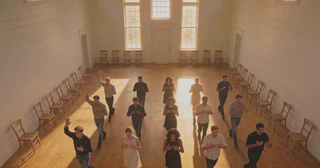
The Shakers formally the United Society of Believers in Christ’s Second Appearing built and maintained their theology almost entirely through body movement. For more than two centuries, trembling, marching, turning, and precisely choreographed gesture sequences served not as expressions of belief but as the very mechanism through which belief was created, sustained, and renewed. They constituted, arguably, the most fully documented sustained experiment in somatic belief change in Western religious history.
This article examines their five-stage movement protocol through the lens of embodied cognition, nervous system regulation, and NLP. What emerges is a coherent technology: one that cleared old somatic patterns, induced altered states, kinesthetically encoded doctrine, generated state-dependent content, and entrenched belief through communal entrainment. Each stage maps precisely onto what modern practitioners now understand about how beliefs are actually formed and changed.
You will leave this article with more than historical curiosity. You will have a practical framework for somatic belief work, a detailed practitioner script, a body-based meditation, and a set of exercises that let you feel not just understand how movement can write new meaning into the body. The Shakers shook for good reason. After reading this, you may want to as well.
🎯 THE BENEFITS OF THE SHAKER SOMATIC PROTOCOL
“I spent twenty years trying to change my beliefs through willpower and reading. Then I shook for five minutes and felt something shift that I hadn’t been able to budge in two decades.” Anonymous
When you work with a somatic protocol rooted in the Shaker model, you are not working with metaphor. You are engaging nervous system regulation, movement-based anchoring, and community entrainment mechanisms that research now confirms as among the most efficient pathways into lasting change.
Bypassing intellectual resistance. Beliefs stored as procedural body memory cannot be dislodged by argument or analysis. They sit below the level of language. When you access them through the same channel through which they were formed movement and sensation you meet them on their own terrain. The body stops defending a position it no longer needs to hold.
Completing the stress response cycle. Spontaneous trembling the stage the Shakers called “shaking off sin” activates the same mechanism that modern Trauma Release Exercises (TRE) researchers describe as the body’s natural discharge pathway. You may feel warmth spreading from the base of your spine, a loosening in the chest, or a peculiar lightness in the arms after trembling. These are physical signatures that the nervous system has completed a cycle it had been holding open. Old somatic patterns that underpinned old beliefs literally discharge from the muscles.
Installing beliefs with procedural permanence. When a belief is encoded kinesthetically through specific gesture, posture, and coordinated movement it enters procedural memory rather than declarative memory. You know it the way you know how to ride a bicycle. You cannot forget it on a bad day. You cannot be argued out of it at a dinner party. This is durable change.
Opening access to embodied wisdom. The Shakers described the state that emerged during rhythmic marching and turning as one in which they “listened not with outer ears, but with a kinetic sense.” In NLP terms, this is deep kinaesthetic primary processing a state in which the critical, evaluating narrator of the default mode network quietens, and the deeper pattern-recognition of the unconscious mind becomes available. You may discover that you already know what you need to decide. You simply could not hear it over the noise of analysis.
Strengthening communal resonance. Where the full Shaker model is available group movement, synchronised rhythm, shared space oxytocin and endogenous opioid release measurably increase trust, cooperation, and what researchers describe as self/other boundary softening. In group facilitation contexts, this translates to a quality of connection between participants that is difficult to generate through conversation alone.
Building a personal somatic vocabulary. Working with movement-based protocols trains you to distinguish between sensations that signal congruence and those that signal conflict. A warm, spreading quality in the chest is different from a hollow, contracting feeling in the stomach. Over time this vocabulary becomes precise enough to serve as a reliable internal compass particularly in high-stakes decisions where the data runs out and the body has to take over.
🏛️ ORIGINS OF THE SHAKER MOVEMENT ACROSS CULTURES AND HISTORY
The story of the Shakers begins not with America but with a Manchester blacksmith’s daughter named Ann Lee, born in 1736 into the grinding poverty of England’s early industrial north. Lee had joined a small dissenting group called the Wardley Society sometimes called the Shaking Quakers who had broken from mainstream Quaker practice toward something rawer and more physical: trembling, shaking, crying out, receiving visions. For them, the spirit did not arrive through silent waiting. It arrived through the body convulsing.
After periods of imprisonment, persecution, and what she described as a transformative mystical experience, Lee led eight followers to North America in 1774, settling near Albany, New York. They had no programme, no choreography, and no theology of movement beyond a conviction that the body was the primary site of spiritual encounter. The name the world gave them Shakers was originally an insult, a mockery of the violent, involuntary shaking that characterised their early worship.
What makes the Shaker story remarkable is what happened next. Over the following century, this raw somatic impulse was deliberately refined into a complete system. The spontaneous individual trembling of the early years gave way to group marching in the 1780s, then to synchronised circular and square dances in the 1820s, then to precisely choreographed movements with symbolic gesture sequences in the 1820s and beyond. Mother Lucy Wright, who led the community after the death of founder Joseph Meacham in 1796, introduced hymns with specific movement cues, pairing particular words with particular body positions to create what we would now recognise as kinesthetic anchors.
The period known as the Era of Manifestations (1837 to the early 1850s) represents the most striking demonstration of the system’s emergent power. During these years, members spontaneously generated hundreds of new songs, dances, and elaborate visual artworks called gift drawings maps of spiritual landscapes, trees of light, fountains of blessing all arising from within movement states rather than preceding them. Approximately 250 of the 800 surviving Shaker song manuscripts date to this single decade.
The Shakers were not unique in discovering that movement encodes belief. Sufi whirling the sema practice of the Mevlevi order uses turning, breath, and arms extended at specific angles to physically enact the Sufi cosmology of divine circulation. Buddhist cham ritual dance encodes doctrinal content in gesture sequences (mudras) so precisely that a practitioner who performs the complete set is said to have physically traversed the doctrinal landscape. The West African Vodou tradition uses specific drumming patterns and dance vocabularies to invite particular orishas each with its own postural signature to inhabit the body of the dancer.
In each of these traditions, the pattern is identical to the Shaker one: the body’s movement creates, rather than expresses, the theological reality. The doctrine is not translated into dance. The dance is the doctrine.
NLP arrived at the same recognition from a different direction. The Walking Belief Change Pattern, developed from the intersection of NLP somatic work and the kinesthetic anchoring model of Bandler and Grinder, is premised on the same insight: beliefs built through direct sensory experience are more durable, more generative, and more change-resistant than beliefs derived from information alone. The Shakers knew this 200 years before the research caught up.
📜 PRINCIPLES OF SOMATIC BELIEF ENCODING
Principle 1: The body changes the mind faster than the mind changes the body
Cognitive approaches to belief change work top-down: you reason yourself toward a new understanding and hope the body eventually follows. The Shaker model and contemporary somatic neuroscience both demonstrate that the reverse sequence is more efficient. When you move the body first particularly through rhythmic, whole-body engagement brainwave entrainment, hormonal shifts, and default mode network suppression occur within minutes. The mind, arriving into an altered neurological state, forms beliefs appropriate to that state rather than defending the old ones.
In practice, you may notice this as a sudden loosening of certainty about a position you had been holding rigidly. The chest softens. The jaw unclenches. A thought you had been suppressing rises naturally. This is not psychological weakness. It is the body doing what it does best: creating the conditions for change.
Principle 2: Discharge before installation
You cannot write new content onto a full disc. The nervous system, chronically activated by unresolved stress, old decisions, accumulated emotional holding, is a full disc. The Shaker trembling what they called “shaking off sin” was not superstition. It was a systematic nervous system reset. Modern somatic research confirms that spontaneous trembling (as in TRE, or Somatic Experiencing’s “discharge” phase) signals safety to the amygdala, shifts the autonomic nervous system from sympathetic to parasympathetic dominance, and produces the felt sensation of “being lighter.”
Feel for this in your own body as a baseline: notice where you are currently holding. The upper trapezius, the jaw, the diaphragm, the hip flexors. These are common holding zones. Trembling, shaking, and spontaneous movement begin to release them. Only once this clearing has begun does new encoding become possible.
Principle 3: Rhythm is the fastest door to altered states
Repetitive, synchronised rhythmic movement is among the most consistently documented pathways into altered states across every culture that has used them. The mechanism is now understood: sustained rhythmic input entrains brainwave oscillations, particularly in the theta range associated with hypnagogic imagery, reduced critical evaluation, and heightened associative processing. The marching that followed Shaker trembling was not merely organisational. It was a precisely applied induction technology.
For practitioners, this means that introducing rhythmic movement early in a session even something as subtle as rocking gently in a chair, tapping the sternum, or synchronising breathing with a rhythm begins to shift the client toward the receptive state in which new encoding is possible.
Principle 4: Specific gestures carry specific meanings
When a particular body position or movement sequence is paired repeatedly with a particular state or content, the two become linked. Access one and you access the other. This is the mechanism of kinesthetic anchoring in NLP, and it is exactly what the Shaker choreographers were building when they assigned specific gesture sequences to specific doctrinal content: hands turned palms upward to receive, arms pulled inward to “gather,” shaking the hands downward to “cast off.”
The practical implication is that you do not need to use words to install a new belief. If you can move the body through the spatial and postural experience of the desired state arms open, chest forward, feet grounded, breath full while simultaneously holding the specific content of the new belief, the two become neurologically associated. The gesture becomes the belief’s retrieval cue.
Principle 5: State-dependent access unlocks what analysis cannot
The content generated by Shakers during the Era of Manifestations gift songs, gift drawings, new movement vocabularies arose from within altered kinesthetic states, not before them. These were not products of planning. They were expressions of what the altered state itself revealed. In NLP terms, this is state-dependent resource access: certain kinds of knowing are only available from certain states, and the knowledge of what to do which decision to make, which direction to move in is frequently one of them.
This is practically significant for anyone working with a client who is “stuck” in analysis. The question is not “what do you think you should do?” The question is “what does your body know that your thinking has been drowning out?” Movement-based induction creates the conditions in which this deeper knowing becomes audible.
Principle 6: Communal movement multiplies individual effect
When people move together in synchrony, the social bonding effects are measurable and substantial: increased pain tolerance, elevated trust, heightened cooperation, and a softening of the boundary between self and other. In the Shaker meetinghouse deliberately stripped of furniture, chairs hung on pegs to clear the floor, walls bare of distraction dozens and sometimes hundreds of bodies moved together. The individual belief was not merely stored in personal body-memory. It was held in the felt resonance of the community’s shared movement. This made the belief socially entrenched in a way that purely individual experience cannot achieve.
Principle 7: What is learned in the body is not forgotten in the mind
Declarative memory facts, arguments, propositional content is vulnerable to doubt, counter-argument, fatigue, and emotional disruption. You can believe something firmly on Monday and find the whole edifice shaky by Thursday. Procedural memory the kind that lives in the muscles and habitual movement patterns has no such vulnerability. You do not need to remember how to walk each morning. The Shakers understood, intuitively, that doctrinal belief stored in procedural memory would be far more stable than doctrine received through instruction. They were right.
🗨️ GUIDING CLIENTS IN SOMATIC BELIEF WORK
Observation and presence
Position yourself at the client’s side, not directly opposite. From this angle you can observe shifts in breathing, skin tone, micro-movement in the hands and feet, changes in postural alignment, and the quality of the client’s facial expression without triggering the social pressure that direct face-to-face contact creates. Your role is not to direct the client’s inner process it is to track it, reflect it, and support its natural unfolding.
Vocal modulation
When working somatically, slow your speech considerably. Match your rhythm to the client’s breathing. Allow genuine pauses longer ones than feel comfortable to your social self. A slow, unhurried, slightly lowered tone communicates at a nervous system level that it is safe to open, safe to move, safe to feel. Clients in early stages of somatic process are highly attuned to the practitioner’s arousal level. If you are brisk and businesslike, they will be too.
Genuine engagement
Real curiosity about the client’s somatic process is the best tool you have. When a client says “there’s something in my chest,” your authentic interest in that something what it feels like, where exactly it is, whether it has movement or temperature or texture communicates that their body’s intelligence is taken seriously. This is not a technique. Clients can tell the difference between genuine interest and performed interest.
Reflective communication
When the client describes something with animation quickening speech, brightened eyes, a shift in posture match those qualities in your response. If they describe a constriction in their throat with a quieter voice and a slight inward tilt, meet them there. Mirror the affect, the pace, the volume. This is not mimicry. It is the most fundamental form of being present with someone: allowing their state to land in you before you respond.
Connecting experience and inquiry
Link your questions to the client’s experience through coordination rather than sequence. Not “now I’d like you to notice…” but “…and as that feeling in your chest shifts, you might begin to notice what happens in your hands.” The word “and” preserves the continuity of the client’s process. “Now” and “next” break it into segments. The Shaker preacher did not call a halt to the marching to explain what would happen. The marching was continuous, and the revelation arrived inside it.
Step-by-step practitioner guidance
When introducing a somatic belief session, begin by establishing what the client already knows bodily about the belief they want to change. Where do they feel it? What does it feel like there? This gives you a baseline and, crucially, a location to return to for testing after the work.
Watch for signs of nervous system activation increased breathing rate, subtle holding, flickering eye movements as possible indicators that discharge is beginning. Do not try to manage or hurry this. Create space around it.
During movement phases, track whether the client’s postural orientation is moving toward openness (chest forward, limbs extending, head lifting) or away from it. Openness generally signals receptivity; collapsing or protective postures may indicate that more discharge time is needed before encoding begins.
Test the new state by returning to the original topic and watching the body’s response. Has the quality of sensation changed? Is the location different? Is there more space? These are somatic signals that something has shifted, independent of what the client reports verbally.
Close sessions with explicit integration work: future pacing through movement (having the client physically walk forward and notice what the body knows about the future context) and a brief body scan to note any residual holding that may need attention in a subsequent session.
💧 SOMATIC BELIEF IMMERSION AXEL MAGNUS SCRIPT BASED ON NLP PRINCIPLES
“The moment they put that VR headset on me, I stopped thinking and started knowing. Took twenty minutes and a lot of weird arm movements. Best business decision I ever made.” Anonymous
NLP Techniques applied: VR-facilitated state induction, Shaker Five-Stage Somatic Protocol (Clearing → Induction → Encoding → Generation → Maintenance), kinesthetic anchoring, state-dependent resource access, future pacing via movement.
Client profile: Marcus, 44, evangelical Christian, active in a Pentecostal community with experience of speaking in tongues (glossolalia). Has been wrestling with a major life decision whether to leave a senior corporate role to launch his own ministry and coaching practice for eight months. He describes himself as “unable to get a clear answer through prayer.” He trusts body-based spiritual experience. He is open to NLP but sceptical about whether it can add anything to what God does in him during worship.
Axel Magnus: Marcus, before we begin I want to check in with your body. Just sit for a moment and bring the decision to mind. Not the arguments just the situation itself. Where do you feel it?
[Marcus pauses. He places his right hand on his sternum without being prompted. His breathing shortens slightly.]
Marcus: Here. Right in the middle of my chest. It feels heavy. Like something’s been sitting there for a long time.
Axel Magnus: Good. I want you to keep that location in awareness as we work we’ll come back to it. Now. I’ve prepared something for you that I think your spirit will recognise more than your mind will.
[Axel hands Marcus a VR headset. The environment loads: a large, spare meetinghouse, whitewashed walls, wooden floor, no furniture. Morning light through plain windows. A community of perhaps eighty people, simply dressed, standing in rows. A preacher at the front, unhurried.]
Axel Magnus: You don’t need to do anything yet. Just arrive. Feel the floor through your feet. Notice the quality of the light.
[A long pause. Marcus’s breathing slows. His hand, still resting on his sternum, relaxes.]
Marcus: It feels clean in here. Very still.
Axel Magnus: (quietly) Yes. Just let that stillness land.
STAGE ONE: CLEARING
[The preacher raises a hand. The congregation begins to tremble. Not dramatically a fine vibration moving from the feet upward, the hands beginning to shake slightly, the jaw loosening.]
Axel Magnus: The preacher is going to invite something. You don’t need to perform anything just notice what happens in your body.
[Pause of thirty seconds. Marcus begins to mirror the trembling in the VR environment. His hands, resting on his thighs, begin to vibrate slightly. He makes a small surprised sound.]
Marcus: Something’s my hands are actually shaking. Is that me doing that?
Axel Magnus: Your nervous system is doing it. That’s different. Don’t stop it.
[The trembling moves into Marcus’s upper chest. He exhales sharply, once. His shoulders drop two centimetres.]
Marcus: There’s a lot going on in my chest. Like something’s being wrung out.
Axel Magnus: (softly) Good. Let it finish.
[Two minutes of silence, tracked. The trembling gradually stills. Marcus’s posture has changed he is slightly more upright, his chest more open.]
Marcus: Something left. I don’t know what it was. But something left.
STAGE TWO: INDUCTION
[The VR congregation begins to move in a slow, synchronised march a simple forward-back-turn sequence, feet creating a steady rhythm on the wooden floor. The sound of their feet is the primary sensory input.]
Axel Magnus: The march is starting. Just follow the rhythm. Don’t think about it.
[Marcus begins to sway gently in his chair, unconsciously following the rhythm. His eyes, behind the headset, have stopped their rapid lateral movement.]
Marcus: I can feel the beat in my feet. Like it’s going up through me.
Axel Magnus: (slower still) And as that rhythm moves through you… the thinking part gets quieter… and something else gets louder…
[A long pause. Marcus’s head drops forward slightly. His breathing has deepened and slowed.]
Marcus: (very quietly) This feels like when the Spirit comes in tongues. That same… like the thinking moves sideways.
Axel Magnus: Yes. That’s the exact state. Stay in it.
STAGE THREE: ENCODING
[The preacher in the VR raises both arms, palms upward, in a gesture of receiving. The congregation mirrors it. The preacher then brings hands to heart, then opens them outward in a gesture of offering. Each position is held for several seconds before moving.]
Axel Magnus: The preacher is showing you something. Let your arms find what they want to do.
[Marcus’s arms begin to rise, following the VR figures. He holds the palms-up position. His face changes something opens in it.]
Marcus: When my hands are like this… I feel like a vessel. Like I’m just open and something can pour through me. (pause) This is what it’s like when I speak in tongues.
Axel Magnus: Anchor that feeling, Marcus. The openness, the vessel quality, the pouring through. Let it fill your hands, your chest, your feet on the floor.
[The congregation moves to the offering gesture hands open and extending forward.]
Axel Magnus: And now in this state, as a vessel what does the decision feel like? Not what should I do. What does the vessel know?
[Long pause. Marcus’s breath catches.]
Marcus: (quietly) I already know.
Axel Magnus: Stay in the hands. What does the vessel know?
Marcus: It knows I’m supposed to go. That the corporate role is the held breath and the ministry is the exhale. (voice thickens slightly) I’ve known this for eight months. I’ve just been trying to think my way to permission.
Axel Magnus: Let that knowing settle into your hands. Into your chest. Into your feet.
STAGE FOUR: GENERATION
[The preacher invites the congregation to move freely. Some begin to hum. Some trace shapes in the air with their fingers gift drawings being made in space.]
Axel Magnus: The preacher is opening space for whatever wants to come through. You don’t need to understand it. Just let the vessel receive.
[Marcus’s hands begin to move in slow, flowing gestures nothing recognisable as language, but purposeful and unhurried. He begins to murmur, low.]
Marcus: (murmuring) There’s something about… the thing I can offer is exactly the thing I was afraid I didn’t have. The wounding is the gift. (pause) That’s new. I didn’t know that before.
Axel Magnus: (simply) Let that settle.
STAGE FIVE: MAINTENANCE AND INTEGRATION
[The congregation slows to a standing together, breathing together, hands resting open at their sides.]
Axel Magnus: Notice the quality of the air around you. Notice the quality of the people standing with you. The same rhythm in all of you.
[Pause of two minutes.]
Axel Magnus: When you’re ready, step forward in the VR. One step forward. And as you step, bring the decision with you.
[Marcus steps forward. His posture changes chest forward, shoulders back, weight grounded.]
Axel Magnus: Notice what the body knows about the path ahead.
Marcus: (pause, then with steadiness) It knows the floor is solid.
[Axel removes the VR headset. Marcus sits quietly for a moment.]
Axel Magnus: Come back slowly. Bring your attention to the chair beneath you, to your feet on the floor. And when you’re ready, check back in with that place in your chest.
Marcus: (after a pause) It’s different. It’s not heavy anymore. It’s… warm. Like something’s been switched on rather than off.
Axel Magnus: What do you know now that you didn’t know when you arrived?
Marcus: I knew the answer already. The body knew. I just needed permission to feel what it already knew. (pause) The vessels don’t deliberate. They receive and they pour.
[Silence. Axel makes no further comment. Some things end best without analysis.]
💪 MEDITATION FOR SOMATIC BELIEF CHANGE
Find a position that allows your spine to be long and your feet, if you’re seated, to rest fully on the floor. And you don’t need to do anything in particular with your hands just allow them to rest wherever they find themselves naturally, palms up or down, open or loosely closed…
As you begin to settle, you might notice that your body already knows how to let go of certain things without being instructed… the way a breath releases without you needing to remember to exhale… the way the eyes soften without effort when the light becomes gentle…
Take a moment, in your own time, to bring to awareness something you have been carrying. Not examining it. Not analysing it. Simply acknowledging that it’s there, the way you might acknowledge a piece of furniture you walk past every day without moving…
And now, just beginning to notice where in the body you feel that. Not where you think you should feel it where you actually feel it. You might find it in the chest, where a compression or a heaviness seems to have settled. You might find it in the throat, as a held quality. Or in the belly, as something that contracts slightly when the topic arises… Take a moment to locate it with some precision, the way you might locate a sound in a room by turning your head slowly…
Good. Just notice it without moving toward it or away from it. And you might begin to be curious about what wants to happen with that sensation if you simply allowed it to move… because sensations, unlike beliefs, like to move… they have a natural trajectory that thinking tends to interrupt…
Now, very gently, let your body begin to respond to an imagined rhythm. You don’t need to make anything happen. You might notice a very subtle rocking, or your hands wanting to shift position, or a gentle pulse beginning in your sternum that you had not noticed before… Let it be as small as it needs to be… or as large as it wants to become…
The Shakers understood something about what happens when the body is given permission to move its own rhythm rather than hold still for thought. As you begin to follow whatever small movement wants to happen, you may notice the held quality in that place in your chest or throat or belly beginning to… shift. Not resolving. Just becoming less fixed. Like ice becoming water, without your needing to apply any particular warmth…
And as that happens, you might become aware of something that has been underneath it… something that was waiting for the holding to ease before it could be heard…
Allow your hands, now, to find whatever position carries a feeling of openness. They might spread wide, or turn palms upward, or one hand might come to rest on the chest and one extend outward… trust whatever the hands know…
And in this position this posture your body has found notice what arises. Not what you think should arise. What actually does. A word. An image. A sense of direction. A warmth moving through a particular part of you…
You don’t need to understand it yet. You just need to let it land.
If something is arising a knowing, a clarity, a quietness that feels different from ordinary calm allow your hands to close gently around it. The way you might cup water without squeezing. Just hold it in the posture that found it…
And now, slowly, begin to let the rhythm settle. The movement slowing… the posture softening… the body returning to stillness with something it did not have when it began…
Take three full breaths. On each exhale, allow the thing you were holding to simply… dissolve. Not pushed away. Just no longer needed in the same way…
And when you’re ready, become aware of the floor beneath you, the weight of the chair, the quality of the air against your skin. And bring your attention, gently, back to the place in your body where you began this meditation. Notice what’s there now. What has changed. What remains. What feels different.
That is enough. That is sufficient. That is yours.
🗣️ ANECDOTE ABOUT SOMATIC BELIEF ENCODING
Elena arrived in my practice holding a belief she had never been able to name precisely. She described it as “I’m not meant to be visible,” and she said it in the way people say things they have said so many times the words have lost their edges smoothly, without flinching, the way you report a long-ago fact.
She was a musician. A genuinely gifted one, by the recordings she had shared with me. She had not performed publicly in six years. She taught from home, quietly, to children who were clearly benefiting from her. She was comfortable with her smallness in a way that told me the comfort was its own kind of suffering.
I asked her where she felt the belief in her body. She paused a long pause, the kind that tells you the person is actually going to look rather than guess. Then she placed both hands on her upper chest, just below the collarbones, and pressed in slightly. “Here,” she said. “Like something’s been folded over. Like the chest wants to open forward but there’s a hinge in the wrong direction.”
I asked her to stand.
I asked her to walk to one end of the room and then, slowly, to turn and walk toward me. She did this willingly enough but I noticed that as she walked toward me her head dropped slightly and her chest receded. She was physically enacting the belief with every step toward being seen.
We worked somatically for approximately forty minutes. I invited her first to allow whatever small movements wanted to happen in her upper chest the place with the wrong-direction hinge. She was sceptical, I could feel it. But she allowed it. The first five minutes produced nothing visible. Then a very slight rocking began, initiated from the sternum rather than the lower back. Her hands, which had been at her sides, rose without her apparently deciding to raise them and came to rest, palms slightly forward, at chest height.
She made a sound. Not a word. A sound.
Then she began to cry. Quietly, without drama. I waited.
“There’s so much room here,” she said, eventually. “I didn’t know there was room here. I thought it was just compact. But there’s so much room.”
I asked what she knew now. She stood for a long moment, hands still slightly extended, posture completely different from her arrival posture chest genuinely forward, shoulders back and open, eyes up.
“That the hinge was always backwards,” she said. “And that I put it there.”
We finished the session with a slow walk across the room. This time she walked toward me without the head dropping or the chest receding. Her feet were unhurried but her body was forward. She stopped in front of me and looked up.
“I’m going to play at the farmer’s market on Saturday,” she said. “I was always going to, apparently.”
Three months later she sent me a recording. The whole audience quiet. Her voice carrying further than the space had any right to allow.
👣 THE BASIC PROCESS OF SOMATIC BELIEF ENCODING
Step 1: Locate the belief in the body
Bring the belief you want to work with to mind. Not the words the thing itself. Breathe with it for a moment. Then scan your body from feet to crown, pausing wherever you notice a change in sensation: heaviness, tightening, temperature difference, or a quality of holding. Notice the location, the size of the area, and the quality of the sensation. This is the belief’s somatic address. You will need it later.
Common experiences: compression in the chest, tightness in the throat, a hollow quality in the belly, a low-grade tension across the upper trapezius. Some people feel nothing at first if so, speak the belief aloud and scan again.
Step 2: Allow discharge
Without trying to change anything, give the area permission to move in whatever way it wants. This might mean the hands beginning to shake, the chest beginning to rock, the jaw loosening and releasing sound. Allow this. Don’t direct it, perform it, or hurry it. If nothing happens after three to four minutes of genuine invitation, try standing and allowing the body to move freely for two minutes before returning to the scan.
Somatic cues indicating discharge has begun: warmth spreading outward from the location, a sense of becoming lighter, spontaneous deep exhale, tears without accompanying sadness, or spontaneous movement in the hands or legs.
Step 3: Enter the marching rhythm
Begin a simple, regular, whole-body rhythm. This can be walking in a slow circle, rocking from foot to foot, swaying gently, or if you have space a Shaker-style forward-back march. The rhythm should be gentle and sustainable. Maintain it for five to ten minutes. You are not exercising. You are entraining.
What to notice: When the analytical narrator in your mind quietens, and the kinaesthetic channel becomes primary, you will often notice this as a shift in the quality of your awareness less language, more sensation. You might become unusually aware of the soles of your feet, the movement of air against your skin, or the rhythm in your sternum. This is the receptive state.
Step 4: Find the gesture of the desired belief
In the receptive state, ask your body what the desired belief feels like as a posture or gesture. Do not decide in advance. Allow the arms, hands, and torso to find their own expression. You might find your arms spreading wide, your hands opening upward, your chest rising forward. Hold this position for thirty seconds to two minutes, long enough for the nervous system to begin associating the posture with the state.
Troubleshooting: If no gesture arises spontaneously, try this: move first into the posture of the old belief (let your body show you how it carried it), and then very slowly shift from that posture in the opposite direction. Notice what the new position feels like when you arrive at it.
Step 5: State the new belief from inside the gesture
From within the gesture while the body is in the posture of the desired belief speak the new belief aloud. Not to convince yourself. To plant it. Speak it quietly, once. Notice where in the body it lands.
Important: if the words feel hollow or performed, return to step 2. The discharge was incomplete and the new content will not install cleanly into a system that is still defending the old pattern.
Step 6: Move forward
Take three deliberate steps forward, carrying the posture. This uses spatial anchoring to associate the new belief with movement toward the future. Keep the gesture alive. Keep the body in its open position. Walk toward something real in the room, or toward an imagined representation of the context in which you want this belief to be active.
Step 7: Test
Return to the belief’s original somatic address from Step 1. What is the quality of sensation there now? Has it changed? Is it lighter, warmer, more open, less compressed? This is your primary measure. Verbal confirmation is useful but secondary.
Step 8: Seal with rest
Sit or lie quietly for five minutes. Do not analyse, process, or talk about what happened. Simply allow the body to consolidate what it has done. The nervous system integrates somatically acquired content during stillness, not during narration.
▶️ VIDEO ABOUT THE SHAKERS
The Ken Burns documentary The Shakers: Hands to Work, Hearts to God (1984/1985) is widely regarded as the most sensitive and thorough film portrait of Shaker life available to general audiences. Narrated by David McCullough and featuring the memories of then-surviving Shaker sisters including Sister Mildred Barker, one of the great keepers of the Shaker song tradition the film includes recreations of authentic Shaker music and movement. It is remarkable for showing the emotional texture of what it meant to live inside a somatic theology, not merely to observe one.
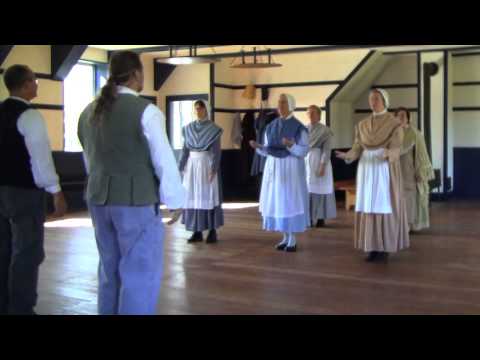
The two-and-a-half minute video, filmed in the actual 1793 Meetinghouse at Hancock Shaker Village, shows interpreters performing authentic songs and dances in the space built for them. Watch particularly for the quality of collective attention: how bodies moving together in a plain room generate a quality of presence that is immediately legible even on a screen.
❓ FAQ ABOUT THE SHAKER SOMATIC PROTOCOL
Question: Isn’t this just relaxation with fancy language? What makes it different from simply calming down?
Answer: Relaxation and nervous system discharge are related but distinct. Relaxation deep breathing, progressive muscle relaxation, meditation reduces arousal without necessarily completing incomplete stress response cycles. Discharge, as in TRE or the Shaker trembling model, activates a specific neurological sequence: the myotatic stretch reflex, proprioceptive stimulation, and a shift from sympathetic to parasympathetic dominance that signals to the amygdala that the threat is genuinely over rather than merely paused. The felt difference is specific: discharge typically produces a sense of lightness or warmth, while relaxation produces quiet. Both are useful. They are not the same thing.
Question: I am a religious person and the Shaker context feels theologically uncomfortable to me. Can I use this approach without adopting their theology?
Answer: Entirely. The five-stage Shaker protocol is a nervous system and movement-based technology. It worked for the Shakers within a Christian theological framework. It works equally within other theological frameworks as the Sufi sema and Pentecostal tongues traditions demonstrate and it works within a purely secular framework. The mechanism is somatic, not doctrinal. What you bring to the open state that the clearing and induction create is entirely up to you.
Question: What if I don’t feel anything when I try the exercises? Does that mean they aren’t working?
Answer: Reduced somatic awareness is itself information. It typically indicates one of three things: a chronically high threshold for noticing physical sensation (very common in people with a primarily auditory-digital or visual processing preference), a learned dissociation from body sensation as a protective strategy, or simply that the discharge process has not yet begun and you need more time. Start with five minutes of rhythmic whole-body movement before attempting the scan. For many people, movement is the door to sensation, rather than the other way around.
Question: How long does kinesthetic anchoring last?
Answer: Procedural memory, once established, is highly durable. Studies of motor learning suggest that kinesthetically acquired skills persist for decades with minimal reinforcement. The practical equivalent in belief change is similar: a belief installed through somatic protocol during a genuinely altered state, with clear emotional resonance and specific gestural anchoring, typically shows more durability than one arrived at through argument alone. Regular re-activation of the anchor repeating the gesture in relevant contexts reinforces the association. The Shakers understood this, which is why they met weekly rather than annually.
Question: Is this appropriate for people with trauma histories?
Answer: Somatic work, particularly discharge work, can surface material that has been held in the body for a long time. For most people with ordinary stress accumulation, this is manageable and ultimately beneficial. For people with significant trauma histories particularly those with PTSD, complex trauma, or active dissociative symptoms somatic work of this kind should be undertaken with a trained trauma-informed practitioner who can track dysregulation and work within the person’s window of tolerance. The trembling and discharge phase in particular can activate rather than discharge trauma if not appropriately held. This is not a reason to avoid somatic work. It is a reason to approach it with appropriate support.
Question: My clients are sceptical about body-based work. How do I introduce it without losing their confidence?
Answer: Begin with the existing evidence. Embodied cognition research, TRE clinical literature, and the neuroscience of movement-based trance induction all provide a scientific framework that analytically-oriented clients can engage with before they engage with the practice. Then start small: ask the client where they feel the presenting issue in their body before doing anything else. This question alone asked simply and with genuine curiosity often produces an immediate shift in attention toward somatic experience. You have not yet introduced a technique. You have simply widened the field of what counts as information in the room.
Question: Can this be done in a group setting?
Answer: Not only can it the entrainment effects described in Principle 6 suggest that group movement protocols produce additional benefits beyond what individual practice generates. The communal resonance that Shaker meetings created is one of the most documented and most powerful aspects of their system. Group somatic belief work requires more careful facilitation than individual work (attention to the room, the pace of different participants, the quality of safety being maintained collectively), but the returns in terms of depth of state and durability of change are proportionally greater.
Question: How do I know when the encoding is complete?
Answer: Return to the original somatic address the location in the body where you felt the old belief at the start. If the quality of sensation has changed (lighter, warmer, more open, or simply absent), the encoding has taken hold at least initially. Test it also by bringing to mind a future scenario in which the old belief would previously have activated. Notice the body’s response. Does it move toward or away? Open or close? Breathe or hold? The body tells you the truth about this with a reliability that verbal reporting does not always match.
😆 JOKES ABOUT MOVEMENT AND BELIEF CHANGE
-
“I’ve been doing somatic belief change for three years. I’ve released more trauma through my shoulders than my therapist managed to locate through my entire childhood.” - Anonymous
-
“The Shakers were celibate and shook together in public. Modern NLP practitioners ask clients to stand up and wave their arms. I’m not saying there’s a pattern, but there’s a pattern.” - Anonymous
-
“My life coach said ’let the movement lead you.’ I ended up walking to the kitchen. Turns out my unconscious mind was hungry, not enlightened.” - Anonymous
-
“I tried the Shaker trembling exercise alone in my living room. My dog is now more spiritually evolved than I am. He’s been trembling his whole life and seems fine about it.” - Anonymous
-
“Nothing prepares you for the moment you’re doing somatic anchoring in a corporate workshop and a senior executive realises that the gesture encoding his leadership belief is basically jazz hands.” - Anonymous
-
“Asked a client to find the posture of their desired belief. She spread her arms wide and said it felt like a large aircraft. We installed the belief. Her quarterly review was excellent. Aviation works.” - Anonymous
🦋 METAPHORS FOR SOMATIC BELIEF ENCODING
-
The wrung cloth: Imagine a cloth that has been soaking in cold water for years heavy, saturated, cold to the touch. The discharge phase of somatic belief work is the wringing: the water that has been held so long it has become invisible is expressed out, and the cloth, lighter and ready, becomes available again. You cannot dye a cloth that is already full. The wringing is not the work it is the preparation for the work.
-
The footpath through the field: A belief, held long enough, wears a path through the grass that becomes visible from above. Thoughts and sensations flow automatically along it without decision. The somatic encoding of a new belief does not erase the old path that takes time but it begins to wear a new one alongside it. Eventually the new path, used more frequently, becomes the one that is obvious. The old one grasses over. You still know it is there, but you no longer default to it.
-
Tuning forks in a room: Strike a tuning fork at a specific frequency, hold it near other forks of the same frequency, and they begin to vibrate without being touched. This is what communal rhythmic movement does to individual nervous systems: it entrains them toward a shared oscillation. Each person in the room resonates the same frequency, and what would take thirty minutes of individual work to access is available in five because the room itself is already there. The Shaker meetinghouse was a room full of tuning forks, meeting weekly.
-
The locked room key: Certain kinds of knowing are locked in state-specific rooms. You cannot enter the room of calm resourcefulness through the door of anxious analysis. You can only enter through a door that is the same frequency as the room a body that is already calm and resourceful. Somatic induction through rhythmic movement is a key-making process. The movement creates the matching frequency. The room opens from the inside.
-
Calligraphy in water versus stone: A belief held cognitively in arguments, in remembered reasons is written in water. Agitate the surface, create enough counter-argument or emotional distress, and the writing disperses. A belief installed through movement and kinesthetic anchoring is written in stone: not permanently unchangeable, but not dispersed by a ripple on the surface. This is why the Shakers did not bother arguing their theology. They moved their theology into stone and left the water alone.
-
The tree and the wind: A tree that has never moved in wind develops a dense, rigid heartwood that is brittle under load. A tree that has been regularly moved that has been allowed to sway and respond and tremble develops a flexible, resilient structure that can bear tremendous force without breaking. Somatic discharge followed by somatic installation creates psychological flexibility in exactly this way: the system learns to move and recover, and the new belief is installed in a flexible rather than a rigid structure.
🦲 AXEL MAGNUS’S EXPERIENCE WITH MOVEMENT AND BELIEF
I want to tell you about a Tuesday morning in November when I ended up shaking on my kitchen floor and understood something that seven years of reading had not given me.
I had been working on a belief about deserving good things. Classic material, the kind every practitioner eventually finds on their own shelf, usually while cleaning a client’s identical shelf and thinking “interesting, I seem to have this too.” I had done the submodality work. I had done the parts work. I had done the timeline. I had had the intellectual insight multiple times, from multiple angles that the belief was a construction from an early time and was no longer accurate. I knew this. I knew it very well. I could draw diagrams about it.
The belief remained.
A colleague, during a training that autumn, had demonstrated a spontaneous discharge sequence adapted from the TRE model. I watched it with interested scepticism the kind where you nod thoughtfully while actually thinking “this seems like a lot of floor-based writhing for what could be achieved with a reframe.”
Three weeks later, for reasons I cannot entirely reconstruct, I got up at six in the morning, stood in my kitchen in bare feet, and allowed my body to do whatever it wanted to do.
What it wanted to do was shake.
Not violently. Not dramatically. A fine, sustained trembling that began in my thighs and moved through my hips and into my lower back and then, after several minutes, arrived in my chest in a way that felt like something being unzipped. I did not direct it. I did not understand it. I stayed with it, somewhat baffled, for what turned out to be twenty-two minutes based on the kitchen clock.
At the end, I was sitting on the floor without having decided to sit. My hands were open in my lap. There was something in my chest that I can only describe as room the specific sensation of air where there had been a long-standing compression.
The thought arrived without preamble: I have been working on this belief intellectually because working on it in my body would have confirmed that it was in my body, and I did not want to know that.
The knowing was not comfortable. It was not therapeutic in the soft sense. It was more like being told clearly, by a very quiet authority, that you had been looking in the wrong place for a long time and here is the place and here is the key.
I did not cry. I just sat on the kitchen floor in the early morning light and felt the shift settling. The way a building settles after a tremor not damaged, but recalibrated.
The belief did not vanish that morning. It began to loosen, which is different and more honest. Over the following weeks, in moments where it would previously have activated automatically good things arriving, praise offered, opportunities presented I noticed a new quality of space around the response. Room where there had been the folded hinge. A pause instead of an automatic withdrawal.
What I understood, and what has informed my practice since, is this: the beliefs that have the deepest roots in the body are often the ones most resistant to cognitive intervention not because they are the strongest but because we have, without knowing it, arranged our intellectual work to avoid landing on them directly. The body circumvents this arrangement. It goes directly to where the thing lives. It does not require our cooperation, our readiness, or our understanding.
It just needs permission to move.
The Shakers knew this in 1780. I learned it on a Tuesday in November. I recommend you skip the seven years of diagrams.
🕳️ THE LIMITATIONS OR UNCERTAINTIES IN SOMATIC BELIEF ENCODING
It is not a universal solution. Somatic belief work addresses beliefs that have significant kinesthetic encoding beliefs held in the body. Not all beliefs are primarily kinesthetic. A belief that “the world is fundamentally dangerous” may be encoded partly in visual memories, partly in auditory internal dialogue, and partly in body sensation. The somatic component can be addressed through movement-based protocols, but the other representational systems may need separate attention.
Trauma requires specialised holding. As noted in the FAQ, somatic discharge work can activate trauma material. The line between productive discharge and destabilising flooding is real and not always predictable. Practitioners working with this approach need sufficient somatic training to track dysregulation and sufficient clinical skill to work within a client’s window of tolerance. Enthusiasm for the method is not a substitute for this competence.
The altered state has to be genuine. Kinesthetic anchoring works when the body is in a genuinely altered state when the default mode network is genuinely suppressed and the kinaesthetic channel is genuinely primary. If the rhythmic induction phase is rushed or performed rather than genuinely entered, the “encoding” that follows will attach to ordinary waking state rather than to the altered state, and its durability will be correspondingly limited. There is no shortcut through the induction.
Cultural resonance varies. The Shaker model grew within a specific Christian evangelical context. The tongue-speaking tradition, the experience of the Spirit moving through the body, the framework of being a vessel these are not universal reference points. Practitioners working across diverse cultural backgrounds need to either find the culturally resonant movement tradition within their client’s own framework (Sufi turning for some clients, drumming traditions for others, African movement vocabularies for others) or present the approach in its secular neuroscientific framing without the religious metaphor.
Individual differences in body awareness are significant. People vary enormously in their baseline capacity to notice and report somatic experience. For someone with high interoceptive awareness, the somatic mapping is rich, precise, and immediately useful. For someone with low baseline body awareness which is extremely common in populations that have spent decades working primarily with ideas the process of building enough somatic awareness to do effective kinesthetic anchoring may take considerable time before the belief change protocol itself becomes accessible.
What we do not yet know. The neuroscience of kinesthetic anchoring is empirically supported in principle (through the research on procedural memory, state-dependent learning, and movement-based trance induction), but the specific mechanisms by which Shaker-derived protocols produce belief change in contemporary NLP contexts are not yet the subject of controlled clinical research. The field draws on convergent evidence from multiple disciplines rather than direct experimental validation. Practitioners should hold their claims about outcomes proportionally to this reality.
Group work requires careful facilitation. The entrainment effects of communal movement are powerful and not always predictable. Groups can amplify both productive states and unproductive ones. A facilitator working with group somatic protocols needs significant experience with group dynamics, the ability to track multiple individuals simultaneously, and the skill to interrupt contagion patterns when they arise without losing the quality of collective resonance the group has generated.
✏️ CONCLUSION
The Shakers shook, marched, turned, and danced their doctrine into their bodies. Not once, ceremonially, but week after week, community after community, for more than two hundred years. What they built was not a theology. It was a technology one that circumvented the fragility of intellectual belief and installed its content in a place that doubt, counter-argument, and ordinary human inconsistency could not easily reach.
The five-stage protocol they developed clearing through discharge, induction through rhythm, encoding through gesture, generation through altered state, maintenance through communal entrainment maps precisely onto what embodied cognition research, nervous system science, and NLP kinesthetic anchoring models now confirm as the most efficient sequence for lasting somatic belief change. They arrived at it experientially, through generations of practice, without any of the vocabulary we now have for explaining why it works.
What this means for you, as a practitioner or as someone navigating your own beliefs, is both simple and demanding. It means that beliefs held in the body are changed in the body. It means that discharge must precede installation. It means that rhythm is not decoration it is the key that opens the door. And it means that the wisdom your clients need is, in almost every case, already present in them. The practitioner’s task is not to introduce new content. It is to create the conditions under which the body can speak clearly enough to be heard.
The Shakers’ name was an insult. They kept it. They shook for good reason. So can you.
📚 REFERENCES
- George Lakoff & Mark Johnson, 1980; Metaphors We Live By
- Steve & Connirae Andreas, 1987; Change Your Mind and Keep the Change: Advanced NLP Submodalities Interventions
- Julian Jaynes, 1976; The Origin of Consciousness in the Breakdown of the Bicameral Mind
- Andreas, S. (2002). Transforming Yourself: Becoming Who You Want to Be. Real People Press.
- Connirae Andreas & Steve Andreas, 1989; Heart of the Mind: Engaging Your Inner Power to Change with Neuro-Linguistic Programming
- Connirae Andreas & Tamara Andreas, 1994; Core Transformation: Reaching the Wellspring Within
- Video DVD: Transforming Yourself Complete 3-Day Training with Steve Andreas
- The Wholeness Work
- Core Transformation
- Daniel W. Patterson, 1979; The Shaker Spiritual (Dover Publications) the definitive scholarly study of Shaker song traditions
- Stephen J. Stein, 1992; The Shaker Experience in America (Yale University Press)
- Peter A. Levine, 1997; Waking the Tiger: Healing Trauma (North Atlantic Books)
- David Berceli, 2005; Trauma Releasing Exercises foundational TRE research
- Bradford Keeney, 2007; The Bushman Way of Tracking God comparative study of embodied religious traditions
- Stephen Porges, 2011; The Polyvagal Theory: Neurophysiological Foundations of Emotions, Attachment, Communication, and Self-Regulation
- Hancock Shaker Village: hancockshakervillage.org
- Shaker Heritage Society “Let Us Labor: The Evolution of Shaker Dance”: home.shakerheritage.org
- NLP Comprehensive Belief Change: nlpco.com/belief-changes
Image credit - Perplexity SHAKERS: HOW MOVEMENT INSCRIBES BELIEF INTO THE BODY
🎬 MOVIES ABOUT THE SHAKERS AND SOMATIC BELIEF
- The Testament of Ann Lee (2025) Director Mona Fastvold’s film musical starring Amanda Seyfried as Ann Lee, Shakerism’s founder. Filmed partly at Hancock Shaker Village, the film portrays the chaotic ecstasy of early Shaker worship and Lee’s founding of the American Shaker communities. One of the most visually vivid depictions of somatic religious practice in recent cinema.
📺 TV SHOWS ABOUT SHAKERS AND EMBODIED RELIGION
- Cosmos: A Spacetime Odyssey (2014, Season 1, Episode 11: “The Immortals”) while not specifically about the Shakers, this episode examines how communities transmit knowledge and belief across generations, providing useful comparative context.
- American Experience (PBS) various episodes explore American utopian communities, including Shaker communities, in historical documentary format.
🎭 DOCUMENTARIES ABOUT THE SHAKERS
- The Shakers: Hands to Work, Hearts to God (1984/1985, Ken Burns) the essential documentary portrait of Shaker life, narrated by David McCullough. Features interviews with surviving Shaker sisters and recreations of authentic Shaker music. Available on the PBS website.
- The Shakers (1974, Tom Davenport) filmed partly at Sabbathday Lake Shaker Village when multiple Shaker sisters were still alive, this earlier documentary is notable for including what may be the only filmed record of Shaker worship song performed by an actual Shaker. Available via Folkstreams (folkstreams.net).
- The Shaker Legacy (2021, Fordham University Center on Religion and Culture) a shorter documentary (nine minutes) examining the connection between Shaker belief and Shaker design, with commentary from scholars at Fordham and Columbia. A useful entry point for those encountering the Shakers for the first time.
📚 NOVELS ABOUT THE SHAKERS AND SOMATIC BELIEF
- The Visionist (2014, Rachel Urquhart) set in an 1840s New England Shaker community during the Era of Manifestations, this novel follows a teenage girl who arrives as a refuge and discovers her capacity for visionary experience. Urquhart researched the period extensively and captures both the discipline and the ecstasy of the movement system with unusual accuracy.
- The Outsider (2008, Ann H. Gabhart) the first novel in Gabhart’s Shaker series, set in a Kentucky Shaker village in 1807. The series explores the interior life of the community from the perspective of its members rather than outside observers, giving a more sympathetic account of the somatic and spiritual practices involved.
- The Believers (1989, Janice Holt Giles) a novel set among the early Kentucky Shaker communities, following a woman who accompanies her husband into the community and must navigate the gap between her emotional life and the doctrine she has agreed to live. One of the more nuanced fictional portrayals of what it costs to live inside a somatic theology.
- Dance unto the Lord (George Dell) set in 1848 to 1852 in the Union Village Shaker community in Ohio, this novel offers a detailed portrait of Shaker worship practice during a period of active communal life, including the dance traditions of the era.