USING KINESTHETIC SUBMODALITY ELICITATION TO DECODE THE PHYSICAL LOCATION OF LIMITING BELIEFS
🗺️ WHERE DO YOU FEEL THAT STORY? MAPPING THE BODY'S NARRATIVE ARCHITECTURE

Tools - is part of Series

Your body knows things your mind has forgotten. That belief about not being good enough? It lives as a tightness in your solar plexus, accompanied by a voice somewhere behind your left shoulder telling you to stay small. The conviction that you cannot trust others? It manifests as a cool, heavy sensation in your chest, with sounds that seem to press inward from all directions. These are not metaphors they are the literal, mappable architecture of how your nervous system encodes and stores the narratives that shape your life.
Recent neuroscience research confirms what practitioners of embodied change have known for decades: emotions and beliefs are not abstract mental constructs but concrete patterns of bodily sensation. Finnish researchers mapping where people feel different emotions discovered consistent, cross-cultural body signatures for experiences ranging from happiness to shame. This somatic specificity means your limiting beliefs have physical addresses, and once you can locate them precisely including not just where they live in your body but whose voice speaks them and from what direction—you can systematically transform them.
This article guides you through the process of kinesthetic submodality elicitation: the practice of discovering the fine-grained sensory details of how your beliefs manifest physically. You will learn to map not only where sensations occur in your body but also the auditory dimensions that accompany them whose voice narrates your limiting story, where that voice originates in space, which direction it moves, and how the sound itself feels in your tissues. By making these usually unconscious details conscious and then applying proven NLP belief change techniques, you can rewrite the body-based stories that have been limiting your possibilities.
🎯 THE BENEFITS OF KINESTHETIC SUBMODALITY MAPPING
“I finally discovered where my anxiety lives. Turns out it’s been subletting space in my throat this whole time without paying rent.” - Anonymous
Understanding where and how your beliefs physically manifest in your body offers transformative advantages that extend far beyond intellectual insight. When you can locate the precise kinesthetic and auditory signatures of limiting narratives, you gain unprecedented access to the neurological coding that maintains these patterns.
The most immediate benefit is enhanced somatic awareness. Most people experience beliefs as vague, amorphous feelings a general sense of unease, a diffuse heaviness, an undefined constriction. Through systematic kinesthetic mapping, you develop the capacity to discern that your self-doubt manifests as a cold, dense sphere approximately three inches in diameter, located two inches below your navel, rotating counterclockwise, while simultaneously hearing a stern voice from your upper right saying words at a rapid clip. This level of precision fundamentally changes your relationship with the experience. Instead of being overwhelmed by an unnamed feeling, you become a skilled observer of specific, modifiable sensations.
Research on embodied cognition demonstrates that our understanding of abstract concepts depends heavily on sensory and motor systems. When you identify the physical location of a belief, you are accessing the fundamental way your brain encodes meaning. Studies using body sensation mapping show consistent patterns across cultures for different emotional states, suggesting these somatic signatures are not arbitrary but reflect deep neurological structures. By working directly with these bodily patterns rather than trying to think your way through them, you engage the actual mechanisms by which beliefs are maintained.
Physical symptoms often decrease dramatically when you map limiting beliefs somatically. Chronic tension in your shoulders might be literally holding the weight of a belief about having to be responsible for everything. Digestive issues could relate to difficulty processing a narrative about unworthiness. Headaches might correspond to the pressure of contradictory beliefs competing for attention. When you locate these patterns precisely and work with them using submodality interventions, the physical manifestations frequently resolve without direct medical intervention. Your body relaxes when it no longer needs to maintain the somatic signature of an outdated story.
Emotional regulation becomes significantly easier. When panic arises, instead of being hijacked by the feeling, you can notice the specific kinesthetic qualities perhaps a rapid vibration in your chest combined with a high-pitched voice coming from above and behind you saying words too quickly to understand. This noticing creates what neuroscientists call metacognitive awareness: you are experiencing your experience rather than being your experience. This shift alone reduces emotional intensity and creates space for choice.
The ability to map auditory submodalities adds another dimension of precision. Many people discover that limiting beliefs are accompanied by specific voices a critical parent, a mocking peer, an internalized authority figure. By identifying whose voice narrates the limiting belief, where that voice is located in space, at what volume and tempo it speaks, and which direction it seems to move or press, you gain access to powerful leverage points for change. A belief loses much of its power when you recognize it as your father’s voice from over your left shoulder rather than as universal truth.
Relationship dynamics improve as you become aware of somatic patterns in interaction. You might notice that when your partner raises a particular topic, you feel a contraction in your belly and hear an urgent voice from your right side saying something about danger. This awareness allows you to differentiate between present moment reality and historical patterns your body is remembering. You can then choose to respond to what is actually happening rather than to the ghost stories your nervous system is replaying.
Creative blocks often dissolve when you locate their physical signatures. Writer’s block might manifest as a heavy pressure across your forehead combined with a droning voice from behind saying monotonous phrases about inadequacy. Performance anxiety could be a trembling in your hands plus a sharp voice from your left cutting through with criticism. Once mapped, these patterns can be modified systematically rather than struggled against ineffectively.
The long-term benefit is developing what researchers call an updated body schema an accurate internal map of yourself that reflects your actual current reality rather than outdated narratives. Children who experience trauma or difficult developmental periods often create body maps that reflect those circumstances. These maps can persist for decades, making you feel small when you are actually full-grown, vulnerable when you are actually capable, or isolated when you are actually connected. Systematic kinesthetic mapping helps update these schemas to reflect who you actually are now.
Scientific evidence supports these experiential claims. Research on mirror neurons and embodied simulation shows that understanding and changing beliefs requires engaging the sensory-motor systems where they are encoded. Studies on somatic therapies demonstrate significant improvements in trauma symptoms, anxiety, and depression when interventions work directly with bodily sensations. The Andreas belief change pattern you will learn later in this article has been applied successfully with thousands of clients precisely because it addresses the submodality structure the sensory coding—by which beliefs are maintained neurologically.
Perhaps most significantly, kinesthetic submodality mapping cultivates a fundamentally different relationship with yourself. Instead of judging your anxiety or fighting your depression or trying to think away your limiting beliefs, you become curious about the precise ways your nervous system encodes experience. This curiosity itself is therapeutic. It shifts you from being at war with aspects of yourself to being a compassionate investigator of your own inner architecture.
🏛️ ORIGINS OF BODY-BASED BELIEF WORK ACROSS CULTURES AND HISTORY
The recognition that beliefs and emotions live in the body is not new. Long before neuroscience could image the brain or measure galvanic skin response, human cultures developed sophisticated practices for working with the somatic dimensions of experience.
Eastern contemplative traditions have emphasized body awareness for millennia. Buddhist Vipassana meditation, dating back over two thousand years, trains practitioners to systematically scan the body and observe sensations with equanimous attention. The practice rests on the understanding that mental formations including beliefs manifest as physical sensations that can be directly perceived and worked with. Advanced practitioners develop extraordinary sensitivity to subtle bodily sensations, noticing the arising and passing of experiences that most people never consciously register.
Traditional Chinese medicine conceptualized emotions as residing in specific organs. Anger was associated with the liver, fear with the kidneys, worry with the spleen, grief with the lungs, and joy with the heart. While the exact correspondences differ from contemporary body mapping research, the fundamental insight remains valid: emotional states and the beliefs that underlie them have physical locations and qualities that can be identified and addressed.
Indigenous healing practices across cultures have long worked with the principle that trauma and limiting narratives are stored somatically. Hawaiian Ho’oponopono healing ceremonies address transgenerational patterns that manifest as bodily symptoms. African traditional healing incorporates dance and rhythmic movement to release patterns held in the body. Native American healing traditions use somatic rituals to restore balance when beliefs have become disconnected from embodied wisdom.
Western philosophy also recognized body-based aspects of cognition, though this understanding was later suppressed by Cartesian mind-body dualism. Aristotle wrote extensively about the role of sensory experience in forming concepts. Medieval mystics like Hildegard of Bingen described detailed bodily experiences accompanying spiritual states. It was only with the rise of rationalism in the seventeenth century that Western thought increasingly located cognition exclusively in the mind and dismissed bodily experience as unreliable or irrelevant.
The twentieth century saw a gradual reintegration of somatic awareness into Western psychology and neuroscience. Wilhelm Reich, working in the early nineteen hundreds, developed the concept of character armor the idea that psychological defenses manifest as chronic muscular tensions that can be observed and worked with directly. His student Alexander Lowen founded bioenergetics, which systematically addresses how beliefs and emotions are held in body structure and movement patterns.
Moshe Feldenkrais, a physicist turned somatic educator, developed a method for increasing awareness of how habitual movement patterns reflect and reinforce limiting beliefs about capability and self-concept. His work demonstrated that changing physical organization can fundamentally alter psychological experience and self-understanding.
The field of Gestalt therapy, developed by Fritz Perls in the mid-twentieth century, emphasized present-moment awareness of bodily sensations as a route to psychological integration. Perls trained clients to notice where they felt emotional experiences in their bodies and to stay with these sensations rather than immediately moving into conceptual analysis.
Eugene Gendlin’s Focusing technique, developed in the nineteen sixties from research on what made psychotherapy effective, taught clients to identify and work with the “felt sense”—a bodily awareness of situations that contains more information than can be immediately articulated. This work demonstrated that productive therapeutic change required engaging bodily-felt experience, not just cognitive reframing.
Peter Levine’s Somatic Experiencing, developed from studying how animals release trauma, works directly with the autonomic nervous system responses stored in the body. Levine demonstrated that traumatic beliefs and their accompanying physiological activation patterns could be resolved by carefully working with bodily sensations, often without needing to verbally process the traumatic narrative.
Bessel van der Kolk’s groundbreaking research on trauma, synthesized in his book The Body Keeps the Score, provided neuroscientific validation for what body-based therapies had long claimed: traumatic experiences and the beliefs formed during them are encoded primarily in subcortical brain regions and throughout the body, not in the verbal, narrative-processing areas of the cortex. This explains why talking about trauma often provides limited relief while body-based interventions can produce dramatic shifts.
The specific practice of submodality work emerged from the field of Neuro-Linguistic Programming in the late nineteen seventies. Richard Bandler and John Grinder, studying the methods of exceptionally effective therapists including Milton Erickson, Fritz Perls, and Virginia Satir, noticed that people encoded internal experiences using specific sensory qualities. They discovered that systematically eliciting and modifying these submodalities the fine-grained distinctions within sensory systems could produce rapid, lasting changes in beliefs and emotional responses.
Steve and Connirae Andreas expanded this work significantly in the nineteen eighties, developing detailed protocols for mapping and changing the submodality structures of beliefs, values, decisions, and identity. Their book Change Your Mind and Keep the Change provided the first systematic presentation of submodality-based interventions, including the belief change pattern that forms the foundation of the technique you will learn in this article.
The Andreas’s work on kinesthetic submodalities was particularly innovative. While early NLP emphasized visual submodalities like brightness and distance, the Andreas’s recognized that for many people, kinesthetic qualities location, pressure, temperature, movement, texture were the primary access points for belief change. They also identified the importance of auditory submodalities, particularly whose voice narrated internal experiences and from what spatial location.
Contemporary neuroscience has provided remarkable validation for these phenomenological discoveries. The Finnish body mapping research led by Lauri Nummenmaa demonstrated that specific emotions produce consistent bodily sensation patterns across cultures. Antonio Damasio’s somatic marker hypothesis showed that decision-making depends on bodily signals that tag experiences with emotional valence. Research on mirror neurons revealed that understanding concepts involves simulating their sensory-motor components.
The emerging field of embodied cognition has fundamentally challenged the notion that thinking happens exclusively in the brain. George Lakoff and Mark Johnson’s work on conceptual metaphor demonstrated that abstract reasoning depends on metaphors grounded in bodily experience we understand time as space, we comprehend emotional intimacy as physical closeness, we conceive of importance as weight. These are not decorative figures of speech but reveal how cognition is fundamentally structured by our embodied existence.
Current research on interoception the perception of internal bodily states shows that people differ significantly in their ability to accurately sense what is happening in their bodies, and that these differences correlate with mental health outcomes. Those with greater interoceptive awareness tend to have better emotional regulation, lower anxiety, and more accurate self-knowledge. This suggests that training people to map their bodily sensations, including the specific locations and qualities of beliefs, may be a fundamental mental health intervention.
The convergence of ancient wisdom traditions, Western somatic therapies, NLP innovations, and contemporary neuroscience creates a compelling case for the power and importance of kinesthetic submodality work. You are not learning an isolated technique but participating in a rich lineage of inquiry into how human experience is fundamentally embodied and how working skillfully with this embodiment enables profound transformation.
📜 PRINCIPLES OF KINESTHETIC SUBMODALITY MAPPING
Principle 1: Beliefs have physical addresses
Every belief you hold exists not as an abstract proposition but as a specific pattern of bodily sensation. The belief that you are capable manifests differently than the belief that you are inadequate, and these differences are not random. Your nervous system encodes meaning through the precise qualities of kinesthetic experience where sensations occur, their temperature, their texture, their movement, their density.
When you state a belief and then direct attention inward, you can locate exactly where that belief lives in your body. It might be a warm expansion in your chest, a tight knot in your stomach, a heaviness across your shoulders, or a lightness in your head. These locations are not metaphorical. They represent actual patterns of neural activation, muscle tension, and interoceptive feedback that your brain uses to recognize and maintain that particular belief.
This principle means that vague statements like “I feel bad about myself” can be refined into precise observations like “I feel a cold, dense, rough-textured sphere about the size of a grapefruit located in my upper abdomen, slightly left of center, rotating slowly clockwise, while hearing a monotone voice from behind my left shoulder saying I should have done better.” This level of precision transforms your relationship with the experience. Instead of being overwhelmed by a monolithic feeling, you are observing specific, changeable qualities.
Principle 2: Submodalities encode meaning
The specific qualities of bodily sensations what NLP calls kinesthetic submodalities are not neutral carriers of information. They are the very means by which your brain distinguishes between different types of experiences. A belief you doubt feels different than a belief you hold with certainty. An empowering narrative has different kinesthetic qualities than a limiting one.
Common kinesthetic submodalities include location in or on the body, size or extent of the sensation, shape or boundaries, temperature ranging from icy to burning, texture from smooth to rough, density from light to heavy, pressure from gentle to crushing, movement including speed and direction, rhythm or pulsation, and vibration or stillness. Each of these qualities contributes to the overall meaning your nervous system assigns to an experience.
For example, limiting beliefs often manifest as sensations that are heavy, dense, dark, cold, pressing inward, moving slowly or not at all, and located in the lower torso or pressing down on the shoulders. Empowering beliefs more commonly feel light, warm, bright, expansive, moving freely, energetic, and located in the upper chest or distributed throughout the body. These patterns are not universal but represent common findings. Your personal coding may differ, which is why eliciting your specific submodalities is essential.
Principle 3: Auditory submodalities provide narrative structure
Beliefs do not exist as pure sensation. They are embedded in stories, and stories require language. Most limiting beliefs are accompanied by an internal voice narrating the belief, often in second or third person. This voice has specific qualities that can be systematically identified and modified.
Key auditory submodalities include whose voice is speaking your own voice, a parent’s voice, a teacher’s voice, a composite voice, or an unidentified voice. The location of the voice in space matters significantly: voices from above often feel authoritative, voices from behind can feel like accusations, voices from inside the head feel more like personal thoughts, while voices from outside the body can feel more like external judgment.
Other important auditory qualities include volume from whisper to shout, tempo from drawling to rapid, pitch from deep to high, tonality from warm to harsh, direction of sound whether it presses in, pulls away, or circles around, and whether the voice is static or moves through space. These auditory elements combine with kinesthetic sensations to create the complete somatic-narrative structure of a belief.
Principle 4: The map is not the territory, but the map is what we navigate
This principle, articulated by Alfred Korzybski and central to NLP, recognizes that your internal representation of reality is not reality itself. However, you navigate life based on your maps, not based on some objective territory you cannot directly access. Your beliefs about yourself and the world are maps, and these maps determine what you perceive as possible, what you attempt, and how you interpret your experiences.
Kinesthetic and auditory submodalities are the detailed topography of these maps. By making these usually unconscious details conscious, you gain the ability to revise your maps. This is not about denying reality or engaging in positive thinking that ignores genuine limitations. It is about recognizing that the felt sense of “I am not good enough,” complete with its specific bodily location, temperature, and accompanying critical voice, is a construction a map that can be examined, questioned, and potentially redrawn.
The somatic specificity of beliefs means they can be mapped with geographic precision. Just as you can mark locations on a physical map, you can identify the coordinates of beliefs within the landscape of your body. This concrete, specific approach is far more effective than abstract affirmations or general positive thinking.
Principle 5: Structure determines function
How an experience is structured sensorily determines how it functions psychologically. Change the structure, and you change the function. This is the core insight that makes submodality interventions so powerful. You do not need to change the content of a belief directly. Instead, you change the submodality structure the sensory coding and the belief’s hold on you naturally shifts.
If a limiting belief exists as a heavy, cold, dense sensation in your lower abdomen accompanied by a loud, harsh voice from above, and you systematically shift those qualities to match how you encode beliefs you doubt or have released, the limiting belief loses its grip. This is not willpower or forced positive thinking. It is a precise intervention based on how your neurology actually operates.
This principle explains why some interventions work rapidly while others take years with limited results. Interventions that address submodality structure engage the actual mechanisms by which beliefs are maintained. Approaches that work primarily with content—talking about beliefs, analyzing their origins, rationally debating their validity—often leave the submodality structure intact, which is why the belief persists despite intellectual understanding that it is irrational.
Principle 6: Congruence creates power
When the kinesthetic sensations, auditory components, and cognitive content of a belief all align, the belief feels unquestionably true and exerts maximum influence on behavior. Conversely, when these elements are incongruent, the belief feels doubtful or uncertain. This principle provides leverage for change.
Most people have experienced trying to adopt a new empowering belief through affirmations, only to find it feels hollow or fake. This occurs because the cognitive content the words being affirmed does not match the submodality structure. You might say “I am confident” while feeling a small, cold, trembling sensation in your chest and hearing a uncertain, quiet voice from below. The submodalities broadcast doubt while the words claim confidence, creating incongruence that your nervous system rejects.
Effective belief change requires creating congruence at the submodality level. This means identifying the kinesthetic and auditory coding that represents true, empowering beliefs for you personally, and then installing desired new beliefs with that same submodality structure. When the felt sense, the internal voice, and the content all align, the new belief integrates naturally and powerfully.
Principle 7: Transformation is ecological
Your current beliefs, even limiting ones, exist for reasons. They served a purpose at some point, provided protection, helped you navigate a difficult situation, or represented the best understanding available to you at the time. Belief change work must respect this ecology the interconnected system of beliefs, values, behaviors, and relationships that constitute your life.
Effective kinesthetic mapping includes exploring what positive intentions or protective functions might be served by limiting beliefs. The belief “I cannot trust anyone” might be protecting you from repeating past betrayals. The conviction “I am not smart enough” might be shielding you from the anxiety of high expectations. Understanding these functions allows you to find alternative ways to meet those needs while releasing beliefs that no longer serve you.
Additionally, rapidly changing a belief without considering its role in your broader life system can create unforeseen problems. If you release the belief that you must work constantly and suddenly feel free to rest, but your family dynamics depend on you being the reliable worker, conflict may arise. Ecological change considers these systemic implications and ensures transformations support your overall wellbeing and relationships.
🗨️ GUIDING CLIENTS IN KINESTHETIC SUBMODALITY MAPPING
When working with clients on kinesthetic and auditory submodality elicitation, your role is to create conditions in which they can perceive and describe their internal experience with increasing precision. This requires patience, calibration, and a particular quality of presence that supports exploration without imposing interpretations.
Observation and Presence
Position yourself at the client’s side to unobtrusively observe subtle shifts in facial expressions, gestures, and skin tone while ensuring you do not interfere with their imaginative process or metaphor creation.
Vocal Modulation
Use a gentle, melodic, and unhurried tone when speaking, allowing your voice to foster calm and receptivity.
Genuine Engagement
Demonstrate active interest in the client’s process by listening attentively and supporting their exploratory journey.
Reflective Communication
Echo the client’s words and delivery style. For example, if the client describes an exciting moment with a bright expression, quicker speech, and a higher tone, mirror these qualities in your response. As a practitioner, strive to match their affective cues, or consider formal training in expressive techniques to enhance these skills.
Connecting Experience and Inquiry
Seamlessly link questions and reflections to the client’s experiences using coordination such as and, as, when, ensuring a smooth and empathetic flow throughout the interaction.
Beginning the exploration
Start by inviting the client to identify a specific limiting belief they would like to explore. Encourage them to state it clearly, using their own words. Notice their physiology as they express the belief where their attention goes, changes in breathing, micro-expressions, shifts in muscle tone. These external signs provide clues about the internal experience you will help them map.
Ask the client to say the belief again, this time while directing their attention inward to notice what happens in their body. Use language like “As you say that and really let yourself feel it, where do you notice sensations in your body?” Pause and allow time for them to search internally. Many people are not accustomed to this kind of attention and may need encouragement to slow down and sense rather than think.
Eliciting kinesthetic location
Once the client identifies a general area, help them refine the location with increasing specificity. “Where exactly in your chest? Upper or lower? More toward the center or to one side? How far in does it seem to be, or is it more on the surface?” Guide them toward precision without imposing your interpretations. You are helping them develop a more detailed internal map, not telling them what they should feel.
Use their own words and metaphors whenever possible. If they say it feels “heavy,” ask about the heaviness rather than introducing your own descriptors. You might ask “That heaviness how heavy? Like a blanket, like a boulder, somewhere in between? Does the heaviness have a definite boundary or does it fade at the edges?”
Mapping kinesthetic qualities
Systematically guide the client through relevant kinesthetic submodalities. “What’s the temperature of that sensation? Does it have a texture rough, smooth, something else? Does it seem dense or more diffuse? Is there any movement to it, or is it still? If it’s moving, which direction and at what pace? Is there pressure pushing in, pulling out, or something different? Does it have a shape or size?”
Notice the client’s responses carefully. Some submodalities will shift their state more than others these are critical submodalities for this person. For example, when asked about temperature, the client might suddenly look relieved or distressed, indicating temperature is a powerful variable in their coding. Make mental note of these responses as they will guide the later intervention.
Identifying auditory components
Transition to auditory dimensions by asking “As you notice these sensations, is there any voice or sound that goes with them? Internal commentary or words?” Many people will immediately identify a voice. If they say no, you can gently inquire whether there might be unspoken words or attitudes present, but respect if they genuinely experience no auditory component.
When a voice is present, elicit its qualities with the same systematic precision. “Whose voice is that? Does it sound like you, like someone specific from your life, or like an amalgam? Where is the voice located above you, behind you, to one side, inside your head? How loud is it? What’s the tempo—fast, slow, measured? What’s the emotional tone harsh, neutral, concerned? Does the sound seem to move or is it stationary? Does it press in on you, pull away, or do something else?”
Pay attention to which auditory variables produce the strongest responses. For some clients, identifying whose voice speaks the limiting belief creates an immediate shift in perspective. For others, the location of the voice in space proves most significant.
Supporting the client through discomfort
Mapping limiting beliefs can evoke uncomfortable feelings. Some clients will want to move away from the sensations quickly. Your role is to support them in staying present with their experience long enough to complete the mapping, while respecting genuine overwhelm that requires pausing or backing off.
You might say “I know this isn’t pleasant, and we’re not trying to amplify it or make it last longer than necessary. We’re just taking a few moments to really understand the geography of this belief so we can work with it effectively. Can you stay with it just a bit longer?” Monitor their physiology continuously. If they appear to be dissociating or becoming overwhelmed, pause the mapping and help them ground back in the present moment before continuing.
Documenting the map
Either during the session or immediately after, document the specific submodalities elicited. You will need this information for the belief change intervention. Record both kinesthetic and auditory qualities in detail. This documentation becomes the client’s unique belief map, revealing the precise neurological structure that maintains their limiting narrative.
Repeating the process for comparison states
To prepare for belief change work, you will need to elicit submodality patterns not only for the limiting belief but also for several comparison states. Guide the client through the same mapping process for a belief they used to hold but no longer believe, for a belief they are certain is true, and for the new belief they would prefer to have instead of the limiting one.
These comparison states reveal the client’s personal coding for doubt, certainty, and aspiration. By identifying the submodality differences between limiting and empowering beliefs, you gain a precise template for transformation. The belief change intervention will involve shifting the limiting belief’s submodalities to match the pattern of beliefs the client has successfully released.
Recognizing completion
You will know the mapping is complete when you have specific, detailed answers for the key kinesthetic and auditory submodalities of the limiting belief and comparison states. The client should be able to quickly access and describe each element. If the information remains vague despite multiple inquiries, that might be their actual experience some people genuinely do not encode much detail in certain submodalities. Work with what is present rather than insisting they should experience qualities they do not.
Throughout this process, your attitude of curious, non judgmental exploration models for the client how to relate to their internal experience. You are not diagnosing pathology or fixing problems. You are mapping terrain. This shift in perspective from something wrong that must be fixed to interesting patterns that can be understood and modified itself constitutes a significant therapeutic intervention.
💧 KINESTHETIC BELIEF MAPPING AXEL MAGNUS SCRIPT BASED ON NLP PRINCIPLES
“My therapist asked me to find where I keep my limiting beliefs. Apparently, they’ve been throwing ragers in my solar plexus every night.” - Anonymous
The following transcript demonstrates the systematic application of kinesthetic and auditory submodality elicitation followed by the Andreas Belief Change Pattern. This intervention involves identifying a limiting belief, mapping its submodality structure, contrasting it with beliefs the client has released, and then using the “Mapping Across” technique to shift the limiting belief’s coding to match the pattern of doubt.
NLP Technique Used: Submodality Mapping Across with specific focus on kinesthetic location and auditory components, followed by the Andreas Belief Change Pattern including the Museum of Old Beliefs metaphor.
Axel Magnus: Welcome. What would you like to work on today?
Client: I’ve been struggling with this belief that I’m not smart enough. It keeps coming up at work, and it’s really limiting what I think I can accomplish.
Axel Magnus: leaning forward slightly with warm, attentive expression That’s something we can definitely explore together. When you say “I’m not smart enough,” I’m curious as you say those words right now and really let yourself feel what that’s like, where do you notice that in your body?
Client: hand moving automatically to abdomen, eyes shifting down and right It’s in my stomach, sort of.
Axel Magnus: matching client’s slightly slowed pace In your stomach… Let’s explore that a bit more precisely. gentle, unhurried tone Where exactly in your stomach area? Upper, lower, center?
Client: pausing, attention clearly directed inward Lower. Maybe three or four inches below my belly button. And it’s not exactly in the center it’s a bit to the left.
Axel Magnus: nodding slowly Lower stomach, few inches below the navel, slightly left. Good. pausing to let client stay present with the sensation And as you sense into that area, what can you tell me about the sensation itself? Does it have a temperature?
Client: slight furrow in brow, breathing shifts to slightly more shallow It’s cold. Definitely cold.
Axel Magnus: Cold… voice softening And that coldness does it have any texture to it? Smooth, rough, or something else entirely?
Client: pause, eyes closed now Rough. Like… like gravel or something. Small sharp edges.
Axel Magnus: Small sharp edges, rough like gravel, and cold. speaking slowly to match client’s internal processing speed Does this sensation have a particular size or shape that you can sense?
Client: hands coming together unconsciously, forming a sphere roughly the size of a grapefruit About this big. Round, sort of.
Axel Magnus: About grapefruit size, roundish. gentle curiosity in voice And does it feel dense or more diffuse? Heavy or light?
Client: Heavy. Really dense. Like it’s pulling down.
Axel Magnus: Heavy, dense, pulling down. matching the weight in his own voice slightly Does it have any movement to it, or is it still?
Client: long pause, deepening concentration It… it kind of rotates. Slowly. Clockwise, I think.
Axel Magnus: Rotating slowly clockwise. allowing silence for client to stay with the experience Now, I’m curious about something else. As you feel all of this this cold, rough, dense, slowly rotating sensation in your lower stomach is there any voice or internal commentary that goes with it?
Client: immediate shift in expression, slight tension in jaw Oh yes. There’s definitely a voice.
Axel Magnus: leaning in slightly And whose voice is that? Does it sound like you, like someone from your life, or like something else?
Client: pause, eyes moving up and left as if accessing memory It’s… it’s my father’s voice, actually. I hadn’t realized that until just now, but it’s definitely his voice.
Axel Magnus: Your father’s voice. respectful, non judgmental tone And where does his voice seem to be coming from? Is it inside your head, outside somewhere, above, below?
Client: hand gesturing automatically to space behind and above left shoulder Behind me and up. Over my left shoulder, maybe two feet back.
Axel Magnus: Behind and above your left shoulder, about two feet back. mirroring the spatial gesture subtly What’s the quality of the voice? Is it loud, soft, somewhere in between?
Client: Loud. Not shouting, but definitely loud. Like he’s making sure I hear him.
Axel Magnus: Loud enough to make sure you hear. matching the client’s slightly tense posture What about the tempo does he speak quickly, slowly, at a measured pace?
Client: eyes closed again, listening internally Measured. Deliberate. Like each word has weight.
Axel Magnus: Each word with weight, measured and deliberate. pause And the tone of the voice is it warm, harsh, neutral?
Client: Stern. Definitely stern. Not mean, but… not warm either.
Axel Magnus: Stern, not warm. gentle, supportive tone And does the voice or the sound seem to have any direction? Does it press in toward you, pull away, move around?
Client: body shifting slightly, shoulders drawing in It presses in. Like it’s pushing down on me from behind.
Axel Magnus: Pushing down on you from behind. allowing a moment of silence So we have this cold, rough, dense, heavy sensation rotating slowly clockwise in your lower stomach, slightly left, about grapefruit size. And accompanying that is your father’s voice, stern, loud, measured, coming from behind and above your left shoulder, pressing down on you. watching client nod in recognition Does that capture it accurately?
Client: opening eyes, looking somewhat relieved to have it named so precisely Yes. Exactly. That’s exactly what it is.
Axel Magnus: warm acknowledgment You’ve done excellent work mapping this. Now I’d like to explore something for comparison. Can you think of a belief you used to hold but don’t believe anymore? Something you were once certain about but that you’ve since released or outgrown?
Client: thinking for a moment Oh, I used to believe I’d never be good at public speaking. I was terrified of it. But I’ve done enough of it now that I don’t believe that anymore.
Axel Magnus: Perfect. So when you think about that old belief “I’ll never be good at public speaking” and you recognize you no longer believe it, where do you experience that now? Where is it in your body?
Client: pause, attention inward, hand moving to gesture vaguely toward right side It’s… it’s hard to locate actually. It’s sort of distant. Maybe off to my right somewhere, outside my body.
Axel Magnus: Off to your right, outside your body, distant. Does it have any temperature?
Client: searching Not really. It’s more… neutral. Room temperature maybe, if anything.
Axel Magnus: Neutral temperature. Any texture or density?
Client: shaking head No, it’s kind of… insubstantial. Like it’s fading, or already mostly gone.
Axel Magnus: Insubstantial, fading. Does it have movement?
Client: If anything, it’s drifting away. Slowly moving farther off.
Axel Magnus: Drifting away. voice curious and supportive And is there a voice with that old belief?
Client: considering If there is, it’s very quiet. More like an echo. And it’s my own voice, but like from a long time ago. Young, uncertain.
Axel Magnus: Your own voice from long ago, very quiet, like an echo. Where’s it located?
Client: gesture toward same distant right side Out there with the sensation. Distant. Fading.
Axel Magnus: nodding thoughtfully Excellent. So notice the difference. The belief you no longer hold is distant, off to the right, neutral temperature, insubstantial, drifting away, with a quiet echo of your younger voice far off. While the belief “I’m not smart enough” is right in your body, lower stomach, cold, rough, dense, rotating, with your father’s loud, stern voice pressing down from behind. watching client’s recognition Very different structures, yes?
Client: eyes widening slightly Very different. I never thought about it like that.
Axel Magnus: The structure makes all the difference. Your brain uses these sensory qualities to know what to believe and what not to believe. leaning forward slightly Now, here’s what we’re going to do. We’re going to take that belief “I’m not smart enough” and shift its structure to match the structure of beliefs you no longer hold. We’ll move it from inside your body to off in the distance, change its qualities, shift the voice. Are you willing to try that?
Client: curious, slightly uncertain Yes, I think so.
Axel Magnus: Good. clear, calm instructions First, I want you to locate that sensation in your lower stomach again. The cold, rough, dense one with the rotating movement.
Client: closing eyes Okay, I have it.
Axel Magnus: And you can hear your father’s voice from behind and above your left shoulder?
Client: Yes.
Axel Magnus: Now, gently, just notice what happens as that sensation begins to move. It starts to lift up and out of your stomach, slowly moving toward your right side. You don’t have to force it just notice it beginning to travel, lifting out of your body, drifting to the right. voice guiding slowly, watching client’s physiology
Client: breathing deepening, body visibly relaxing slightly It’s… it’s moving.
Axel Magnus: That’s right. And as it moves, notice the temperature beginning to shift. That cold starts to warm up, becoming neutral, room temperature. The rough texture smoothing out, becoming less distinct.
Client: small nod It’s getting softer.
Axel Magnus: Softer, smoother. And that dense heaviness is becoming lighter, more insubstantial, beginning to fade. The rotation slowing, perhaps even stopping as it drifts farther away to your right.
Client: shoulders dropping, face softening It feels lighter.
Axel Magnus: Lighter, drifting away. voice gentle And that voice your father’s stern voice notice it’s changing too. It’s becoming quieter, softer, moving away from behind you, following the sensation off to your right. The pressing quality easing, the sternness softening.
Client: breathing fully now, visible release of tension It’s quieter. Moving away.
Axel Magnus: Moving away, becoming distant, fading. And perhaps it’s even shifting into your own voice, or just becoming an echo from long ago, harder and harder to make out the words. pause Where is it now?
Client: eyes still closed, faint smile It’s way off to my right. Distant. I can barely feel it anymore.
Axel Magnus: Barely there. matching client’s more peaceful state Now, I’m going to ask you to think about that belief statement “I’m not smart enough” and notice what happens.
Client: pause, searching inward It’s… weird. It doesn’t feel true anymore. It feels like something I used to think, but it’s distant now. Like it’s not really relevant.
Axel Magnus: Not relevant anymore. warm acknowledgment That’s the shift. Your brain was maintaining that belief through the structure the location, the sensations, the voice. By changing the structure to match beliefs you no longer hold, the belief itself loses its power. watching client integrate How are you feeling?
Client: opening eyes, looking surprised Lighter. Clearer. Like something that’s been pressing on me just… lifted.
Axel Magnus: gentle smile That’s your nervous system updating its maps. Now, there’s one more step I’d like to do for integration. settling into slightly more formal tone I want you to imagine there’s a museum a personal museum of old beliefs. This is where all the beliefs you used to hold but have outgrown live now. They’re there for reference, you can visit them if you want to remember what you once thought, but they’re clearly in the past, safely archived.
Client: nodding, clearly tracking
Axel Magnus: And in this museum, there’s a room or a shelf or a display case whatever feels right to you where old beliefs about yourself go. pause Can you see it or sense it?
Client: Yes, I can see it. It’s like a shelf with old books.
Axel Magnus: Perfect. Old books on a shelf. inviting tone And that belief “I’m not smart enough” with all its old structure the coldness, the roughness, your father’s stern voice all of that belongs in this museum now. It’s part of your history, something you once believed when you were younger and it made sense given what you knew then. But it’s not current truth. pause Can you place it there, on that shelf with the other outgrown beliefs?
Client: pause, visible relaxation spreading through body Yes. It’s there now. It’s like an old journal entry or something. Something I wrote a long time ago.
Axel Magnus: Something you wrote long ago. acknowledging nod And from where you are now, looking at it on that shelf, do you believe it? Does “I’m not smart enough” feel true?
Client: shaking head No. It feels like something my father believed about himself that he passed on to me. But it’s not actually true about me.
Axel Magnus: allowing that realization to land Not actually true about you. gentle, supportive presence So what is true instead?
Client: pause, attention shifting, hand moving to upper chest I’m capable of learning. I’m intelligent in my own way. I’ve proven that over and over, even if I didn’t recognize it.
Axel Magnus: You’re capable of learning, intelligent in your own way, proven over and over. watching carefully And where do you experience that belief? Where is it in your body?
Client: hand on upper chest, left of center Here. In my chest. It feels… warm. Open.
Axel Magnus: Warm and open. Does it have texture?
Client: Smooth. Flowing, almost.
Axel Magnus: Smooth and flowing. Dense or light?
Client: Light. Expansive. Like it’s radiating out.
Axel Magnus: Radiating out from your chest. Any movement?
Client: Yes, it pulses gently. Like breathing, in and out.
Axel Magnus: Pulsing like breath. gentle curiosity And is there a voice with this belief?
Client: pause, small smile Yes, but it’s my voice. My current voice. And it’s inside, central. Kind, even.
Axel Magnus: Your own current voice, kind, central. matching the client’s more relaxed, open state So notice this. The limiting belief “I’m not smart enough” is now distant, archived in your museum, no longer felt as current truth. And the empowering belief “I’m capable of learning, intelligent in my own way” lives right here gesture to chest area in your body, warm, smooth, light, expansive, pulsing, with your own kind voice affirming it. That’s a very different way of being in the world.
Client: visible emotion, eyes glistening slightly It really is. I feel like I can breathe more fully.
Axel Magnus: Breathing more fully. allowing a moment of integration Let’s test this. Think about a situation at work where that old belief used to stop you. Something you wanted to do but felt you weren’t smart enough for.
Client: considering There’s a project I’ve been avoiding leading. I kept thinking I wasn’t smart enough to handle it.
Axel Magnus: And when you think about that project now, what happens?
Client: pause, noticing internal experience I feel… interested. Curious. Like I want to figure it out. There’s still some nervousness, but it’s not that heavy, cold certainty that I can’t do it. It’s more like… healthy challenge nervousness.
Axel Magnus: Healthy challenge nervousness instead of that cold, heavy certainty of limitation. affirmative nod That’s appropriate nervousness the kind that sharpens attention and mobilizes energy. Very different from the limiting belief that shut down possibility.
Client: nodding emphatically Completely different.
Axel Magnus: leaning back slightly, open posture So you now have a practice you can use anytime. If that old belief ever tries to reassert itself, you can notice where it is in your body, notice the voice, and make a choice. You can leave it in the museum where it belongs and return your attention to this gesture to chest warm, expansive, capable knowing. Your nervous system has learned something new today about how to structure empowering versus limiting beliefs.
Client: taking a full breath, looking noticeably lighter and more present Thank you. This is… this is really different from anything I’ve tried before.
Axel Magnus: You did the work—I just guided you through the territory you already had inside. That map is yours now. You can use it whenever you need to.
This session demonstrates the systematic elicitation of kinesthetic and auditory submodalities for a limiting belief, the identification of contrasting submodality patterns for released beliefs, the application of mapping across to shift the limiting belief’s structure, and the use of the Museum of Old Beliefs metaphor for integration. The practitioner maintained careful calibration to the client’s experience, used the client’s own words and metaphors, and guided the process without imposing interpretations.
💪 MEDITATION FOR KINESTHETIC BELIEF MAPPING
Find a comfortable position where you can be undisturbed for the next fifteen minutes or so. You might choose to sit, or perhaps you prefer to lie down, and as you settle into whatever position feels right for you, you can allow your eyes to close, or if that doesn’t feel comfortable, you might simply soften your gaze, letting your attention begin to turn inward, in whatever way feels natural and easy for you.
And as you begin to notice your breathing, without trying to change it, just observing the natural rhythm that’s already there, you might become curious about what it’s like to simply be present with yourself in this moment, noticing perhaps how your body already knows how to breathe, how your heart already knows how to beat, without any effort or intention from your conscious mind.
You can begin to scan through your body now, starting perhaps with your feet, noticing any sensations there, the pressure where they rest, any temperature, any tingling or stillness, and you don’t need to change anything, just notice what’s already present. And as your attention moves up through your ankles, your calves, your knees, you might discover that some areas feel very clear and present while others seem quieter, more neutral, and both responses are perfectly fine.
Continuing to scan upward through your thighs, your hips, your lower abdomen, and you might notice that different areas of your body have different qualities of sensation, different textures of awareness, and you can simply note these differences with curiosity, without judgment, allowing whatever is present to be exactly as it is.
And now, when you’re ready, you might bring to mind a belief you hold about yourself, perhaps something limiting that you’ve been carrying, and as that belief comes into your awareness, you can notice what begins to happen in your body. Where does your attention naturally go? What part of your body seems to respond or react as you consider this belief?
You might discover that there’s a particular location where the belief seems to live, and you can let your attention rest there gently, the way you might observe a interesting object you’ve found, with curiosity rather than judgment. And as you stay present with this area, you might begin to notice subtle qualities you hadn’t been aware of before, perhaps a temperature that’s different from the surrounding areas, or a texture that has its own character.
The belief might have a size or shape that you can sense, or it might feel more diffuse, spreading through a region, and whatever you discover is valuable information about how your nervous system has been encoding this particular narrative. You can notice if there’s any density or weight to the sensation, any pressure or movement, and you don’t need to change anything yet, just map the territory with gentle attention.
And I wonder if you might also become aware of any sounds or words that accompany these sensations, perhaps a voice that speaks the belief, and if there is a voice, you might notice whose voice it is, where it seems to originate from in space, what qualities it has, and you can observe all of this with the same gentle curiosity you’d bring to watching clouds drift across the sky.
As you continue to notice these details, you might discover that simply observing them with kind attention begins to shift something, the way that sunlight gradually melts frost, not through force but through steady, gentle warmth. The sensations might soften slightly, or the voice might become a bit quieter, and you can allow these natural shifts to occur without trying to make them happen.
Now, bringing to mind a belief you used to hold but no longer believe, something you’ve outgrown or released, and notice where that old belief lives now. You might find it’s distant, or faded, or located somewhere completely different from the limiting belief you explored first. Notice the temperature, the texture, the quality of this released belief, how different it feels from something you currently hold as true.
And you can begin to imagine, gently, playfully, what it might be like if that limiting belief you explored first could begin to take on some of the qualities of this released belief. Not forcing anything, just allowing your nervous system to experiment, to try on different possibilities. What if that heavy sensation could become lighter? What if that cold temperature could warm to neutral? What if that pressing voice could soften and drift into the distance?
You don’t have to make these changes permanent right now, you’re simply exploring, giving your nervous system permission to discover that the way you’ve been encoding this belief is not fixed, that the structure is malleable, responsive to your attention and intention. And as you play with these possibilities, you might notice which shifts feel natural and which feel forced, and you can follow the natural path, the way water follows the easiest route downhill.
Perhaps you imagine the limiting belief beginning to lift out of your body, drifting to a safe distance where you can observe it without being overwhelmed by it, and as it moves, its qualities might naturally shift, becoming more like those old beliefs you no longer hold, fading, softening, losing their grip on your sense of what’s possible.
And in the space where that limiting belief lived, you might sense what wants to emerge, what new belief or knowing wants to take root there. You don’t need to force or fabricate anything, just notice what arises naturally when you create space. Perhaps it’s a sense of capability, or worthiness, or possibility. Perhaps it’s something you’ve known all along but forgotten. Let whatever emerges have its own voice, its own feeling, its own presence in your body.
Notice where this new knowing wants to live, what temperature feels right for it, what texture, what quality of movement or stillness. Give it permission to establish itself, to become familiar, to feel like home in your body. And if there’s a voice that speaks this new belief, notice whose voice it is, where it comes from, how it sounds, allowing it to be kind, supportive, authentically yours.
You can imagine this new belief sending roots down through your body, establishing itself, becoming integrated into your sense of self, while the old limiting belief drifts farther and farther away, becoming archived in your personal museum of outgrown beliefs, available for reference if you ever need to remember it, but no longer active, no longer shaping your choices and possibilities.
And as you rest in this new configuration, this updated map of yourself, you might notice how your breathing has shifted, how your body feels different, perhaps more spacious, more at ease, more aligned with who you actually are rather than who you once thought you had to be.
In a moment, when you’re ready, you can begin to bring your attention back to the room around you, noticing sounds, feeling the surface beneath you, perhaps wiggling your fingers and toes, and as you return to ordinary awareness, you can trust that the work you’ve done here continues, that your nervous system is integrating these new patterns, updating your maps, and when you open your eyes, you might notice the world looks slightly different, feels slightly different, because you are carrying yourself differently through it.
🗣️ ANECDOTE ABOUT KINESTHETIC BELIEF MAPPING
Maria sat across from me, her posture slightly collapsed, shoulders rolled forward as if protecting something fragile in her chest. She was a successful architect in her early forties who had come to me because, as she put it, “I keep sabotaging opportunities right when I’m about to break through to the next level.”
“Can you give me an example?” I asked.
She described a pattern that had repeated three times in the past five years. She’d be offered a significant project or partnership, something that would elevate her career substantially. She’d feel initial excitement, then within days a crushing doubt would descend, and she’d find reasons to decline the opportunity or withdraw from the partnership. Afterward, she’d watch others succeed in the roles she’d turned down and feel sick with regret.
“When you think about one of those opportunities now, what do you notice in your body?” I asked.
Her hand immediately moved to her throat. “It’s right here. Like something’s wrapping around my throat and squeezing.”
“Can you describe it more specifically? The temperature, the texture, anything else you notice?”
She closed her eyes, attention clearly directed inward. “It’s cold. And rough, like rope or something. It’s tight, constricting. And it…” she paused, breathing becoming slightly more rapid, “it’s pulling backward, like something’s dragging me away from where I want to go.”
“Is there a voice or words that go with this sensation?”
Her eyes snapped open, startled. “Yes. How did you know?”
“Many beliefs have auditory components. Whose voice is it?”
She was quiet for a long moment. “My mother’s. She’s saying ‘Who do you think you are?’” Maria’s voice dropped when she quoted these words, taking on a harsh, dismissive quality that clearly wasn’t her natural tone.
“Where is her voice coming from? Can you locate it in space?”
“Behind me. To my right. Maybe a foot away.” She turned her head slightly, as if checking.
“What’s the quality of the voice? The volume, tempo, tone?”
“Sharp. Cutting. Fast and loud. Like she’s spitting the words at me.”
I asked Maria to notice all these qualities simultaneously the cold, rough, constricting sensation pulling backward at her throat, and her mother’s sharp, cutting, fast voice behind her to the right saying “Who do you think you are?”
Tears started running down her face. “This is what’s been stopping me. Every single time.”
We sat with that recognition for a moment. Then I asked her to think of something she used to believe but didn’t anymore.
“I used to believe I was bad at math,” she said. “But I’ve used complex mathematical principles in my architectural work for years. I know now that belief was wrong.”
“When you think about that old belief, where is it?”
She looked puzzled. “It’s… nowhere really. It’s just gone. Or maybe,” she gestured vaguely to her far left, “somewhere way over there, outside me. Irrelevant.”
“Does it have any of those qualities temperature, texture, voice?”
“No. It’s just… neutral. Barely there. Definitely no voice.”
I explained that her brain used these structural differences to know what to believe and what not to believe. The mathematical incompetence belief had been relocated to the “no longer true” filing system, while the “who do you think you are” belief remained active, encoded with all its constricting, cold, pulling-backward kinesthetic qualities and that sharp, cutting maternal voice.
“Would you be willing to relocate the ‘who do you think you are’ belief to the same place as the math belief?” I asked.
She looked uncertain. “Can I do that?”
“We can explore whether your nervous system is willing. Are you willing to try?”
She nodded.
I guided her through the process slowly. First, locating the sensation at her throat again. Then, gently, allowing it to begin to loosen, the rope-like quality softening, the temperature warming toward neutral. The pulling backward pressure easing, becoming lighter, less insistent.
As we worked, her breathing deepened. Her shoulders started to drop away from her ears. Color returned to her face.
“Now notice that voice,” I said. “Your mother’s voice behind you. What if it could become quieter, softer, beginning to fade and drift away, moving in the same direction as the sensation, off to your left, becoming distant, irrelevant?”
“It’s moving,” she whispered. “It’s actually moving.”
We continued until the entire complex the throat sensation and the voice had relocated to that far left space where old, irrelevant beliefs lived. Then I introduced the Museum of Old Beliefs metaphor, helping her visualize a place where this belief could be archived as history rather than current truth.
“It belonged to a different time,” Maria said quietly. “When I was young and my mother was threatened by my ambition. But it’s not true now. It never was, really.”
“So what is true instead?”
Her hand moved from her throat to her chest, resting over her heart. “I am exactly who I think I am. I’m capable. I’ve earned my place.”
“Where do you feel that?”
“Here,” she pressed her palm against her chest. “It’s warm. Solid. Steady.”
“Any voice?”
She smiled, a real smile that lit her face. “My voice. My own voice, right here in my chest, saying it clearly and calmly.”
Three weeks later, Maria emailed me. She’d been offered another significant opportunity a partnership in a prestigious firm. The old pattern had started to activate she felt the familiar pull of doubt. But this time, she recognized it immediately as the old structure trying to reassert itself.
She’d paused, located where the doubt was trying to establish itself in her throat, noticed her mother’s voice attempting to speak from behind her, and consciously relocated them both to her museum of old beliefs. Then she’d placed her hand on her chest, reconnected with the warm, solid feeling of her own current knowing, and heard her own calm voice affirming her capability.
She accepted the partnership.
Six months after that, she sent me a photo of the first major project completed under the new partnership a stunning modern library with soaring angles and unexpected interior spaces that played with light in ways I’d never seen before.
“This is what becomes possible,” she wrote, “when you stop listening to voices from behind you and start trusting the knowing in your chest.”
👣 THE BASIC PROCESS OF KINESTHETIC BELIEF MAPPING
Step 1: Identify the limiting belief
Begin by clearly stating a belief that limits you. Write it down in simple, direct language using your own words. Rather than vague statements like “I have issues with confidence,” aim for specific beliefs like “I am not capable of leading others” or “I cannot trust my own judgment” or “I am not worthy of success.”
Say the belief out loud and notice what happens in your body as you speak it. This initial noticing gives you the first glimpse of its somatic signature. You might feel your energy drop, your posture shift, your breathing change. These external signs point toward the internal kinesthetic and auditory experience you’re about to map in detail.
Common troubleshooting: If you can’t identify a specific belief, think of a situation where you feel stuck or limited. Ask yourself “What would I have to believe about myself or the world for this to make sense?” The answer is likely your limiting belief. If multiple beliefs emerge, choose the one that feels most charged or most relevant to your current life challenges.
Step 2: Locate the sensation in your body
State the limiting belief again while directing your attention inward. Scan through your body from head to toe, noticing where you feel a response. Most people will discover one or two primary locations where the belief manifests. Common areas include the throat, chest, solar plexus, stomach, lower abdomen, shoulders, or head.
Once you’ve identified a general area, refine your awareness. Is the sensation in the center of your chest or off to one side? Is it surface-level or deep inside? Is it the size of a pebble or does it fill your entire torso? The more specific you can be, the more effectively you can work with it.
What to notice: You’re looking for wherever your attention naturally goes, where you feel tension, heaviness, coldness, tightness, or any distinct sensation. Trust your first impulse. If your hand automatically moves to your stomach when you state the belief, that’s valuable information even if you don’t immediately feel a clear sensation there.
Troubleshooting: If you can’t locate any sensation, try exaggerating the belief. Say it louder, more emphatically, even dramatically. This amplification often makes the somatic signature more apparent. Alternatively, imagine a future situation where this belief would limit you, and notice what happens in your body as you envision that scenario.
Step 3: Map kinesthetic submodalities
Now systematically explore the qualities of the sensation you’ve located. Go through each submodality methodically:
Temperature: Is it hot, warm, neutral, cool, or cold? Be as specific as possible not just “cold” but “ice cold” or “cool like metal.”
Texture: Does it feel smooth, rough, sharp, soft, grainy, liquid, solid, fuzzy, or something else? The texture might not match any physical object you know that’s fine, use whatever words come closest.
Density: Is it light and airy, heavy and solid, or somewhere between? Does it feel compact and concentrated or diffuse and spread out?
Size and shape: How large is the sensation? Compare it to familiar objects if helpful marble sized, baseball sized, basketball sized? Does it have defined boundaries or does it fade at the edges? Is it round, angular, formless?
Pressure: Is there pressure pushing in, pulling out, squeezing, crushing, or no particular pressure? If there’s pressure, from which direction does it come?
Movement: Is the sensation still or moving? If moving, in what direction? Rotating, pulsing, vibrating, flowing, spiraling? Fast or slow? Constant or intermittent?
Weight: Does it feel heavy, light, or neutral? Does it seem to pull downward, press on surrounding areas, or have no particular weight quality?
Take notes on each quality. This detailed map is essential for the transformation work that comes later. Your brain maintains the belief partly through this precise sensory coding, so understanding the code is key to changing it.
Step 4: Identify auditory components
Now shift attention to any voice or sound that accompanies the kinesthetic sensation. Many people discover they have internal commentary running alongside the bodily feeling.
First, determine if there’s a voice. When you feel the sensation and think the belief, do you hear words? If not, are there unspoken attitudes or meanings present? Some people experience this more as a knowing than as actual words, and that’s fine just note what’s present.
If there is a voice, identify whose voice it is. Does it sound like you, like a parent, like a teacher, like a composite of many voices, or like something unidentifiable? There’s no right answer whatever you perceive is what your nervous system is using.
Locate the voice in space. Is it inside your head, in your chest, or outside your body? If outside, where above, below, to the left, to the right, in front, behind? How far away? Use rough measurements: “about two feet behind me” or “somewhere above and to my left, maybe three feet away.”
Notice the voice’s qualities: Volume from whisper quiet to shouting. Tempo from slow and drawling to rapid-fire. Pitch from deep bass to high soprano. Tone ranging from harsh to neutral to warm. Does the voice have emotional coloring angry, sad, contemptuous, concerned?
Determine the direction of the sound. Does it press in toward you, pull away from you, move around you, or stay stationary? Does it seem to come from one location or does it surround you?
Finally, notice how the sound feels in your body. Some voices create sensations a harsh voice might feel cutting or sharp, a loud voice might feel like pressure, a sad voice might feel heavy. Note any physical component to the auditory experience.
Step 5: Map a released belief for comparison
This step is crucial. You need to identify how your nervous system codes beliefs you no longer hold so you have a target pattern for transformation.
Think of something you used to believe with certainty but now recognize as false or outdated. Good examples include childhood beliefs like “monsters live under my bed” or “I’ll never be able to drive a car” or past self-concepts like “I’m terrible at sports” that you’ve since disproven.
Go through the exact same mapping process with this released belief. Where is it in your body? What are its kinesthetic qualities? Is there a voice, and if so, what are its characteristics?
Most people discover that released beliefs have dramatically different structures than active beliefs. Common patterns for released beliefs include: located outside the body or far away, neutral or warm temperature, insubstantial or fading texture, light or weightless, little to no movement or drifting away, quiet or absent voice, voice is distant or echo like.
The specific pattern matters less than noticing the difference between how you code “true and limiting” versus “no longer believed.” This contrast reveals your personal belief maintenance system.
Step 6: Map an empowering belief
Now identify a belief you’d prefer to hold instead of the limiting one. This should be realistic and attainable, not a fantasy. If your limiting belief is “I am incompetent,” an appropriate alternative might be “I am capable of learning what I need to know” rather than “I am perfect at everything.”
Map this desired belief using the same process. Where would it live in your body? What kinesthetic qualities would it have? Whose voice would speak it and from where?
Don’t worry if the desired belief doesn’t feel completely real yet. You’re exploring how you’d like to code it, creating a template for your nervous system to grow into. Many people find that empowering beliefs they do hold even about unrelated topics share common patterns: warm temperature, smooth or flowing texture, light or expansive, located in chest or distributed through body, gentle or energetic movement, voice is their own current voice, voice is central or internal, kind and supportive tone.
Step 7: Shift the limiting belief’s structure
Now comes the intervention. You’re going to systematically shift the submodality structure of the limiting belief to match the structure of beliefs you’ve released.
Start with the kinesthetic qualities. Locate the limiting belief sensation in your body. Then gently imagine it beginning to change. If it was cold, imagine it warming to neutral. If it was rough, imagine it smoothing. If it was dense, imagine it becoming lighter and more insubstantial. If it was inside your body, imagine it lifting out and moving away.
You’re not trying to make the belief worse or suppress it. You’re simply shifting its sensory coding to match the pattern your brain uses for “no longer relevant.” Move through each submodality, adjusting it toward the released belief pattern.
Then work with the auditory components. If there was a voice, let it become quieter, softer. Let it move to wherever your released beliefs’ voices were located—usually distant, outside, or faded. Change its tone from harsh to neutral, its tempo from urgent to leisurely, its volume from loud to barely audible.
Take your time with this. You might need to make each shift multiple times. Some changes will feel natural and easy; others might meet resistance. Where you encounter resistance, back off and try again gently later, or try shifting a different submodality first. The sequence matters less than the overall pattern shift.
Step 8: Install in the Museum of Old Beliefs
Once you’ve shifted the limiting belief’s structure significantly, use the Museum of Old Beliefs metaphor for integration. Imagine a personal museum where old beliefs you’ve outgrown are archived. They’re not destroyed or forgotten they’re respectfully filed away as history.
Find a place in this museum for the limiting belief. Perhaps it goes on a shelf of old self-concepts, in a cabinet of outgrown narratives, or in a display case of beliefs you inherited but never truly belonged to you. Place it there consciously, acknowledging it served a purpose once but is no longer needed.
This metaphor helps your nervous system categorize the belief appropriately. It’s not current, active information but historical data that can be referenced if needed without shaping present-moment choices.
Step 9: Embody the empowering belief
Now turn attention to the empowering belief you want to strengthen. Using the map you created in step six, imagine this belief taking up residence in your body with all the kinesthetic and auditory qualities you identified.
Feel it establishing itself in its location perhaps your chest, perhaps throughout your body. Let it have the temperature, texture, movement, and qualities that signal “true and empowering” to your nervous system. Hear the voice—likely your own current voice speaking it from its appropriate location with its supportive tone.
Spend time letting this new pattern become familiar. Breathe into it. Let it send roots through your body. Imagine it being there in various future situations where you’ll need it. This installation process helps the new belief encode neurologically.
Step 10: Test and integrate
Finally, test the work. Think about a situation where the old limiting belief would have stopped you. Notice what happens now. Do you still feel the old sensation? Does the old voice still speak?
If the limiting belief has truly shifted, you should experience it as distant, irrelevant, or you might not be able to access it easily at all. The situation that once triggered limitation might now evoke curiosity, possibility, or realistic confidence.
If the old pattern tries to reassert itself, that’s normal. Simply repeat the process: notice where it’s trying to establish itself, consciously relocate it to the museum, and return attention to the empowering belief in its established location.
Integration happens over time. Your nervous system needs repeated experience with the new pattern to fully install it. Practice accessing the empowering belief daily, especially before situations where you might need it. Each time you consciously choose the new pattern over the old one, you strengthen the neural pathways that maintain it.
▶️ VIDEO ABOUT KINESTHETIC SUBMODALITY MAPPING
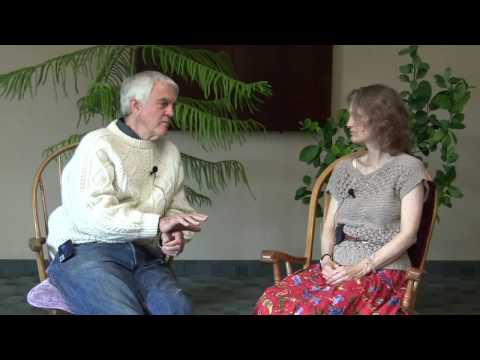
This video explores how emotions are embodied literally felt as physical sensations in the body. The research presentation discusses body mapping studies that reveal consistent patterns across cultures for where different emotions are experienced physically, providing scientific validation for the kinesthetic submodality work described in this article. Key points to watch for include the methodology of mapping emotional sensations, the cross-cultural consistency of findings, and the implications for understanding how beliefs and emotions are encoded somatically.
For additional viewing, search YouTube for “Steve Andreas NLP submodalities” or “embodied cognition” to find demonstrations of submodality work and further explorations of body-based approaches to belief change.
❓ FAQ ABOUT KINESTHETIC BELIEF MAPPING
Question: How is kinesthetic belief mapping different from just “thinking positively” or using affirmations?
Answer: Positive thinking and affirmations work primarily with cognitive content the words and ideas. Kinesthetic belief mapping works with the underlying neurological structure the actual sensory coding your brain uses to distinguish between beliefs you hold versus beliefs you doubt. When you say an affirmation like “I am confident” but your body holds a cold, heavy sensation in your stomach accompanied by a critical voice from behind you, the submodality structure broadcasts doubt while the words claim confidence. Your nervous system rejects this incongruence. Kinesthetic mapping changes the felt sense, the bodily location, the auditory qualities the actual mechanisms by which beliefs are maintained. This creates lasting change because you are working with how your brain actually operates rather than trying to override it with contradictory words.
Question: What if I cannot feel any physical sensations when I think about my limiting belief?
Answer: This is more common than you might think, especially for people who have learned to disconnect from bodily awareness as a coping mechanism. Start by amplifying the belief state it more dramatically, louder, with more conviction. This often makes the somatic signature more apparent. Alternatively, imagine a future situation where this belief would limit you and notice what happens in your body as you envision that scenario. You can also try contrasting experiences: think of something you know is absolutely true and notice any subtle body sensations, then think of something you know is completely false and notice the difference. This comparison can help you develop sensitivity to the signals that are present but previously outside your awareness. If genuine numbness persists, working with a skilled practitioner who can observe your external physiology may help you reconnect with internal sensations.
Question: Is it safe to do this work on my own, or do I need a practitioner?
Answer: Many people can safely explore kinesthetic belief mapping on their own, especially when working with relatively minor limiting beliefs like “I am not good at public speaking” or “I cannot trust my artistic judgment.” The process becomes more powerful and potentially emotionally activating when addressing core beliefs formed during trauma or deeply painful experiences. If you have a history of significant trauma, dissociation, or mental health challenges, working with a qualified practitioner trained in both NLP and trauma-informed approaches is strongly recommended. They can provide containment, help you titrate the intensity of the work, and intervene skillfully if you become overwhelmed. A good guideline: if thinking about the limiting belief creates overwhelming distress that you cannot regulate on your own, seek professional support before attempting transformation work.
Question: How long does it take for the change to become permanent?
Answer: The submodality shift itself often happens rapidly sometimes in minutes during a single session. However, permanence depends on several factors. Your nervous system needs repeated experience with the new pattern to fully install it neurologically. Old habits of thought may try to reassert themselves, especially under stress. The ecological fit matters if your environment or relationships actively reinforce the old belief, maintaining the change requires more conscious effort. Most people find that with intentional practice over two to four weeks consciously accessing the new belief pattern daily and catching moments when the old pattern attempts to return the change stabilizes and becomes automatic. Some shifts feel permanent immediately; others require ongoing maintenance, similar to physical fitness. The key is recognizing that a lapse into old patterns does not mean failure but rather signals the need for another round of conscious shifting.
Question: What if the limiting belief serves a protective function? Will changing it leave me vulnerable?
Answer: This is a crucial question that speaks to the ecological principle of change work. Many limiting beliefs did serve protective functions, often developed during childhood or difficult circumstances when they represented the best available survival strategy. The belief “I cannot trust anyone” might have protected you from repeated betrayals. The conviction “I should not be visible” might have kept you safe from a narcissistic parent’s rage. Effective belief change work honors these protective functions and finds alternative ways to meet the underlying need. Before releasing a limiting belief, explore what positive intention it serves. Then ensure your new belief or behavior meets that same need more elegantly. For example, “I can trust selectively based on evidence” protects you from indiscriminate vulnerability while allowing authentic connection. “I can be appropriately visible in safe contexts” maintains protection where needed while permitting growth. The change should enhance your safety and wellbeing, not compromise it.
Question: Why do you emphasize auditory submodalities when most NLP work focuses on visual?
Answer: While early NLP heavily emphasized visual submodalities because of the prominence of vision in Western culture and Bandler’s personal preference for visual processing, the Andreas’s discovered that for many people particularly those who process experience primarily kinesthetically or auditorily visual submodalities provide less leverage for change. Internal voices are extraordinarily powerful in maintaining beliefs. The harsh, critical voice of an internalized parent or authority figure often drives limiting narratives more than any visual image. Additionally, many limiting beliefs do not have strong visual components but are primarily felt as bodily sensations accompanied by internal commentary. By emphasizing kinesthetic location and auditory qualities whose voice, from where, with what tone this article addresses the modalities that most directly encode belief structures for a significant portion of the population. Everyone’s neurology differs, so skilled practitioners elicit across all systems and work with whatever provides the most leverage for each individual.
Question: Can I use this technique for beliefs about other people or about how the world works, or does it only work for beliefs about myself?
Answer: Kinesthetic submodality mapping works with any belief structure, whether about yourself, others, or how reality operates. The belief “people cannot be trusted” has a somatic signature just as “I am not capable” does. The conviction “the world is dangerous” lives in your body with specific kinesthetic and auditory qualities. However, the ethics and ecology of changing beliefs about others or reality require more careful consideration than changing self-limiting beliefs. A belief like “my partner is unreliable” might be an accurate assessment based on actual behavior rather than a distorted limiting narrative. Changing the belief without addressing the actual behavior could leave you vulnerable to genuine harm. Similarly, some beliefs about danger “I should not walk alone at night in this neighborhood” may reflect realistic assessment rather than limiting fear. Always examine whether a belief reflects distorted perception or accurate information. Use this technique for beliefs that limit you beyond what reality requires, not for discarding appropriate caution or ignoring actual patterns in others’ behavior.
Question: What happens if I successfully change a limiting belief but the people around me still treat me as if I have it?
Answer: This situation reveals the interpersonal dimension of belief systems. Families, workplaces, and social groups often function as systems with assigned roles. If you have been the “incapable one” or the “quiet one” or the “person who needs rescuing,” others may continue to interact with you based on that identity even after you have internally shifted. This creates a period of uncomfortable transition where your new internal state does not match others’ expectations and treatment of you. You may need to explicitly communicate your changes, set different boundaries, or demonstrate new behaviors repeatedly before the system accommodates your transformation. Some people in your life may resist your change because it requires them to adjust their own role or face aspects of themselves they have been avoiding. In extreme cases, maintaining a new empowering belief may require changing your social environment leaving relationships or contexts that actively reinforce limiting narratives. This is why ecological assessment matters: ensure you have support for your new belief and realistic expectations about the challenges of maintaining it in environments that preferred the old version of you.
😆 JOKES ABOUT KINESTHETIC BELIEF MAPPING
-
“I tried to locate where I store my limiting beliefs. Turns out they’ve been living rent-free in my solar plexus with a view of my diaphragm. Prime real estate, apparently.” - Anonymous
-
“My therapist asked where I feel self-doubt. I said ’everywhere.’ She said that’s not helpful. I said neither is self-doubt, but here we are.” - Anonymous
-
“Discovered my inner critic’s voice comes from over my left shoulder. Explains why I’ve been flinching that direction for thirty years.” - Anonymous
-
“Found out my limiting belief has been residing in my chest with the density of a bowling ball. No wonder I’ve had trouble breathing around success.” - Anonymous
-
“Turns out my anxiety isn’t just in my head it’s been throwing parties in my stomach, hosting meetings in my throat, and subletting space in my shoulders.” - Anonymous
-
“My beliefs about not being good enough were located in my lower abdomen, rotating clockwise. They were literally going in circles.” - Anonymous
🦋 METAPHORS FOR KINESTHETIC BELIEF MAPPING
-
The body as landscape: Your body is territory with varied terrain mountains of tension in your shoulders, valleys of softness in your belly, rivers of sensation flowing through your limbs, and weather systems of emotion moving through your chest. Limiting beliefs are like permanent structures built on this landscape cold stone walls across your throat, heavy boulders in your stomach, thick brambles around your heart. Kinesthetic mapping is the process of becoming a skilled cartographer of this inner landscape, noting precisely where each structure stands, what materials compose it, and how it affects the surrounding terrain. Once mapped, these structures can be relocated, dismantled, or transformed, allowing new growth in spaces long blocked.
-
Beliefs as radio signals: Every belief broadcasts on a specific frequency with distinct qualities the limiting belief transmitted on the harsh, static filled station from above and behind you, the empowering belief on the warm, clear channel emanating from your center. Your nervous system is constantly scanning these frequencies, and the one broadcasting loudest and clearest determines your felt sense of truth. Kinesthetic submodality work is like being a radio engineer who discovers how to adjust transmission strength, change frequencies, and even move the broadcasting location of different stations. By turning down the volume and moving the limiting belief to a distant, weak signal while amplifying and centralizing the empowering belief, you change which truth your system receives most clearly.
-
The museum curator of self: Your psyche operates like a vast museum with multiple wings and countless rooms. Active, current beliefs occupy the prominent galleries near the entrance with good lighting, interactive displays, and frequent foot traffic. Outdated beliefs belong in the archive basement or the historical wing, clearly labeled as artifacts from another time. Limiting beliefs often masquerade as current exhibits when they should be filed in history. The work of kinesthetic mapping involves becoming curator of your own museum identifying which beliefs truly belong in active display and which should be respectfully relocated to the archives, acknowledged as once useful perspectives that no longer serve your current life.
-
Voices in the theater: Your inner experience is like a theater with multiple speakers positioned throughout above, below, to each side, in front, behind. Different voices speak from different locations, each with its own volume, tone, and authority. The critical parent’s voice booms from the back row balcony, the doubtful child whispers from stage left, the encouraging friend speaks gently from center stage. Kinesthetic belief mapping helps you identify which voice speaks from where and realize you can adjust the sound system—turning down speakers that broadcast harmful messages, moving supportive voices to central locations, changing harsh tones to kind ones, even switching which voices are connected to which speakers.
-
The body as music: Each belief is a chord played through your body, created by multiple notes sounding simultaneously the bass note of location, the middle tones of temperature and texture, the high notes of movement and quality, with the melody line of internal voice weaving through. Limiting beliefs play as dissonant, heavy, minor-key chords that create tension and constriction. Empowering beliefs sound as harmonious, light, major key chords that create expansion and ease. You carry an entire symphony orchestra within you, and kinesthetic mapping is the process of learning to read the sheet music you have been unconsciously playing, then consciously arranging new compositions that serve your flourishing.
-
Beliefs as weather patterns: Your body is a climate system, and beliefs are weather patterns that move through it the cold front of self-doubt pushing in from behind your left shoulder, the heavy precipitation of shame falling through your chest, the stagnant hot pressure of anxiety sitting in your stomach. These patterns have become habitual, recurring in predictable ways regardless of actual external conditions. Kinesthetic mapping teaches you to become a meteorologist of your internal weather, tracking the formation of limiting belief systems with precision, understanding their patterns, and discovering you have more influence over your inner climate than you realized. You can shift the jet stream, raise the temperature, clear the clouds, and let new patterns establish themselves.
-
The archaeologist of sensation: Limiting beliefs are like ancient ruins buried within the landscape of your body, structures built long ago that continue to shape the terrain above them. You walk through life navigating around these buried foundations without realizing why certain paths feel blocked or certain areas feel unstable. Kinesthetic submodality work is an archaeological excavation, carefully uncovering these hidden structures brushing away layers of habit and unconsciousness to reveal the precise architecture beneath. Once revealed in detail, you discover these ancient foundations can be relocated, repurposed, or built over with new structures that better serve your current life.
🧑🦲 AXEL MAGNUS’S EXPERIENCE WITH KINESTHETIC BELIEF MAPPING
The first time I deliberately located a limiting belief in my body with precision, I was forty-two years old and sitting in a hallucinated workshop led by Steve Andreas. I had been practicing therapy for over a decade, had studied multiple modalities, and considered myself reasonably self-aware. I was wrong about the last part.
Steve asked us to identify a limiting belief. Mine came immediately: “I am not truly creative.” This belief had haunted me throughout my career. I could facilitate others’ creativity brilliantly, help clients access their artistic impulses, guide them through blocks—but my own creative expression felt perpetually out of reach. I had accepted this as simply how I was built.
“Where do you feel that belief in your body?” Steve asked.
I had never been asked that question before. I closed my eyes and said the belief silently: “I am not truly creative.” Immediately, unmistakably, my attention went to my throat. Not vaguely “in the throat area” but specifically the front of my throat, about an inch below my Adam’s apple, extending down perhaps two inches toward my sternum.
“Good,” Steve said. “What else can you notice about that sensation?”
I stayed with it, bringing more attention than I had ever brought to a bodily sensation. It was cold not slightly cool but genuinely cold, like touching metal in winter. It had a texture, rough and granular, like sand or salt. It felt dense, compressed, as if something hard had been pushed into soft tissue. And it was absolutely still no movement, no pulsation, just frozen presence.
“Is there a voice?” Steve asked.
The question startled me because yes, there was a voice, though I had never consciously registered it before. The moment he asked, I heard it clearly: my high school art teacher, Mr. Peters, saying “That’s derivative. You’re just copying.” His voice came from my upper right, maybe two feet away and slightly elevated, as if he were standing beside and slightly behind me looking down at my work. The voice was loud, definitive, dismissive. Each word landed like a gavel closing a case.
I felt my face flush with the recognition. I was forty-two years old, a practicing therapist, and Mr. Peter’s voice from when I was sixteen had been running my creative life for twenty-six years without my conscious awareness.
Steve had us compare this limiting belief’s structure with beliefs we had released. I thought of my former conviction that I was “bad at mathematics.” That belief felt distant, irrelevant, located nowhere in particular certainly not in my body. No temperature, no texture, no voice. Just gone, like a book I had once read but could barely remember.
The contrast was stunning. My brain maintained “I am not truly creative” through a precise somatic auditory structure while “I am bad at mathematics” had been stripped of all that machinery and filed away as irrelevant. The difference had nothing to do with the truth of the statements and everything to do with how my neurology was coding them.
Steve guided us through shifting the limiting belief’s structure to match the released belief pattern. I imagined the cold, rough, dense sensation beginning to warm, soften, lighten. I visualized it lifting up from my throat, becoming insubstantial, drifting away to my left where old beliefs lived. I heard Mr. Carmichael’s voice growing quieter, more distant, moving away, eventually fading to barely audible echo.
The physical relief was immediate and profound. My throat felt open for the first time in years quite literally. I had not realized I had been holding tension there for decades. I took a full breath, deeper than any breath I remembered taking.
But the real test came three days later. I was home alone on a Saturday morning, and I found myself standing in front of a blank canvas I had bought months earlier but never touched. The old pattern would have activated: the cold weight in my throat, Mr. Carmichael’s cutting voice, the absolute certainty that anything I created would be derivative and worthless.
Instead, I noticed the beginning of that pattern and recognized it as the old structure trying to reestablish itself. I consciously relocated it feeling it drift away to my left, hearing the voice fade. Then I placed my hand on my chest where the new belief wanted to live and asked myself: what if I am creative? What if I have always been creative but have been operating under someone else’s judgment?
Warmth spread through my chest. My own voice, kind and curious, said “Let’s find out.”
I painted for three hours. What I created was not objectively remarkable a abstract piece with blues and greens, intuitive, unplanned, messy in places. But it was mine. Genuinely, authentically mine. No derivation, no copying, just pure exploration.
I stood back and looked at it, and for the first time in twenty six years, I felt like a creative person. Not because the painting was good or would impress anyone, but because the somatic auditory structure that had maintained “you are not creative” had been dismantled and replaced with something that allowed creative expression to flow.
That weekend changed my practice fundamentally. I began asking every client “Where do you feel that in your body?” and helping them map their limiting beliefs with the same precision I had learned. I discovered that nearly everyone including people who considered themselves disconnected from their bodies could locate their beliefs somatically once they were invited to pay attention.
The canvas from that Saturday still hangs in my office, not because it is beautiful but because it represents the moment I discovered that beliefs are not abstract propositions about reality but concrete patterns of sensation and sound that can be observed, mapped, and systematically transformed.
Now when limiting beliefs arise and they still do, because old patterns have deep grooves I can feel them trying to establish themselves in their familiar locations with their familiar qualities. And I can choose to let them pass through rather than taking up residence again. That cold, rough density at my throat? I recognize it now as an old friend who once tried to protect me from the humiliation of being judged but who no longer needs to run my life.
The voice from my upper right? Sometimes I still hear it attempting to speak. But it is distant now, faded, and I have discovered my own voice in my chest speaks with far more wisdom about what I am capable of creating.
🕳️ THE LIMITATIONS OR UNCERTAINTIES IN KINESTHETIC BELIEF MAPPING
Kinesthetic belief mapping is powerful but not universal or appropriate for everyone in all circumstances. Understanding its boundaries helps you apply it skillfully and recognize when alternative approaches are needed.
Not a substitute for addressing actual circumstances: If your belief “I am not safe” reflects genuine current danger you are in an abusive relationship, living in a war zone, or facing real threats changing the somatic signature of that belief without addressing the external reality would be harmful. Beliefs sometimes accurately reflect circumstances that need to change. Transformation work should help you respond more effectively to reality, not deny it.
Requires sufficient affect tolerance: Working with limiting beliefs activates the emotional and physical patterns associated with them. People who dissociate easily, have experienced significant trauma, or struggle with affect regulation may find direct kinesthetic mapping overwhelming without proper support and containment. If noticing bodily sensations associated with limiting beliefs triggers flashbacks, severe anxiety, or dissociative episodes, work with a trauma-informed practitioner trained in both NLP and somatic stabilization techniques.
Cultural considerations affect applicability: This approach emerged from Western psychological traditions and emphasizes individual agency and internal change. In cultures with more collectivist orientations or different relationships between mind, body, and self, the framework may need significant adaptation. Additionally, the notion of deliberately changing beliefs may conflict with spiritual or philosophical traditions that emphasize acceptance, surrender, or recognizing beliefs as illusory. Respect for cultural context and personal values should guide application.
Physical conditions can complicate the process: Chronic pain, neurological conditions, dissociative disorders, and some medications can interfere with accurate interoception the perception of internal bodily states. People whose bodies send confusing or overwhelming signals may find it difficult to distinguish the somatic signature of a belief from other physical sensations. This does not mean the approach cannot work, but it requires more patience, external guidance, and possibly modification to work with auditory or visual submodalities instead.
The relationship between belief and behavior is not simple: Changing a limiting belief does not automatically change deeply ingrained behavioral patterns or acquired skills. Someone who shifts from “I cannot speak publicly” to “I am capable of public speaking” still needs to develop actual public speaking competence through practice. The belief change removes internal interference and opens possibility, but skill development remains necessary. Conversely, changing behavior sometimes naturally updates beliefs without direct submodality work.
Ecological disruptions can occur: Belief systems exist within larger networks of identity, relationships, and life structure. Rapidly changing a core limiting belief can create temporary instability as other elements of your life adjust. Relationships built partly on you having certain limitations may become strained when you no longer fit that role. Career paths chosen to accommodate limiting beliefs may suddenly feel incompatible with your new sense of possibility. These adjustments are often ultimately beneficial but can be disorienting in the transition period.
Individual neurology varies significantly: While common patterns exist limiting beliefs often cold, heavy, located lower in the body or with critical voices from above not everyone follows these patterns. Some people experience limiting beliefs as hot rather than cold, as moving rather than still, as whispers rather than shouts. There is no universally “correct” submodality structure for doubt versus certainty. Each person’s coding system must be elicited individually rather than assumed.
Placebo and expectancy effects matter: Like all psychological interventions, kinesthetic belief mapping is influenced by expectations, rapport, context, and the meaning attributed to the experience. Some changes that feel dramatic immediately after a session may not maintain over time without ongoing practice and environmental support. Distinguishing between genuine neurological restructuring and temporary state changes influenced by the setting requires honest assessment and follow-up.
Some beliefs resist change for good reasons: Occasionally a belief that appears limiting actually protects against authentic recognition of current inadequacy or unreadiness. The belief “I am not ready to start my business” might accurately reflect lack of necessary skills, resources, or market understanding. Changing it prematurely could lead to costly failure. Discernment about whether a belief is truly limiting versus appropriately cautionary requires honest self-assessment and sometimes external perspective.
The language of submodalities is itself a metaphor: When you describe a sensation as “cold” or “rough” or “heavy,” you are using metaphorical language to communicate ineffable internal experience. These descriptions are useful but not literal. The temperature is not actually measurable with a thermometer; the texture is not physical roughness. This metaphorical nature means different people use the same words to describe different experiences, requiring careful elicitation and calibration rather than assumptions about meaning.
Long-term maintenance requires ongoing practice: The initial submodality shift can happen rapidly, but maintaining the new pattern typically requires conscious reinforcement, especially in the first weeks. People who expect permanent change from a single session may become discouraged when old patterns attempt to reassert themselves under stress. Realistic expectations about the need for practice and the possibility of occasional “reruns” of old beliefs helps sustain long-term success.
Research base is limited: While the growing neuroscience literature on embodied cognition supports the general premise that beliefs have somatic components, specific research on NLP submodality interventions remains sparse and methodologically limited. Most evidence is clinical and anecdotal rather than from controlled studies. This does not invalidate the approach many effective therapeutic methods have limited controlled research but it does mean claims should be appropriately modest and matched to available evidence.
✏️ CONCLUSION
Your beliefs are not abstract thoughts floating disembodied in your mind. They live as patterns of sensation coursing through your tissues, as voices speaking from specific locations in space, as temperatures and textures and movements that your nervous system uses to navigate reality. The conviction that you are not good enough manifests as a cold, dense weight in your stomach accompanied by a harsh voice from behind. The knowing that you are capable feels as warm expansion in your chest with your own kind voice speaking from your center.
This is not metaphor. This is the actual architecture of how your brain encodes meaning and maintains the narratives that shape your possibilities. Every limiting belief occupies specific coordinates in the geography of your body, broadcasts on a particular frequency with distinct auditory qualities, and persists precisely because of these structural details.
The remarkable discovery validated by decades of clinical practice and increasingly supported by neuroscience research is that these structures are not fixed. They can be observed, mapped, and systematically modified. By bringing conscious attention to the kinesthetic and auditory submodalities that maintain limiting narratives, you gain access to the control panel of your own belief system.
This work requires patience, courage, and genuine curiosity about your internal experience. It asks you to sit with uncomfortable sensations long enough to map them precisely rather than reflexively pushing them away. It invites you to listen to internal voices you may have been trying to silence for years. It challenges you to treat your limiting beliefs not as fundamental truths about reality but as neurological patterns that made sense once but may no longer serve you.
The practice of kinesthetic submodality mapping is ultimately an act of coming home to yourself. For too long, you may have believed that change requires years of analysis, endless repetition of affirmations, or superhuman willpower to override your natural responses. Instead, you can work with the elegant precision of your own neurology, making small structural adjustments that cascade into profound shifts in how you experience yourself and what you recognize as possible.
Your body knows things your conscious mind has forgotten. It remembers the moment each limiting belief was installed, preserving not just the content but the complete somatic-auditory structure that maintains it. And your body also knows how to release what no longer serves you, how to update its maps to reflect who you are now rather than who you once had to be to survive.
The warm, expansive knowing in your chest has always been there, waiting beneath the cold, constricted narratives imposed from outside. Kinesthetic belief mapping simply helps you relocate your attention from the voices behind you to the wisdom within you, from the limitations you inherited to the possibilities you are ready to embody.
📚 REFERENCES
- George Lakoff & Mark Johnson, 1980; Metaphors We Live By
- Steve & Connirae Andreas, 1987; Change Your Mind and Keep the Change: Advanced NLP Submodalities Interventions
- Julian Jaynes, 1976; The Origin of Consciousness in the Breakdown of the Bicameral Mind
- Andreas, S. (2002). Transforming yourself: Becoming who you want to be. Real People Press.
- Connirae Andreas & Steve Andreas, 1989; Heart of the Mind: Engaging Your Inner Power to Change with Neuro-Linguistic Programming
- Connirae Andreas & Tamara Andreas; 1994; Core Transformation: Reaching the Wellspring Within
- video DVD Transforming Yourself Complete 3-day Training with Steve Andreas
- The Wholeness Work
- Core Transformation
- Nummenmaa, L., Glerean, E., Hari, R., & Hietanen, J. K. (2014). Bodily maps of emotions. Proceedings of the National Academy of Sciences, 111(2), 646-651.
- Damasio, A. (1994). Descartes’ Error: Emotion, Reason, and the Human Brain. Putnam.
- van der Kolk, B. (2014). The Body Keeps the Score: Brain, Mind, and Body in the Healing of Trauma. Viking.
- Levine, P. A. (1997). Waking the Tiger: Healing Trauma. North Atlantic Books.
- Gendlin, E. T. (1978). Focusing. Everest House.
- Lakoff, G., & Johnson, M. (2003). Metaphors We Live By (Updated edition). University of Chicago Press.
- Feldenkrais, M. (1972). Awareness Through Movement. Harper & Row.
- Lowen, A. (1975). Bioenergetics. Coward, McCann & Geoghegan.
- Bandler, R., & Grinder, J. (1979). Frogs into Princes: Neuro Linguistic Programming. Real People Press.
Image credit - Polina - WHERE DO YOU FEEL THAT STORY? MAPPING THE BODY’S NARRATIVE ARCHITECTURE
🎬 MOVIES
- The Diving Bell and the Butterfly (2007): A paralyzed man discovers his entire inner world remains vibrant and accessible through attention to subtle internal sensations and memories housed in his body.
- Arrival (2016): A linguist learns that language shapes not just thought but embodied experience, as she begins to feel time differently in her body through learning an alien language structure.
- Inside Out (2015): Animated exploration of how emotions manifest as distinct characters with physical presence, offering a visual metaphor for how different feelings occupy different spaces in our internal landscape.
- Black Swan (2010): A dancer’s psychological transformation manifests through increasingly intense physical sensations and bodily changes, showing how beliefs about self become embodied.
- Eternal Sunshine of the Spotless Mind (2004): Characters attempt to erase memories stored not just mentally but throughout their bodies, discovering that embodied experiences resist simple deletion.
📺 TV SHOWS
- The OA (2016-2019): Characters learn movements that unlock trauma stored in the body, exploring how physical gestures can access and transform deeply held beliefs and experiences.
- Sense8 (2015-2018): Individuals experience sensation and emotion in their bodies from people across the globe, demonstrating the embodied nature of connection and shared experience.
- Maniac (2018): Participants in a pharmaceutical trial confront their limiting beliefs through immersive experiences that manifest as physical sensations and alternative realities held in the body.
🎭 DOCUMENTARIES
- The Wisdom of Trauma (2021): Dr. Gabor Maté explores how childhood experiences encode in the body as sensation patterns that persist into adulthood, shaping beliefs and behavior.
- Heal (2017): Examines the mind-body connection through stories of people who accessed healing by working with beliefs and sensations stored somatically.
- The Connection (2014): Investigates how chronic illness relates to unprocessed emotional experiences held in the body, featuring people who recovered by addressing somatic belief patterns.
- Neurons to Nirvana (2013): Explores how altered states allow access to beliefs and traumas stored in the body, featuring research on embodied consciousness.
📚 NOVELS
- Body Keeps the Score by Bessel van der Kolk: While primarily nonfiction, it contains detailed case narratives showing how trauma encodes as specific bodily sensations and how tracking these sensations enables healing.
- The Faraway Nearby by Rebecca Solnit: Memoir exploring how physical illness, caregiving, and memory interweave as bodily experiences that carry narrative meaning.
- Disgrace by J.M. Coetzee: A professor’s internalized beliefs about shame and worthiness manifest through his increasingly embodied responses to disgrace, showing physical architecture of self-judgment.
- The Body Artist by Don DeLillo: A woman works through grief by becoming hyperaware of bodily sensations, time, and how beliefs about loss live in physical experience.
- Extremely Loud and Incredibly Close by Jonathan Safran Foer: A boy processing trauma through heightened bodily awareness and sensory sensitivity, showing how limiting beliefs about safety manifest physically.
- White Teeth by Zadie Smith: Multiple generations carry inherited beliefs that manifest as bodily habits, postures, and somatic responses passed through families.
- The Vegetarian by Han Kang: A woman’s rejection of imposed beliefs manifests through radical bodily transformation, exploring how cultural narratives encode somatically.**