DISCOVER HOW VIPASSANA MEDITATION AND SOMATIC TECHNIQUES RESHAPE LIMITING BELIEFS THROUGH NEUROPLASTICITY, BODY AWARENESS, AND MINDFUL INQUIRY.
REWIRING BELIEF THROUGH VIPASSANA AND SOMATIC PRACTICE

Belief - is part of Series

Beliefs are not stored in the mind as neat propositions waiting to be updated. They are distributed across the nervous system as patterns of muscular tension, breath rhythm, postural habit, and visceral tone. When you want to change a belief, you are not editing a file you are reorganizing an embodied system that has been shaped by every experience you have ever had.
Vipassana meditation offers one of the most precise and ancient tools for working with this system. By training equanimous attention on the field of direct experience sensations, emotions, thoughts it creates the conditions under which the nervous system can release its grip on old patterns without suppression or force. Somatic practice deepens this work by giving you language for what the body is holding and techniques for directly engaging the architecture of the belief.
What follows is a practical guide to using both modalities in an integrated way. You will find exercises, a guided meditation, a demonstration session, and a clear process for dissolving limiting beliefs and consolidating new ones. Whether you are new to either practice or have years of experience, this material offers a path into the territory where lasting change actually lives inside the body itself.
🎯 THE BENEFITS OF REWIRING BELIEF THROUGH VIPASSANA AND SOMATIC PRACTICE
“I used to think changing my beliefs required a philosophy degree and a decade of therapy. Turns out it mostly requires sitting still and noticing my stomach.” - Anonymous
Somatic de-escalation of long-held fears. When a limiting belief loses its somatic charge when the tightening in your chest or the hollow feeling in your belly no longer fires automatically the cognitive story attached to it loses most of its power. You may notice a gentle warmth spreading in your torso where tension once lived, or a subtle settling in your shoulders that feels unfamiliar and right at the same time. The change is not dramatic. It is more like a quiet resolution, as if something that had been arguing inside you finally agreed.
Increased self-knowledge through body awareness. Vipassana develops a refined sensitivity to interoceptive signals the body’s ongoing report on its internal state. Practitioners consistently report that they begin to notice the physical signature of emotional states long before those states reach full intensity. You might catch the first faint tightening in your jaw when a belief about your own capability is activated, rather than discovering it only after you have already withdrawn from an opportunity. This early awareness creates choice where there was once only automaticity.
Greater stability under stress. Because somatic belief change works at the level of the nervous system’s predictive machinery, the changes tend to hold under pressure. A belief restructured only at the cognitive level often collapses when the stress response is activated, because subcortical structures override prefrontal processing. A belief restructured somatically has been revised at precisely the level that stress engages.
Improved capacity for genuine change. Neuroplasticity research consistently shows that the brain is most receptive to new learning when it is attentive, mildly aroused, and not defensively contracted. Vipassana practice creates exactly this state. Regular practitioners show measurable changes in default mode network activity, insula thickness, and anterior cingulate cortex function all structures involved in the way beliefs are held and revised.
Deepened relationships. When you are no longer operating from a belief that others are fundamentally threatening, or that your needs are too much, or that you must perform to be acceptable, your nervous system relaxes in the presence of others. This is felt on both sides. People describe being seen more clearly, received more warmly, and related to more honestly. The change is somatic first a softening in the chest, an opening in the throat and relational second.
A growing capacity to hold multiple perspectives. The Vipassana practitioner who has watched a belief arise and pass many times develops a different relationship to conviction itself. Beliefs become functional orientations rather than absolute facts. This creates what developmental researchers call perspective-taking capacity the ability to genuinely inhabit a different worldview without losing your own footing. In practical terms, you disagree without your body going to war.
Reduced reactivity. Somatic inquiry tends to reveal that much of our reactive behavior is driven by beliefs about what an experience means, not the experience itself. When you can locate the somatic charge of a belief and meet it with curiosity rather than urgency, the compulsion to act it out diminishes. This is not suppression. It feels more like a patient loosening, or a long-held breath finally releasing.
🏛️ ORIGINS OF VIPASSANA AND SOMATIC PRACTICE ACROSS CULTURES AND HISTORY
The roots of Vipassana stretch back more than two millennia to the early teachings of Siddhartha Gautama, the historical Buddha, working in what is now northern India and Nepal. The technique systematic observation of physical sensation as a means to insight into the impermanent, interdependent nature of experience was transmitted through monastic lineages in Burma, Sri Lanka, and Thailand across the centuries. It was largely inaccessible to lay practitioners until the 20th century, when Ledi Sayadaw, a Burmese monk, began encouraging lay practice in the late 1800s in response to what he perceived as the decline of traditional Buddhist culture under British colonial rule.
His student Saya Thetgyi and later U Ba Khin continued developing accessible lay instruction. When Satya Narayan Goenka, an Indian businessman trained by U Ba Khin in Burma, returned to India in 1969 to teach his first course, Vipassana began its unlikely transformation into a globally practiced secular technique. Today, the Dhamma.org network operates hundreds of centers on six continents, teaching ten-day residential courses to tens of thousands of practitioners annually.
The somatic tradition has a different lineage, but equally old roots. The understanding that the body holds the record of experience appears in Taoist medical texts, Ayurvedic traditions, and the healing practices of indigenous cultures across the Americas, Africa, and Oceania. In Western medicine, this insight reemerged most explicitly in the work of Wilhelm Reich in the 1930s, who described “character armor” the way chronic muscular tension crystallizes psychological defense structures. His work was largely suppressed during his lifetime but became foundational to later somatic therapies.
Eugene Gendlin, a philosopher and psychotherapist working alongside Carl Rogers, developed Focusing in the 1960s after studying what distinguished clients who made lasting progress in therapy from those who did not. The differentiating factor was a quality of attention to what Gendlin called the “felt sense” a murky, prereflective body sense that carries more information than language can directly express. His empirical observation that working with the felt sense accelerated and deepened therapeutic change remains one of the most underappreciated findings in psychotherapy research.
Peter Levine, influenced by both ethology and biophysics, developed Somatic Experiencing in the 1970s after noticing that prey animals in the wild rarely develop persistent trauma responses, despite routine encounters with mortal threat. He proposed that human trauma results not from the event itself but from incomplete physiological responses survival cycles that were interrupted and remain stored in the nervous system as chronic activation. His book Waking the Tiger (1997) brought somatic approaches to trauma to a wide audience and established the theoretical framework for much contemporary body-based therapy.
In the NLP tradition, work with beliefs at the somatic level appears most explicitly in the submodality research of Richard Bandler and John Grinder, and later in the more structured approaches developed by Steve and Connirae Andreas. Their work on belief change through submodality mapping established that beliefs have a specific representational architecture including kinesthetic submodalities like location, weight, temperature, and movement and that altering this architecture produces corresponding changes in the felt conviction of the belief.
The contemporary convergence of these traditions neuroscience, Vipassana, somatic practice, and NLP is producing a coherent and increasingly evidence-supported framework for working with belief at the level where beliefs actually live.
📜 PRINCIPLES OF REWIRING BELIEF THROUGH VIPASSANA AND SOMATIC PRACTICE
Principle 1: Beliefs are embodied, not merely conceptual
Every belief you hold with strong conviction has a somatic correlate a location in the body, a quality of tension or ease, a pattern of breath, a postural tendency. When someone asks you whether you believe you are worthy of love, you do not first consult a cognitive database. You feel something. That feeling its warmth or tightness, its expansion or contraction, its location in the chest or the pit of the stomach is not a metaphor for the belief. It is part of the belief’s structure. Any work that addresses only the cognitive content while leaving the somatic pattern unchanged is working on the label, not the jar.
Principle 2: The nervous system updates through experience, not argument
The brain’s predictive machinery its system of weighted expectations about how the world and the self operate is not persuaded by logical counter-argument. If it were, we would all simply think our way out of limiting beliefs the moment they were pointed out to us. What the nervous system responds to is direct experience that contradicts its existing model. When you have a clear, embodied experience of safety where fear was predicted, or of capability where inadequacy was expected, a genuine prediction error occurs and the prior begins to revise. This is why somatic and meditative practices, which generate direct experience, are more neurologically potent for belief change than cognitive reframing alone.
Principle 3: Equanimity is not indifference it is the condition for change
The Vipassana instruction to observe experience without reactivity is sometimes misread as a call to detachment or suppression. It is the opposite. Equanimity means the capacity to remain in full contact with a somatic pattern the grief in the chest, the brace in the belly, the heat of shame in the face without flinching away from it or grasping for it to stop. This quality of non-reactive presence is the precise condition under which the nervous system can metabolize experience it has previously been avoiding. What we can stay with, we can complete. What we flee from, we perpetuate.
Principle 4: The felt sense is the primary carrier of meaning
Gendlin’s insight that the prereflective felt sense in the body carries more information than can be directly articulated has profound implications for belief change. When you locate the felt sense of a limiting belief and attend to it with patient curiosity, information emerges that was unavailable to conceptual analysis. The tightness in the throat turns out to have a color. The hollow feeling in the chest has an age. The bracing in the jaw has something it wants to say. This information is not symbolic decoration it is the raw material of the belief’s structure, and working with it directly is orders of magnitude more efficient than working with its verbal expression.
Principle 5: Dissolution and installation are two phases of the same process
A limiting belief that has been met with equanimous awareness and begins to lose its somatic charge creates a window of heightened plasticity a period in which the nervous system is actively seeking a new organizing principle. Failing to work intentionally in this window means the nervous system often reinstates the original belief by default, because it is the most metabolically available option. Deliberate installation of a new belief’s somatic architecture using the same attentional precision that was used for dissolution closes the loop and gives the brain something coherent to consolidate.
Principle 6: Repetition builds the neural trace
Neurological consolidation does not happen through single powerful experiences alone, though those help. It happens through consistent repetition across time. The nervous system strengthens patterns that are repeatedly activated, particularly when those activations occur in a state of relaxed, focused attention the state that Vipassana cultivates. Five minutes of daily, high-quality contact with the somatic sense of a new belief will produce more durable change over four weeks than a single two-hour session, because each repetition deepens the synaptic trace that makes the new prior more readily available.
Principle 7: The body always tells the truth
Cognitive processes are remarkably good at constructing plausible narratives that obscure what the body already knows. A client can describe, with perfect verbal fluency, how much they have forgiven a parent, while their shoulders are at their ears and their breath is shallow and held. The body registers the incongruence before the mind is willing to. Somatic attention the willingness to check in with physical sensation as the arbiter of what is actually happening is not an alternative to intellectual insight. It is the ground truth against which intellectual insight is tested.
🗨️ GUIDING CLIENTS IN REWIRING BELIEF THROUGH VIPASSANA AND SOMATIC PRACTICE
Observation and presence
Position yourself at the client’s side to unobtrusively observe subtle shifts in facial expressions, gestures, and skin tone while ensuring you do not interfere with their imaginative process or metaphor creation.
Vocal modulation
Use a gentle, melodic, and unhurried tone when speaking, allowing your voice to foster calm and receptivity.
Genuine engagement
Demonstrate active interest in the client’s process by listening attentively and supporting their exploratory journey.
Reflective communication
Echo the client’s words and delivery style. For example, if the client describes an exciting moment with a bright expression, quicker speech, and a higher tone, mirror these qualities in your response. As a practitioner, strive to match their affective cues, or consider formal training in expressive techniques to enhance these skills.
Connecting experience and inquiry
Seamlessly link questions and reflections to the client’s experiences using coordination (and, as, when), ensuring a smooth and empathetic flow throughout the interaction.
Introducing the process
Begin by establishing a shared language for somatic awareness before any belief work begins. Ask the client to bring to mind a recent moment of ease or comfort and guide their attention to where they feel that quality in the body. This calibration step builds their interoceptive vocabulary and gives you a somatic baseline for comparison throughout the session.
When you are ready to introduce the belief focus, phrase the invitation without presupposing pathology. Rather than “tell me about your limiting beliefs,” you might say: “Bring to mind something you notice yourself believing about yourself or the world that feels like it gets in your way. Not necessarily a story just let the sense of it arise.”
Tracking somatic signals
Watch for shifts in breathing a held breath or a sudden exhalation often marks somatic recognition. Note changes in muscle tone, particularly in the face, neck, and hands. Micro-expressions of aversion (tightening around the eyes, a slight retraction of the jaw) signal contact with difficult material. These are not problems to be managed they are information to be reflected back gently.
When a client goes quiet, do not rush to fill the space. Somatic processing often happens in silence. A quiet “just noticing whatever’s here” is usually more useful than a question.
Key questions to ask
- “Where do you feel that belief most strongly in your body right now?”
- “What is the quality of that sensation is it more like pressure, heat, tightness, hollowness, something else?”
- “If that sensation had a shape or a size, what would it be?”
- “What happens to it when you bring gentle attention to it rather than trying to change it?”
- “Is there something this part of you has been trying to do by holding on to this?”
Recognizing completion
Somatic completion is rarely dramatic. Watch for a spontaneous, full exhalation the kind that comes from below the ribs rather than the top of the chest. Notice if the shoulders settle or if the hands release tension they were holding. Clients often report a quiet sense of spaciousness, or describe feeling lighter or more grounded. These are reliable markers of genuine reorganization rather than suppression or compliance.
Integration steps
Before ending the session, invite the client to spend a moment attending to any new somatic quality that has emerged however subtle. Ask them to notice where in the body the new quality is felt most clearly and to allow their posture to express it. Offer a brief breath anchor: a full inhale through the nose and a slow, extended exhale through the mouth, repeated three times, while holding the new quality in awareness. This recruits autonomic channels into the consolidation and gives the client a portable practice they can return to between sessions.
💧 REWIRING BELIEF AXEL MAGNUS SCRIPT BASED ON NLP PRINCIPLES
NLP Technique: Submodality Belief Dissolution with Somatic Anchoring
This session demonstrates a full submodality belief change process, working through the kinesthetic and visual architecture of a limiting belief and installing a replacement at the level of felt sense. The practitioner tracks somatic signals throughout.
The client, Elena, 38, a graphic designer, has described a pattern of withdrawing from creative projects she cares about, driven by a persistent belief that her work is never good enough. She has worked with Axel before and is familiar with basic somatic awareness.
Axel Magnus: Before we go anywhere near the belief itself, I want to start somewhere comfortable. Can you bring to mind something you know, without any doubt, to be true? Something completely neutral not about yourself, just a fact. The sky is blue. Water is wet. Something like that.
Elena: (smiling) Um I know that I have a sister.
Axel Magnus: Good. That works perfectly. And as you hold that knowing “I have a sister” notice where in your body you feel that certainty. Not the idea of it, but the felt sense that it is just simply true. Take a moment.
Elena’s breathing slows slightly. Her eyes soften.
Elena: It is… there is a kind of solidity. In my chest, I think. Lower chest, maybe solar plexus. It feels settled.
Axel Magnus: Settled. And does it have a temperature, that settled feeling? Warm, cool, neutral?
Elena: Neutral to warm. Just… quiet.
Axel Magnus: (gently) Good. Just notice that for a moment the quiet warmth, the settledness. That is how your nervous system represents something it knows for certain. That quality is going to be useful to us.
Pause of about twenty seconds.
Axel Magnus: Now, without rushing toward it, let the sense of that belief the one about your work never being good enough just begin to arise. Not the story of it. Not the memories. Just the sense of it as something true. Let it come in at whatever intensity feels manageable.
Elena’s jaw tightens slightly. Her breathing becomes shallower. Her right hand moves unconsciously toward her sternum.
Axel Magnus: Just noticing where that lands in the body first.
Elena: (quietly) It is in my chest. Higher than before. There is a kind of… pressing in. Like a hand pushing from the inside.
Axel Magnus: A pressing in. From the inside. And when you bring your attention there not to fix it or push it away, just to notice does it have a size? Does it feel like it has edges?
Elena: It feels… it is about the size of a fist, I think. Maybe a bit larger.
Axel Magnus: A fist in your upper chest. And is it moving, or still?
Elena: It pulses a little. Like a slow pulse.
Axel Magnus: (matching her slow pace) Good. Now and there is no right answer here if this pressing, pulsing quality had a color, or if something about it felt like it had a color, what comes?
Elena: (pause) Gray. Dense gray.
Axel Magnus: Dense gray. And where does the belief sit in your visual space if you close your eyes and sense where the picture or sense of it is is it close, or far? Up, or down? To the left, or right?
Elena: Close. Really close. Slightly to the right and in front of my face.
Axel Magnus: Close and slightly right. Got it. So right now, without changing anything yet, we have a dense gray, fist-sized pressing sensation in your upper chest pulsing slowly and a visual sense of the belief that is close, right in front of you. Is that accurate?
Elena: Yes. That is exactly it.
Axel Magnus: (nodding) Thank you. Now I want to ask you something that might seem odd. When you bring your attention to this pressing sensation in your chest with genuine curiosity not trying to make it do anything what does it seem to want? What has it been doing for you?
A long pause. Elena’s brow furrows, then gradually softens. Her eyes become slightly wet.
Elena: (quietly) It has been… protecting me. From the embarrassment of putting something out and having it rejected. If I always know it is not good enough, I am never surprised.
Axel Magnus: It has been keeping you safe from a particular kind of pain.
Elena: Yes. For a very long time.
Axel Magnus: (slowly) And is that still the strategy you want to use? Or is there a different kind of safety available to you now that might not require the pressing?
Silence. Elena takes a breath that begins in the upper chest and slowly extends down to the belly.
Elena: I think there is. I do not think I need it the same way anymore.
Axel Magnus: Good. Thank you for checking. Now I would like to offer that pressing sensation something. Rather than fighting it or dismissing it, you are going to acknowledge it genuinely acknowledge what it has done and then invite it to reorganize. We are not evicting it. We are offering it a different job.
Axel Magnus’s voice slows further.
Axel Magnus: Bring your attention back to the gray, fist-sized pressing. As you hold it with acknowledgment “I see you. I know what you have been doing. Thank you.” notice what happens to the qualities. Does anything shift?
Elena is still for about thirty seconds. Her right hand, which had been pressed to her chest, relaxes.
Elena: It is… it is getting lighter. Like it is less dense. Still there, but lighter.
Axel Magnus: Lighter. And the color?
Elena: A bit lighter. More like a silver-gray. It is also moving backward a little.
Axel Magnus: Moving back. And as it moves back, what happens to its size?
Elena: (small sound of surprise) It is getting smaller. It is about… (pauses) about the size of a golf ball now.
Axel Magnus: (very gently) Good. And is that okay with you for it to continue moving back, getting smaller, lighter, at whatever pace feels right?
Elena: Yes. Yes, that feels okay.
A pause of forty-five seconds. Axel Magnus does not speak. He watches the color return slightly to Elena’s face and her shoulders descend a full centimeter.
Axel Magnus: Now I would like to ask something. If the part of you that has always been creative the part that has always made things were allowed to know something different about your work, what would it need to know?
Elena: (without hesitation) That making it matters more than it being good enough. That it is worth making.
Axel Magnus: “It is worth making.” Let that settle somewhere in your body. Not as a thought as a felt sense. Where does that land?
Elena places her hand on her lower sternum.
Elena: Here. It is warm. Spacious. Like something opening.
Axel Magnus: Like something opening. What color, if any?
Elena: Gold, or amber. Warm.
Axel Magnus: And how does it compare the warm amber opening with the settled, quiet warmth we found at the beginning, when you just knew something true?
Elena’s eyes widen slightly.
Elena: They are… the same quality. The amber. It feels the same as the knowing.
Axel Magnus: (quietly) Your nervous system just recognized something. Let that land.
Long pause.
Axel Magnus: Now, without straining for it, is there a posture that wants to happen a way your body wants to hold itself that goes with that warm, open, amber quality?
Elena’s sternum lifts. Her chin drops slightly into a more neutral position. Her hands open on her thighs.
Axel Magnus: Stay there. Just breathe into that for a moment.
Three full breath cycles.
Axel Magnus: When you consider putting your creative work forward not as a test, but as an act of making something worth making what do you notice in your body now?
Elena: (slowly) There is still some nervousness. But underneath it, that warmth is still there. It does not go away.
Axel Magnus: It does not go away. Good. That warmth is yours. It has been there all along. What we have done today is help your nervous system find it again.
Final pause. Elena exhales slowly, fully.
Axel Magnus: How are you right now?
Elena: I feel… quiet. And lighter than when I came in.
💪 MEDITATION FOR REWIRING BELIEF THROUGH VIPASSANA AND SOMATIC PRACTICE
Find a way of being seated that allows your spine to be reasonably upright without force, and that lets your hands rest comfortably wherever they settle naturally. You might close your eyes now, or allow your gaze to soften toward the floor in front of you, whichever feels most comfortable.
And perhaps before you do anything at all, you might allow yourself a moment simply to arrive. To notice that you are here. That whatever the day has held, there is this moment, and you are in it. Already breathing. Already, in some fundamental way, already doing what matters.
As you begin to settle, you might bring attention gently to the breath. Not to control it or improve it simply to follow it. The slight cool of air at the nostrils as it enters. The slow rise of the chest or belly as the inhale completes. And the long, quiet release of the exhale, which, you may notice, the body already knows how to do without any help from you at all.
Stay with this for a few moments, and notice how each breath carries a subtle quality of release. As if the exhale is an invitation the body has been waiting for.
Now, in your own time, and without any urgency, allow yourself to become aware of somewhere in the body where you carry a sense of “this is true about me.” Not a grand belief, not a conclusion you have reasoned your way to just something that has been living in you for long enough that it feels like furniture. Something in the chest, perhaps. Or the belly. Or the quality of how the shoulders hold themselves.
You do not need to name it yet. Simply notice where in the body there is a quality that has a kind of weight to it. A familiar density or tightness or pressing. Just allowing yourself to locate it, gently, the way you might notice an old ache that has been there so long you stopped registering it.
And as you find it… notice that you can stay here. That this sensation is not an emergency. It has been here before, and you have survived it, and now you are simply choosing to look at it with a different quality of attention. Curious. Patient. Without needing it to change immediately.
You might find yourself becoming curious about its specific qualities. Does it have a temperature? A weight? A texture smooth or rough, tight or loose? Does it have edges, or does it seem to fade into the surrounding tissue? You might even find, as your attention rests here, that the sensation itself begins to shift in quality perhaps becoming more defined, or paradoxically a little softer, simply in response to being seen.
Allow the breath to move gently around this area. Not forcing anything. Just letting the rhythm of your breathing offer a kind of companionship to whatever is held here.
And now… as you continue to rest attention here, you might begin to allow a question to form not in your head, but in the body itself: what would it feel like if this were not the whole truth? Not a denial of what has been real. Simply an opening toward what might also be real. A small loosening. The beginning of a question that does not need to be answered yet.
Perhaps you begin to notice somewhere maybe in the same area, maybe nearby, maybe somewhere unexpected a different quality. Warmth, perhaps. Or a spaciousness. Or a sense of something that was braced beginning to ease. It might be very subtle. The nervous system does not announce its reorganizations. It simply, quietly, begins.
Allow your attention to rest on this new quality, however faint it is. You do not need to amplify it. You only need to stay with it, and let it be real. Let the breath support it. Let the posture, if it wants to, reflect it a slight easing in the sternum, a gentle opening of the hands.
And as you rest here, you might allow yourself to notice that this quality this opening, this warmth, this ease is not something that has been added from outside. It has been in the territory of your body all along. You are not creating it. You are finding it.
Stay here for as long as feels nourishing. Allow the breath to deepen at its own pace. Allow the quality to become familiar familiar enough that your nervous system can find it again, without effort, at any moment you choose to look.
Before you return, you might offer the new quality a brief acknowledgment. Not with words, necessarily just with the quality of your attention. A sense of: I see you. I recognize you. You are welcome here.
And now, in your own time, begin to return attention gently to the room around you. To the sounds, the light, the sense of the surface beneath you. When you feel ready, allow your eyes to open at whatever pace feels natural.
Take a moment before moving to simply notice how you feel. Whatever is present is welcome here.
🗣️ ANECDOTE ABOUT REWIRING BELIEF THROUGH VIPASSANA AND SOMATIC PRACTICE
Marco came to see me because he was tired.
Not tired in the way sleep fixes. He was forty-four, a secondary school teacher in a subject he loved, and he described a creeping conviction that had been building for years: that he was fundamentally unsuited for the work of being a person. His phrase, not mine, and he used it without irony. He meant it precisely. Not that he was bad at his job or his relationships, though he doubted both. He meant that the basic act of existing in the world with needs and feelings and opinions felt like a structural error.
When he said this, sitting in the low chair across from me, his hands were folded in his lap with the deliberate stillness of a person who had learned to hold themselves very carefully. His breathing was shallow and high in the chest. His gaze was a little downward and to the left not from shame, exactly, but from the familiar inward focus of someone accustomed to monitoring themselves for evidence of the thing they already believe.
We did not begin with the belief. We began with the chair.
I asked Marco to notice the physical sensation of sitting the pressure of the seat against his thighs, the weight of his hands, the temperature of the air on his forearms. He looked at me with a polite expression that said he was humouring me, and then, about ninety seconds later, something in his face changed. The monitoring quality dropped slightly. He was actually in his body.
“What do you notice?” I asked.
“My back hurts,” he said. “I did not know that until just now.”
We stayed with the back pain for a while not fixing it, just attending to it. Where exactly was it? What kind of pain sharp, dull, spreading? Did it have a color, if that question made any sense? Marco, to his own visible surprise, said it was dark blue. And something about naming it as dark blue made it slightly less his enemy.
Over several sessions, we worked our way to the belief itself. Marco located it below his sternum a kind of concave hollowness, as if something had been scooped out and replaced with a low, continuous suction. He had, he realized, spent the better part of twenty years trying to fill that hollowness with performance: teaching well, being useful, producing evidence against the verdict. The performance never touched the hollowness because the hollowness was not actually empty. It was a somatic structure, organized around a prediction. The prediction was: you should not take up space.
The work of locating it was itself transformative. Something about meeting the suction with attention rather than activity simply staying with it, breathing around it, not trying to fill it produced a very quiet, very real shift. In the third session working directly with the sensation, Marco described what happened like this: “It is like the suction realized it did not have to do that anymore. Like it had been holding on because no one had ever told it there was another option.”
What followed was not a dramatic conversion. He did not leave my office a different man. But over the following weeks, something changed in how he held himself. The careful stillness of his hands began to relax in our sessions. His breathing found its way down to his belly more often than not. He started telling stories about his students with a quality in his voice that was new a warmth that was not performed for my benefit but that came from somewhere he was learning to trust.
He said, about four months in, that he had been standing at the board in his classroom and had felt, unexpectedly, something he could only describe as belonging there. Not because he had earned it. Not because no one was criticizing him. Just because his body, for a moment, had no instructions to the contrary.
That is what somatic belief change looks like from the inside. Not a revelation. A recalibration. The quiet discovery that the ground was never actually as dangerous as the map said.
👣 THE BASIC PROCESS OF REWIRING BELIEF THROUGH VIPASSANA AND SOMATIC PRACTICE
Step 1: Establish body contact
Before working with any specific belief, spend five to ten minutes simply arriving in your body. Sit comfortably and bring attention to physical sensation the weight of your body against the seat, the rhythm of your breath, any areas of warmth or tension you notice. You are not trying to achieve a particular state. You are establishing a quality of contact with your own physical experience that will allow you to work with finer material later. You will know you are ready when sensations stop feeling like concepts and start feeling like direct experience.
Common experience: Restlessness, mind wandering, a tendency to analyze rather than feel. If this happens, return attention to breath and keep narrowing to increasingly specific physical sensations not “tension in my body” but “a specific tightening about two inches below my left ear.”
Step 2: Locate the belief somatically
Bring to mind the belief you want to work with not as an intellectual proposition but as something you actually feel is true. Let the conviction of it arise at whatever intensity feels manageable. Then ask: where in my body is this most strongly felt? Move your attention through your body until you find the area with the clearest somatic charge. This might be a heaviness in the chest, a hollow feeling in the abdomen, a tightness in the throat, or a specific tension pattern in the back or shoulders.
Somatic cue: When you find the right location, there is often a subtle sense of recognition a slight increase in sensation, or simply a quality of “yes, there.” Trust this signal.
Step 3: Explore the somatic qualities
With your attention resting at the location you found, begin exploring its specific qualities with curiosity. What is its size and shape? Does it have edges or does it diffuse into the surrounding tissue? What is its temperature? Is it moving or still? Does it have a texture smooth, rough, hard, soft? Does it have a color, if that question makes sense to you? You are not trying to change anything in this step. You are building a precise, sensory portrait of what is actually there. The quality of your attention matters more than any answer you arrive at. Curious, patient, non-evaluative attention is itself already beginning to alter the nervous system’s relationship to this material.
Step 4: Acknowledge the function
Ask yourself or ask the sensation directly, if that feels natural what this pattern has been doing for you. Not sarcastically. Genuinely. Limiting beliefs do not persist because we are broken. They persist because they were at some point adaptive because the nervous system learned that this particular organization kept something painful from happening.
When you find an honest answer, acknowledge it without collapsing into it. “This has been protecting me from disappointment. I see that. Thank you.” This step often produces a spontaneous softening in the somatic pattern, because the pattern has been met rather than fought.
Step 5: Allow reorganization
Continuing to hold the somatic pattern with equanimous attention, notice whether anything begins to shift on its own. The size, temperature, color, movement, or location of the sensation may change. Allow this to happen without directing it. The nervous system knows the direction of ease your job is to provide the attentional conditions and then trust the process.
If nothing seems to shift, return to Step 4 and deepen the acknowledgment. Often what appears to be stuckness is incomplete acknowledgment something has not yet been fully seen.
Step 6: Open toward the new
When the original sensation has shifted even slightly turn attention to a question: what would it feel like to know the opposite of this belief? Not as a cognitive conviction, but as a somatic proposition. What quality in the body would accompany a genuine sense of capability, or safety, or belonging, or whatever the new belief requires? Allow the felt sense of this new quality to arise, however faintly.
If it will not arise on its own, bring to mind a genuine memory of when something like this quality was present a moment, however brief, when you felt capable, or safe, or belonging. What was the somatic quality of that moment? Invite it back.
Step 7: Consolidate with breath and posture
Once the felt sense of the new belief is present, allow your posture to express it. Let the sternum lift slightly. Allow the shoulders to settle back and down. Let your hands open. These are not performance instructions they are an invitation for the body to complete the new pattern proprioceptively, enrolling musculoskeletal channels into the encoding.
Take three slow, full breaths inhaling through the nose for four counts, exhaling through the mouth for six while holding the somatic quality of the new belief. This recruits the autonomic nervous system into the consolidation and anchors the state in parasympathetic tone.
Step 8: Return and repeat
End the session by returning gently to breath-anchored awareness. Note the somatic quality of the new belief its location, temperature, texture so you can find it again. Practice returning to this quality briefly at the start of each subsequent session, building the neural trace through spaced repetition. Over days and weeks, the new prior becomes increasingly available the nervous system’s default reach becomes the new quality rather than the old one.
▶️ VIDEO ABOUT REWIRING BELIEF THROUGH VIPASSANA AND SOMATIC PRACTICE
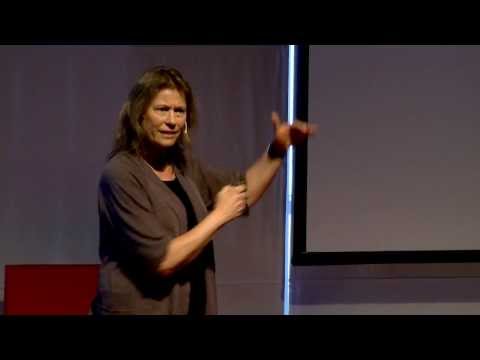
The TEDx talk below, given by documentary filmmaker Eilona Ariel, offers an accessible and personally honest entry point into how body sensation is central to the Vipassana method. Ariel speaks from direct experience rather than theory, and her account of how sensation-based observation alters the relationship to internal states is directly relevant to the belief change work described in this article. Watch particularly for her description of what shifts when observation replaces reaction.
The second video documents a conversation between a Buddhist minister with twelve years of monastic training and a therapist working in the Somatic Experiencing tradition. Their discussion covers the structural overlap between Goenka-style Vipassana and Peter Levine’s somatic work, touching on the relationship between sensation and thought, implicit memory, incomplete response cycles, and what it means to return home to the body. It is a rare and substantive dialogue for anyone integrating these two streams.

❓ FAQ ABOUT REWIRING BELIEF THROUGH VIPASSANA AND SOMATIC PRACTICE
Question: How is this different from positive affirmations?
Answer: Affirmations typically operate at the level of verbal proposition repeating a statement in the hope that repetition will eventually convince the nervous system. Somatic belief change works at the level of the felt sense, which is where the belief’s actual conviction lives. The difference is roughly the difference between telling a tensed muscle to relax and providing the neurological conditions under which it can relax on its own. Affirmations can be useful as part of a consolidation practice, but they are most effective after the somatic pattern of the old belief has already begun to shift, not before. Stacked on top of an unchanged somatic pattern, they often feel hollow because the body is still broadcasting a different signal.
Question: Do I need to attend a formal Vipassana retreat to do this work?
Answer: No. The attentional qualities that Vipassana cultivates steady, equanimous attention to physical sensation can be developed through daily practice of fifteen to thirty minutes. A residential retreat deepens these qualities significantly and is worth doing if you have the opportunity, but it is not a prerequisite for useful somatic belief work. What matters is the quality of attention you bring to the practice, not the setting in which you develop it. If you are new to meditation, starting with a simple daily body scan practice for four weeks will build enough interoceptive sensitivity to begin working with the basic process described here.
Question: What if I cannot locate the belief in my body? I feel it only as a thought.**
Answer: This is very common, particularly for people who have learned to intellectualize as a primary coping strategy. Start smaller: rather than trying to find the belief itself, find the body sensation that arises when you consider acting against the belief. If you believe you are not creative, notice what happens somatically when you imagine showing your work to someone who might judge it. The activation that arises in that imagining is the somatic edge of the belief. Work with that activation first. The fuller somatic pattern typically becomes more accessible after a few sessions of working at the edge.
Question: Is this appropriate for people with trauma histories?
Answer: Somatic work is powerful precisely because it works at the level of the nervous system, and that power requires care in the context of significant trauma. If you have a trauma history particularly complex or developmental trauma this work is best undertaken with a trained somatic practitioner rather than independently. The fundamental principles apply equanimous attention, gradual approach, titration but the practitioner’s ability to track your nervous system state and adjust the pace matters considerably. Solo practice is appropriate for general limiting beliefs that do not carry a significant trauma charge.
Question: How long does it take to see results?
Answer: This varies widely with the individual, the belief, and the consistency of practice. Some people notice a meaningful shift in the somatic quality of a specific belief within a single session of genuine somatic inquiry. More durable change typically unfolds over weeks of consistent practice, because neurological consolidation requires repeated activation across time. A useful benchmark: if you practice the basic process daily for three weeks and notice no change in either the somatic quality of the belief or your behavioral relationship to it, revisit whether you are finding the actual somatic pattern or working at a conceptual layer above it.
Question: What is the difference between equanimity and suppression?
Answer: Suppression involves actively preventing somatic material from reaching awareness tensing against it, distracting from it, or intellectualizing it into abstraction. Equanimity involves full sensory contact with the material combined with non-reactivity staying with the sensation without either amplifying it through aversion or bypassing it through detachment. The distinction is felt, not merely conceptual: suppression typically produces a secondary tension (the effort of holding down), whereas equanimity produces a quality of spacious presence that does not require effort to maintain. If you are not sure which you are doing, check for the secondary tension. If it is there, you are probably suppressing.
Question: Can this practice conflict with my existing therapy?
Answer: Generally, no. Somatic inquiry and Vipassana practice are compatible with most therapeutic modalities and tend to deepen and accelerate work happening in other contexts. They are particularly compatible with somatic therapies (Somatic Experiencing, Sensorimotor Psychotherapy, EMDR), mindfulness-based approaches, and Internal Family Systems. If you are working with a therapist, mention that you are also doing this practice, both because the work may bring material to the surface and because your therapist may be able to use the somatic vocabulary you are developing.
Question: What if the somatic sensation intensifies during practice rather than settling?
Answer: Some increase in intensity when you bring attention to a somatic pattern is normal and often indicates that you have found genuine material. The key distinction is between a manageable intensification that has a sense of process to it something moving through and an overwhelming escalation that feels destabilizing. In the first case, stay with it. In the second case, redirect attention to a neutral anchor (feet on the floor, breath rhythm, the temperature of your hands) and allow the nervous system to regulate before continuing. Titration working in small doses at the edge of tolerance rather than flooding is always more efficient than trying to process everything at once.
😆 JOKES ABOUT REWIRING BELIEF THROUGH VIPASSANA AND SOMATIC PRACTICE
-
“I signed up for a ten-day silent Vipassana retreat expecting enlightenment. What I got was a very detailed relationship with my left knee.” - Anonymous
-
“My therapist said the belief was stored in my body. I checked. It was in my shoulders. Both of them. With luggage.” - Anonymous
-
“I did somatic belief work for three months. My limiting beliefs are gone. Unfortunately so is my excuse for not finishing my novel.” - Anonymous
-
“They said to observe my thoughts without judgment. So I watched my brain tell me I was doing it wrong for forty-five minutes and gave myself a gold star for equanimity.” - Anonymous
-
“I found my core limiting belief. It had been pretending to be a neck pain the entire time.” - Anonymous
-
“The Vipassana teacher said sensations arise and pass. My belief about being fundamentally mediocre has been passing for thirty years. I am starting to suspect it is taking the scenic route.” - Anonymous
🦋 METAPHORS FOR REWIRING BELIEF THROUGH VIPASSANA AND SOMATIC PRACTICE
-
Sediment in still water: A limiting belief is like sediment at the bottom of a jar of water. The harder you shake the jar arguing with the belief, forcing yourself to think differently the more the sediment clouds everything. Equanimous attention is like setting the jar down, very still, and simply waiting. The sediment does not disappear; it settles. And in the clarity that follows, you can see what the water actually contains.
-
The tuning fork: When you bring precise, curious attention to a somatic belief pattern, you are like a tuning fork held against a particular frequency. The attention resonates with what is already there, causing the structure to vibrate more clearly and, in vibrating clearly, to begin to reorganize itself. The tuning fork does not force the note to change. It simply holds the frequency of contact long enough for the instrument to respond.
-
Soil preparation: Installing a new belief without first loosening the ground of the old one is like planting a seed in compacted earth. The somatic dissolution work meeting the old pattern with acknowledgment, equanimity, and honest inquiry is not the main event. It is the tilling. The new belief, when it comes, finds ground that has been prepared to receive it, and it grows accordingly.
-
Reading the weather from inside: Most of us experience our beliefs the way we experience weather as something that arrives without warning. Somatic practice is like learning to read barometric pressure. You begin to notice the faint drop in the internal atmosphere hours before the storm arrives the slight tightening in the chest, the shift in breath quality and you develop the capacity to respond thoughtfully rather than being caught in the downpour.
-
The river and its banks: A limiting belief is like a river that has worn its channel so deep that the water has no choice but to flow in the same direction. Somatic work gradually softens the banks not by attacking the channel but by introducing flexibility at the edges. Over time, the river finds it can spread into new territory. The old channel does not disappear; it simply becomes one of many possible routes rather than the only one.
-
A knot in a rope: You cannot untie a knot by pulling the rope tight. You have to move toward the knot, find the places where the rope has some slack, and work gently at the center of the tangle. A limiting belief held somatically responds in exactly this way. Forcing it, arguing with it, or condemning it simply pulls it tighter. Moving toward it with patient attention finding the softness at its edges, the places where the structure is not completely rigid is how the knot begins to loosen.
🧑🦲 AXEL MAGNUS’S EXPERIENCE WITH REWIRING BELIEF THROUGH VIPASSANA AND SOMATIC PRACTICE
I came to my first Vipassana retreat in my early thirties with the kind of confidence that, in retrospect, was its own warning sign. I had read extensively about meditation, had a regular sitting practice, and had spent several years in NLP training. I expected the retreat to be interesting, perhaps humbling in a productive way, and useful for my work with clients. I did not expect what actually happened, which was that by day four I was sitting in a meditation hall in rural Bavaria watching a belief I had held since I was approximately eight years old reveal itself in my own body, in real time, with nowhere to go.
The belief was not subtle. It was something to the effect that my internal experience did not quite count that what I felt was less real, less valid, less worthy of attention than what I produced, performed, or contributed. I had organized a significant portion of my professional identity around this belief without ever knowing I held it. I was a good listener. I helped people find what was real for them. I was, I realized in that meditation hall, much better at attending to other people’s experience than to my own.
On day four, during the first evening body scan of the session, I found it. It was in my sternum not a dramatic pain or a powerful activation, but a kind of determined flatness, like a door that had been shut for so long no one remembered when it was last open. When I brought my attention to it, following the instruction to simply observe without reacting, something about the quality of the flatness began to change. Not dissolving not yet but becoming more dimensional, more textured. I became aware of something underneath the flatness that had the quality of waiting.
It waited for three more days. I did not force it. I returned to it every session and maintained contact without agenda, which was, as it turned out, the most difficult thing I had done in a long time. Maintaining contact without agenda is not natural behavior for a person organized around contribution. I was accustomed to attending to something in order to help it move. Attending to something simply to be with it was structurally different in a way I had to keep relearning.
On day seven, during the late-morning sit, something gave way. It was quiet not a sob or a catharsis. The flatness in my sternum simply stopped being flat. It became warm. And then it became something I can only describe as spacious, which is a word I had used with many clients but had not, I now understood, ever properly inhabited myself.
What followed the retreat was not a permanent transformation. There were weeks where the flatness returned and I fell back into the old organization without noticing. But something had changed at the level of recognition I could now identify the somatic pattern, and identification is the beginning of choice. Over the following years, I returned to that pattern many times with the same quality of patient attention, and each time the window opened a little more readily.
There was a session, perhaps two years after the retreat, where I was working with a client on a belief about unworthiness territory very close to my own and I noticed something I had not been able to notice before. I could track my own somatic response while simultaneously tracking theirs. Not because I had resolved everything in myself, but because I had a living relationship with the territory. The flatness in my sternum had become a kind of guide rather than an obstacle.
What I understand now that I did not understand going in is that the technique itself is not the agent of change. The agent of change is the quality of attention you bring. Vipassana gave me a structure within which that quality of attention could develop. The somatic work gave me the vocabulary to know what I was attending to. Together, they gave me something I did not know I was looking for: a way of being with my own experience that did not require it to be useful.
That turns out to matter considerably both personally and professionally.
🕳️ THE LIMITATIONS OR UNCERTAINTIES IN REWIRING BELIEF THROUGH VIPASSANA AND SOMATIC PRACTICE
Not a universal solution. This framework works well for beliefs rooted in experiential learning patterns shaped by repeated relational experience, developmental conditioning, or chronic stress. It is less well suited as a primary intervention for beliefs that are symptoms of active psychiatric conditions including psychosis, severe dissociation, bipolar disorder in an active phase, or severe OCD. In these contexts, working with somatic belief material without adequate professional support can be destabilizing rather than liberating.
The depth varies with the practitioner. The quality of what is possible in somatic work scales significantly with the practitioner’s own embodied experience. A practitioner who has spent years developing their own interoceptive awareness and equanimity will be able to track and support a client’s process with a precision that is not available to someone working primarily from conceptual understanding. The implication for the practitioner is that personal practice is not optional it is the foundation of the work.
Vipassana alone has known limitations. Extended Vipassana practice, particularly in intensive retreat formats, can sometimes produce destabilizing experiences including depersonalization, increased anxiety, or the surfacing of unprocessed trauma in practitioners who do not have adequate somatic support structures. The Buddhist tradition has always recognized that intensive practice requires guidance, and contemporary trauma-informed approaches to meditation have added important nuance to how these experiences are understood and held.
Cultural context shapes the felt sense. The body’s representational tendencies are not culturally neutral. What is held in the chest versus the belly, what constitutes an appropriate emotional display, how somatic experience is labeled and interpreted all of these are shaped by cultural context in ways that an exclusively Western framework can miss. Practitioners working across cultural contexts should hold their interpretive frameworks lightly and remain genuinely curious about how the client’s own cultural body understands its experience.
The installation window is real but not always accessible. The period of heightened plasticity that follows somatic dissolution is genuine, but it requires the right conditions equanimity, attentional focus, absence of overwhelming stress that are not always available. In clients dealing with active life crises, the nervous system may simply not have the resources for installation work until conditions stabilize. Pushing for installation before dissolution is complete produces, at best, a cognitive overlay on an unchanged somatic pattern.
What the research does and does not say. The neuroscience cited in support of this work predictive coding, default mode network modulation, interoceptive processing is genuinely relevant and increasingly well supported. What the research does not yet offer is controlled outcome studies on the specific integrated protocol described here. The mechanistic plausibility is strong; the clinical evidence base is still developing. Hold this work with appropriate confidence and appropriate epistemic humility.
Timing and readiness cannot be forced. Some beliefs are not ready to shift, regardless of the quality of attention brought to them, because the life conditions that originally generated them are still present, or because other beliefs that support them have not yet been addressed. Pushing past genuine readiness is not productive and can produce what looks like change while leaving the underlying structure intact. Readiness is itself a somatic signal a quality of openness that the practitioner learns to recognize and the client learns to trust.
✏️ CONCLUSION
The shift this work asks of us is not primarily a shift in thinking. It is a shift in attention. The willingness to turn toward the internal landscape with curiosity, patience, and without the immediate demand that it become something different is the fundamental move from which everything else follows.
Beliefs change when they are met, not when they are defeated. The somatic pattern in the chest that says you are not enough has been holding that shape for a reason. The equanimous attention of Vipassana practice creates a space in which that reason can finally be heard, acknowledged, and gently released. What remains, when the old organization has settled, is something that was always present underneath it a capacity for direct experience that no belief, however persistent, can permanently obscure.
This is not quick work, and it is not always comfortable. The nervous system revises its predictions slowly, through consistent experience, not through force. But the revisions are real. They show up in how the shoulders hold themselves. In the quality of the breath. In the degree to which you feel at home in your own body when facing what you most care about.
Begin small. Find one belief in the body. Sit with it for five minutes without trying to fix it. Notice what happens to the quality of your attention and to the quality of the belief when you meet it as something to be understood rather than overcome.
That is the whole practice, scaled down to its beginning. Everything else grows from there.
📚 REFERENCES
-
George Lakoff & Mark Johnson, 1980; Metaphors We Live By
-
Steve & Connirae Andreas, 1987; Change Your Mind and Keep the Change: Advanced NLP Submodalities Interventions
-
Julian Jaynes, 1976; The Origin of Consciousness in the Breakdown of the Bicameral Mind
-
Andreas, S. (2002). Transforming yourself: Becoming who you want to be. Real People Press.
-
Connirae Andreas & Steve Andreas, 1989; Heart of the Mind: Engaging Your Inner Power to Change with Neuro-Linguistic Programming
-
Connirae Andreas & Tamara Andreas, 1994; Core Transformation: Reaching the Wellspring Within
-
Video DVD Transforming Yourself: Complete 3-Day Training with Steve Andreas
-
Gendlin, E.T. (1978). Focusing. Everest House.
-
Levine, P. (1997). Waking the Tiger: Healing Trauma. North Atlantic Books.
-
Friston, K. (2010). The free-energy principle: a unified brain theory? Nature Reviews Neuroscience, 11(2), 127–138.
-
Farb, N., Segal, Z., & Anderson, A. (2013). Attentional modulation of primary interoceptive and exteroceptive cortices. Cerebral Cortex, 23(1), 114–126.
-
Brewer, J.A., et al. (2011). Meditation experience is associated with differences in default mode network activity and connectivity. Proceedings of the National Academy of Sciences, 108(50), 20254–20259.
-
Hölzel, B.K., et al. (2011). Mindfulness practice leads to increases in regional brain gray matter density. Psychiatry Research: Neuroimaging, 191(1), 36–43.
-
Lazar, S.W., et al. (2005). Meditation experience is associated with increased cortical thickness. NeuroReport, 16(17), 1893–1897.
-
Mahasi Sayadaw (1978). The Progress of Insight. Buddhist Publication Society.
-
Reich, W. (1945). Character Analysis. Orgone Institute Press.
-
van der Kolk, B. (2014). The Body Keeps the Score. Viking.
-
Image credit - Prplexity - REWIRING BELIEF THROUGH VIPASSANA AND SOMATIC PRACTICE
🎬 MOVIES ABOUT REWIRING BELIEF THROUGH VIPASSANA AND SOMATIC PRACTICE
-
Peaceful Warrior (2006) Based on Dan Millman’s autobiographical novel, this film follows a young gymnast whose encounter with a mysterious mentor dismantles his sense of identity and rebuilds it through presence and body awareness. The somatic disruption Millman’s character undergoes maps loosely but recognizably onto the process of belief reorganization through embodied attention.
-
The Maharishi Effect (2004) A documentary examining how contemplative practice intersects with collective and individual belief systems about the self and the world. Useful as cultural context for the mainstream reception of Eastern meditative traditions in the West.
📺 TV SHOWS ABOUT REWIRING BELIEF THROUGH VIPASSANA AND SOMATIC PRACTICE
-
The Mind, Explained (Netflix, 2019–2020) The episode on mindfulness covers contemporary neuroscience research on meditation and the default mode network in accessible, well-produced terms. A useful primer for clients new to the scientific framing of contemplative practice.
-
Headspace Guide to Meditation (Netflix, 2021) While focused on general mindfulness rather than Vipassana specifically, this animated series offers clear, body-centered guidance on working with difficult internal states. One episode addresses the relationship between thought, sensation, and the stories we hold about ourselves.
🎭 DOCUMENTARIES ABOUT REWIRING BELIEF THROUGH VIPASSANA AND SOMATIC PRACTICE
-
Doing Time, Doing Vipassana (1997) This documentary follows Vipassana instruction inside Tihar Jail, one of India’s largest prisons. Watching practitioners encounter their own nervous systems in an environment designed to provoke reactivity makes the dissolution and reorganization process unusually visible.
-
The Dhamma Brothers (2007) A follow-up in the prison Vipassana tradition, this time in a maximum-security correctional facility in Alabama. The psychological and somatic transformations documented over the course of the retreat are striking, and the film raises important questions about what the nervous system is actually capable of revising when conditions are right.
-
Free the Mind (2012) This documentary follows the work of neuroscientist Richard Davidson, whose research at the University of Wisconsin on meditation and emotional regulation is foundational to the neuroscientific framing of belief change through contemplative practice.
📚 NOVELS ABOUT REWIRING BELIEF THROUGH VIPASSANA AND SOMATIC PRACTICE
-
Siddhartha, Hermann Hesse (1922) Hesse’s novel follows its protagonist not through intellectual conversion but through direct, embodied encounter with experience. The trajectory from conviction through dissolution to something quieter and less defended maps with surprising precision onto the framework described in this article.
-
The Remains of the Day, Kazuo Ishiguro (1989) A slow, meticulous portrait of a man whose entire identity is organized around a belief about service and emotional restraint. The novel’s power lies in showing how thoroughly a somatic character structure can shape a life and how long it takes for the body to register what the mind has been avoiding.
-
A Gentleman in Moscow, Amor Towles (2016) The novel’s central subject the reorganization of an entire life’s meaning within radically reduced circumstances is a sustained exploration of how beliefs about what constitutes a worthwhile existence revise themselves when external structures fall away, leaving only the quality of internal attention.