FROM TIBETAN TUMMO TO WIM HOF AND SENSORY WARMTH ILLUSIONS - HOW BODY STATE, SENSATION, AND ATTENTION SUPPORT BELIEF CHANGE AND TRANSFORMATION
TEMPERATURE-BASED BELIEF CHANGE: BREATH, HEAT, AND VISUALIZATION

Belief Change - is part of Series

Heat is one of the oldest change agents humans have ever used. Long before therapy had a name, cultures on every continent discovered the same thing: put the body through fire - real, visualized, or chemically simulated - and something loosens. Old certainties soften. New ones can be installed. This article maps that discovery across ten traditions, from Tibetan tummo to shamanic trance to the controlled chaos of the Wim Hof Method, and then draws a single usable framework from all of them.
The thread connecting every tradition here is body first, belief second. When you shift arousal, temperature, and attention at the same time, the meaning-making layer of the nervous system becomes briefly plastic. That is the window. Breath regulation and heat create the opening; visualization and repetition fill it with something new.
What you will find in this article: a cross-cultural tour of heat and breath practices, a practical belief change framework drawn from all of them, an NLP session transcript using somatic anchoring, a guided Ericksonian meditation, exercises you can use today, and a magician’s honest story about the night capsaicin and a voodoo doll taught him more about the mind than twenty years of books had.
🎯 THE BENEFITS OF TEMPERATURE-BASED BELIEF CHANGE
“I tried a sweat lodge to confront my fear of commitment. I came out so hot and so certain about everything that I accidentally proposed to my hiking boots.” - Anonymous
The benefits of working with heat, breath, and visualization for belief change fall across four layers: physiological, psychological, relational, and cumulative.
Physiological benefits arrive first and fastest. Controlled breathing - whether the abdominal retention of tummo, the forceful cycles of the Wim Hof Method, or the bandha-driven sequences of kundalini yoga - raises core temperature, alters blood CO₂ and O₂ balance, and activates thermogenesis. Research on tummo meditators found measurable increases in peripheral and core body temperature during practice. The body literally warms. Circulation improves. Peripheral tension softens. You feel it in your palms, in the base of your spine, in a loosening behind the eyes.
Psychological benefits follow the physiological ones, because altered body state reliably precedes altered meaning-making. When arousal is heightened and then brought under deliberate control - through breath holds, through the pause after a sweat lodge round, through the moment a Wim Hof practitioner surfaces from ice water - there is a brief window where existing beliefs are held less tightly. The neural patterns that normally maintain your self-concept are running on lower power. This is not metaphor. It is the basis of exposure-based therapies, of why peak experiences shift people, and of why ancient ritual so consistently uses heat, confinement, or extreme sensation as a precondition for transformation.
Relational benefits appear in traditions with communal structure - the sweat lodge, the kundalini class, the shamanic ceremony. Shared heat and shared vulnerability produce rapid social bonding. Beliefs about isolation, separateness, and unworthiness tend to soften in those conditions in ways that solitary practice cannot replicate as easily.
Cumulative benefits are the most important. A single session can crack a belief open. Repeated sessions in a fixed sequence can replace it. The sequence is what makes the change teachable, transmissible, and stable.
🏛️ ORIGINS OF TEMPERATURE-BASED BELIEF CHANGE ACROSS CULTURES AND HISTORY
The discovery that heat and breath alter consciousness, and that altered consciousness is the condition for belief change, was made independently across every culture that left records. The forms differ radically. The underlying structure is almost identical.
Tummo - the classic template
Tummo is the Tibetan Vajrayana term for inner-heat practice, and it remains the most thoroughly documented heat-breath-visualization method in the world. Its formal name in the Six Yogas of Naropa is gtum mo, roughly translatable as fierce woman or inner fire. The lineage traces through Tilopa, Naropa, Marpa, and Milarepa to the Kagyu school, and dates in written form to around the tenth century.
The practice has three components working together: vase breathing (controlled abdominal retention), visualization of inner fire rising from a seed syllable at the navel, and physical attention to the energy channels. The purpose within the tradition is not warmth for its own sake but the activation of subtle-body energies that support states of deep meditative clarity. The measurable physiological effect - verified in studies at Harvard Medical School by Herbert Benson in the 1980s and in later neuroimaging research - is a reliable increase in core and peripheral body temperature, sometimes several degrees Celsius, in conditions of environmental cold that would cause shivering in any non-practitioner.
The belief change mechanism is implicit in the traditional framing: you must become someone who can generate heat at will. The practice does not just create warmth; it rewrites identity.
Vase breathing
Vase breathing is the foundational breath technique inside tummo and related Tibetan practices. You inhale deeply into the lower abdomen, pressing the belly outward until it forms a rounded, contained shape - the vase. You hold, contracting the pelvic floor and drawing energy upward from below. You retain as long as comfortable, feeling pressure and warmth build at the navel center. Then you release.
The technique is teachable as a standalone tool entirely apart from the full tummo visualization. What it produces somatically is unmistakable: a sense of gathering and containment below the navel, a rise in internal pressure and warmth, and, after release, a spreading softness through the trunk that feels like the resolution of a held note in music.
Kundalini yoga
Kundalini yoga is a broader Indian tantric system that uses breath, bandhas (internal locks), mantra, mudra, and visualization to activate and move subtle energy upward through the body. The arousal pattern of a kundalini sequence - rapid breath of fire, root and throat locks, visualization of rising energy - can produce heat, tingling in the extremities, and altered states of arousal and attention that closely parallel what tummo produces, though arrived at through a different technical vocabulary and lineage.
Kundalini is broader than vase breathing: it includes emotional processing, devotional practice, and physical kriyas. Its value for belief change is the combination of physiological intensity with a clear energetic narrative. You are not just breathing fast. You are awakening something. That narrative primes the meaning-making function.
Tantra yoga
Tantra yoga is the wider esoteric family that includes both tummo-like inner-heat methods and kundalini-style energy practices. In some lineages it is virtually indistinguishable from the Tibetan practices: subtle body maps, channels, centers, the deliberate transmutation of energetic intensity into meditative stability and clarity. The key contribution of tantra as a framework for belief change is its sophisticated symbolic vocabulary: every body sensation is also a meaning. You are not just warm; you are embodying the fierce goddess. You are not just breathing fast; you are burning ignorance at the navel.
Wim Hof Method
Wim Hof developed his method across decades of self-experimentation, primarily with cold exposure. The breathing component - hyperventilation cycles followed by a breath hold on empty lungs - produces tingling, light-headedness, alkalosis, and a powerful sense of energy and clarity. Cold exposure then adds a second layer of physiological intensity: adrenaline, attention narrowing, and then, when the body adapts, a profound calm.
The Wim Hof Method strips the religious framework from the breath-heat structure and replaces it with a secular performance narrative: you are proving to your nervous system what it is capable of. This is belief change by demonstration rather than by visualization. You do not imagine you can withstand the cold; you get in and discover that you can. The belief update comes from the evidence of your own body. Neuroscientists at Radboud University confirmed in a 2011 study that Wim Hof could consciously influence his autonomic immune response - a finding that would have been considered impossible before that research.
Yoga and pranayama
The broader family of Indian pranayama includes dozens of breath regulation techniques spanning gentle to forceful, cooling to heating. Bhastrika and kapalabhati are heating practices. Nadi shodhana is balancing. Kumbhaka is retention. The theoretical framework underlying all of them - prana flowing through nadis - maps closely onto the Tibetan wind-channel model. The belief change application of pranayama is usually slower and more incremental than tummo or WHM: regular practice over months creates a quieter nervous system with greater regulation capacity, and quieter nervous systems hold beliefs more lightly, including limiting ones.
Qigong
Chinese inner-energy practice uses breath, posture, attention, and visualization to cultivate qi and move it through meridians. The sensation of warmth in the lower dantian - the energy center roughly corresponding to the navel area of the Tibetan and Indian systems - is a standard marker of correct practice. The methods are softer than tummo or kundalini, but the basic structure is the same: breath regulation, internal attention, warmth as a signal of alignment, and repetition to stabilize the state.
Sweat lodge / Inípi
The Lakota sweat lodge - Inípi, meaning “to live again” - uses intense heat, darkness, steam, prayer, and communal intention to create conditions for release and renewal. You enter in one state; you exit in another. The confinement, the heat, the darkness, and the deliberate ritual framing together produce liminal intensity that strips ordinary defenses. Beliefs about identity, relationships, and purpose that feel unmovable under normal conditions can be spoken aloud, witnessed, and consciously released inside a lodge. The lodge is, in this sense, a belief-change device built of steam and community.
Shamanic trance
Across cultures, shamanic trance practices use rhythm, breath, movement, posture, and sometimes heat or darkness to alter ordinary consciousness and access alternative narratives. The mechanism is not primarily heat but rhythmic entrainment: sustained drumming at around 4 to 7 beats per second drives brainwave activity toward theta, the state associated with imagery, hypnotic receptivity, and loosened habitual self-narrative. Beliefs that feel like facts in ordinary waking state can be examined and reorganized in trance. The shaman’s skill is to hold the container while the client’s usual certainties temporarily dissolve.
Pyrotherapy - the medical detour
Pyrotherapy is the deliberate medical induction of fever for therapeutic purposes. Its documented history runs from Hippocratic texts through to the Nobel-winning work of Julius Wagner-Jauregg in the early twentieth century, who used malaria-induced fever to treat neurosyphilis. Before antibiotics, there was logic to the idea: fever alters the biochemical environment, suppresses certain pathogens, and genuinely changes the patient’s physiological state. More relevant here is the cross-cultural pattern of using heat-like states - sweat, fever, steam - as an expected precondition for healing, whether the mechanism was understood or not.
Capsaicin, menthol, and sensory warmth illusions
Capsaicin activates the TRPV1 receptor - the same receptor the nervous system uses to detect actual heat and pain. Apply capsaicin to skin and the nervous system reports: burning, warming, spreading heat. No actual tissue damage is occurring unless dosage is excessive, but the signal going to the brain is functionally identical to the signal from real heat. Menthol does the opposite, activating TRPM8, the cold receptor, creating felt coolness on tissue that is thermally neutral. Salt-ice creates actual tissue damage through extreme cold that is felt as burning - a cautionary case where the illusion becomes real injury. Hypnosis-induced warmth, by contrast, works purely through suggestion and imagery: experienced subjects can report felt warmth in a limb while showing no peripheral temperature change at all.
For belief change, the capsaicin and hypnosis examples are the most instructive. They demonstrate that the nervous system does not require actual heat to generate a heat experience. It requires only the right signal - chemical or attentional. This means that internal visualization of heat, conducted with sufficient focus and physiological priming, can produce a signal that the brain processes as meaningfully as real warmth. The Tibetan lamas knew this. They built an entire technology of inner fire around it.
📜 PRINCIPLES OF TEMPERATURE-BASED BELIEF CHANGE
Principle 1: State change precedes belief change
The nervous system does not update beliefs through argument. It updates them through experience. If you tell someone their belief is wrong, the belief usually tightens in self-defense. If you place the nervous system in a state where the belief does not fit - where the body is doing something the belief says is impossible - the belief loosens. Heat, breath, and physiological intensity create those states. The principle is: shift the body first; the belief change follows.
Somatically, you can feel this. When you exhale fully and hold, the body is briefly beyond the range of ordinary social vigilance. Something relaxes that normally watches. That brief relaxation is the window.
Principle 2: Visualization directs the change
Altered state without direction is just altered state. The practices here all pair physiological intensity with specific imagery: inner fire at the navel, energy ascending through the spine, steam dissolving what needs to dissolve. The image is not decoration. It is the steering. Without visualization, breath and heat create an open state. With visualization, they create a shaped state - one that can be pointed at a specific belief or identity.
Principle 3: Repetition builds the new pattern
A single session of tummo can produce a powerful experience. Without repetition, that experience remains an interesting memory rather than a structural change in how you hold yourself. Every tradition in this article emphasizes repetition: daily practice, recurring ceremony, a sequence that becomes habitual. The new state must be reinforced enough times that the nervous system begins treating it as a reliable option. This is the same principle as NLP anchoring: an association becomes stable through repeated pairing.
Principle 4: The sequence is the technology
What makes tummo teachable - and what distinguishes it from incidental heat exposure - is that it is a sequence with identifiable steps. Breath, retention, visualization, heat, meaning. The sequence can be transmitted. The fact that it is a sequence is what makes it a technology rather than an accident. When you design your own belief change practice, the sequence matters as much as any individual component.
Principle 5: Intensity calibration determines depth
Gentle pranayama creates mild state shifts; vase breathing with full retention creates strong ones; a properly conducted sweat lodge or ice bath creates very strong ones. The intensity of the state shift correlates roughly with how deeply the existing belief structure is accessed. Mild practices are suitable for gradual change. Stronger intensity creates faster access to deeply held material but also requires more care in how that material is met. Start with what you can hold, and build.
Principle 6: Cultural container holds the charge
Every tradition in this article carries the change inside a cultural container - a ritual form, a teacher lineage, a communal practice, a named method. The container does several things: it creates expectation (which shapes the experience), it provides interpretation (which shapes the meaning), and it offers safety (which allows depth). When you use these practices outside their original containers, as many people do with the Wim Hof Method or yoga, the absence of traditional framing is partly compensated by the method’s own instructions and community. Build your own container with care.
Principle 7: The body remembers what the mind forgets
A belief shift that is worked through the body - through heat, breath, posture, and sensation - tends to be more durable than one worked through language alone. This is why somatic approaches to trauma and belief change have gained traction in contemporary clinical practice. The body holds the record of what was true in past experience. Working through the body to create new experience is not metaphor; it is the most direct route to the record-keeping system.
🗨️ GUIDING CLIENTS IN TEMPERATURE-BASED BELIEF CHANGE
Observation and presence
Position yourself at the client’s side to unobtrusively observe subtle shifts in facial expressions, gestures, and skin tone - particularly flushing, pallor, or visible changes in breathing rate - while ensuring you do not interfere with their imaginative process or somatic experience. Heat-based processes can produce visible physiological changes quickly. Notice them without commentary unless the client needs to be grounded.
Vocal modulation
Use a gentle, steady, unhurried tone when speaking, allowing your voice to model the calm you want the client to occupy. In heat and breath practices, the practitioner’s voice serves as an external anchor for the internal temperature. Slow your delivery during peak intensity. Let pauses do work.
Genuine engagement
Demonstrate active interest in what the client is noticing internally. These practices produce very specific, personal somatic experiences - warmth gathering in a particular place, a sense of pressure that has a distinct quality, a color or temperature gradient that is uniquely theirs. Ask about the specific qualities: where exactly, what quality, what direction, what temperature. This specificity keeps the client tracking signal rather than narrative.
Reflective communication
Echo the client’s words and sensory vocabulary. If they describe a warmth that “spreads outward like water,” use that language back to them rather than substituting your own. If they shift forward slightly when describing the sensation, match that orientation in how you hold yourself. The goal is to stay inside their frame rather than imposing yours.
Connecting experience and inquiry
Link questions and reflections to the client’s experience using natural temporal connectors: “as that warmth spreads,” “while you hold your breath,” “when the heat reaches your chest.” These connectors keep inquiry embedded in experience rather than pulling the client out of their state to answer an abstract question.
Practical step-by-step guidance for practitioners
-
Introduce the process clearly. Before beginning any heat-based or breath practice, describe what will happen and what is normal to experience: warmth, tingling, light-headedness, involuntary movement, emotional response. Informed consent is not bureaucracy here; it is the container.
-
Establish a somatic baseline. Ask the client to notice, before starting, where in their body the belief you are working with lives. What temperature, weight, location, and quality does it have? This baseline becomes the before-measurement.
-
Lead the breath sequence. Begin with instruction-guided breathing rather than letting the client self-direct until they are familiar with the method. Your pacing sets the rhythm. Be explicit about inhale duration, whether to hold, when to exhale.
-
Track the shift as it occurs. When you see flushing, relaxation of held tension in the jaw or forehead, or a deepening of the breath, invite the client to notice what is happening in the specific place where the target belief was located. “What is happening there now, as this warmth builds?”
-
Introduce the visualization at the peak. When physiological intensity is highest - at the top of a retention, during the warmth of a sweat lodge round, immediately after cold exposure - introduce the image or intention. Do not wait until the state has passed.
-
Install the new meaning. While the client is in altered state, offer the new belief or identity as a simple present-tense statement, spoken in their own vocabulary: “I can do this.” “This warmth is mine.” “This is what I am capable of.” Keep it short and concrete.
-
Ground and integrate. Return to normal breathing before ending the session. Ask the client to notice the after-state: what has shifted in the location of the original belief? What quality does it have now? Naming the shift anchors it.
-
Assign a repetition practice. The session opens a window. Repetition builds the new structure. Send the client away with a specific shortened version of the practice - three minutes of vase breathing, a cold shower with intention, or a five-breath sequence - to repeat daily for two to three weeks.
💧 TEMPERATURE-BASED BELIEF CHANGE AXEL MAGNUS SCRIPT BASED ON NLP PRINCIPLES
NLP technique: Somatic anchoring through thermal state induction, combined with submodality modification of the belief’s kinesthetic signature
“The client came in saying she believed she was someone who couldn’t handle pressure. She left smelling faintly of menthol and considerably less convinced.” - Anonymous
Axel Magnus: Before we start, I want to ask you something simple. When you think about the belief that you can’t handle pressure - not a story about it, just the feeling of it - where do you notice that in your body right now?
[Client pauses, places hand on sternum]
Client: Here. It’s kind of - tightening. Like something is gripping.
Axel Magnus: Good. And what quality does that gripping have - is it warm, cool, neutral, something else?
Client: Cool. Slightly cold, actually. Like a held breath.
Axel Magnus: Like a held breath. Interesting. And if you had to give it a size - how much space does it take up in your chest right now?
Client: About… a fist. Maybe smaller than that.
Axel Magnus: Perfect. Thank you. I want you to keep that awareness in your chest as we work, because that fist is going to do something interesting. Now, I am going to guide you through a breathing sequence. It will feel different from normal breathing. Some people feel warmth, some feel tingling, some feel a kind of energy gathering in the belly. Whatever you notice, that is fine. There is nothing you need to do except breathe and stay curious. Ready?
[Client nods]
Axel Magnus: Good. Let’s begin with your eyes open to start. Sit with your feet flat on the floor, spine upright - not stiff, just as if someone had placed a warm hand at the center of your back. [Pauses] Now breathe in slowly through the nose, and as you inhale, push your belly outward - not your chest, your belly - as if you are filling a round container from the inside. Like a vase.
[Client inhales, belly expands slightly]
Axel Magnus: Good. Hold that breath. Feel the roundness of it. Feel the pressure gathering just below the navel.
[Client holds breath, face shows slight concentration]
Axel Magnus: Now release through the mouth. Let it go slowly, but let it all go.
[Client exhales]
Axel Magnus: Good. And again - in through the nose, fill the vase…
[They repeat the sequence four more times. By the fourth repetition the client’s cheeks are faintly flushed and her shoulders have dropped noticeably]
Axel Magnus: This time, on the hold, I want you to bring your attention to that fist in your chest. Don’t push it or change it. Just notice it while the warmth is building in your belly. What do you notice?
[Long pause. Client’s eyes are half-closed]
Client: The fist is… it feels like it’s getting warmer. Like the warmth from below is reaching it.
Axel Magnus: Stay right there. Stay with that contact - the warmth from below meeting the coolness in the chest. [Pauses] What happens at the edge where they meet?
Client: (quietly) It’s softening. The edges are softening.
Axel Magnus: Allow that. You don’t need to do anything. Let the warmth from below be curious about that cool gripping place. [Pauses] What size is it now?
Client: Smaller. Much smaller. It’s more like a - like a coin.
Axel Magnus: Good. And now exhale very slowly, and as you exhale, imagine that warmth spreading through the coin, through the chest, out to the edges of your shoulders, down your arms to your hands.
[Client exhales slowly, hands relax open in her lap]
Axel Magnus: What do you notice in your hands right now?
Client: They’re warm. They feel almost heavy, but in a good way. Alive.
Axel Magnus: I want to offer something. Not because I know what’s true for you, but because you can check it against what your body just showed you. A moment ago your nervous system was generating cold and gripping in your chest - the signal it uses for “I can’t handle this.” And then it generated warmth that spread to your hands. Your nervous system did that. The hands that are warm and heavy and alive right now - those are your hands. That warmth is yours. [Pauses] What does that tell you about the belief that you can’t handle pressure?
Client: (pause, small laugh) That maybe my body knows something I forgot.
Axel Magnus: Exactly. Let’s anchor that. Place one warm hand over where the fist was. [Client does so] And with that warmth under your palm, finish this sentence: I am someone who…
Client: I am someone who… can find warmth when I need it. Who can warm up cold fear.
Axel Magnus: (quietly) That’s it. Stay with that. [Pause] Now let’s do the breathing sequence twice more, and each time on the hold, return to that hand on your chest and let the sentence come up naturally.
[They repeat the sequence twice. After the second repetition the client’s breathing is full and easy. She looks lighter.]
Axel Magnus: Good. Now I want to check something. Think of a situation - it can be imaginary, something in the future - where pressure shows up. The kind of situation that would have triggered that cool fist before. [Client nods slightly, face tightens very briefly] What do you notice in your chest right now?
Client: (surprised) Warm. Warmer than usual. The grip isn’t there.
Axel Magnus: That’s the test. [Smiles] Here is what I would like you to do between now and when we next speak. Once a day - it takes less than three minutes - sit upright, do five vase breaths, hold each one for as long as is comfortable, and on each hold, place your hand on your chest and let the warmth come. You don’t need to repeat the sentence every time. The body will remember it for you.
Client: Just five breaths?
Axel Magnus: Just five breaths. Consistency is what installs it. The door is already open. We are just keeping it open until the new arrangement becomes ordinary.
💪 MEDITATION FOR TEMPERATURE-BASED BELIEF CHANGE
Find a seated position that allows your spine to be comfortable and upright, as if warmth were rising through it from below. You needn’t be perfectly still, and you needn’t arrange yourself in any particular way. Your body already knows how to be warm.
Close your eyes when it feels right to do so, in your own time, allowing your breath to begin settling before you give it any particular instruction. Just notice it. Notice the ordinary temperature of this breath - the slight coolness of the air arriving, the slight warmth of the air leaving. That difference is already there, already working, already a tiny inner fire you’ve been keeping lit without thinking about it for years.
And you might begin to notice, as your attention gathers inward, that there are places in your body that feel warmer than others. Perhaps a warmth in the palms. Perhaps a vague gathering of heat at the center of the trunk. You don’t need to create this. Your body is already doing it. You are simply beginning to listen.
When you feel ready - and that readiness might come as a slight deepening of the inhale, or a settling of the jaw - begin to breathe in slowly through the nose, allowing the belly to expand outward. Not the chest. The belly. Let it round and gather, as if filling a round vessel from inside. Let the air travel all the way down, let the pressure build gently below the navel, and then hold, just for a moment, feeling that contained fullness.
And while you hold… notice the warmth beginning to build at the center of that fullness. A seed of heat, perhaps no bigger than a coal. Just there. Your body generated it. You simply noticed it.
And as you exhale slowly through the mouth, you might allow that warmth to begin moving - upward through the trunk, spreading like warm water finding every available space, reaching the chest, the shoulders, the throat.
Do this again. Breathe in and fill the vessel. Hold. Notice the warmth at the center. Exhale and let it spread.
And while you breathe, I want to invite you to think of something you have told yourself you cannot do or cannot be. Not with urgency. Just let the thought be present, the way you might hold a stone in a warm hand. Let the warmth of your breath touch it.
What temperature does that belief carry? You may find that limiting beliefs often feel cool, or contracted, or a particular shade of gripping. And that’s perfectly all right, because you’re noticing it now from a different temperature than usual.
As you hold your breath on the next inhale, bring your attention to that cool contracted place wherever it lives in the body. Feel the warmth rising from below. Allow the warmth to be curious about the coolness - the way a warm hand might reach toward something cold, not to force it, not to burn it, but simply to be near it, to offer warmth.
And you might notice, as the exhale comes, that the edges of that cool contracted place are not as sharp as they were. They may be softening. A little.
Repeat the breath and hold. And this time, somewhere on the exhale, allow a simple sentence to form - not one you have to construct, but one your body might offer you now, from this warm state: a sentence about who you are when warmth is available. Perhaps it is a single word. Perhaps it is a short statement. Don’t force it. Let it arrive.
Let that sentence settle into the warmth of the chest like a coal into a bed of embers, glowing quietly, not needing to announce itself.
Continue breathing this way for as long as feels natural - five breaths, ten, fifteen. Each breath a repetition. Each repetition a small strengthening of the new pattern. The nervous system is associative: it links what happens together. Warmth and this sentence are happening together, now, in your body.
When you are ready to return, take one full, deeper breath - filling the vessel completely, holding as long as is comfortable, and then releasing slowly, slowly, until the lungs are empty and quiet.
Notice what is in the place where the cool gripping was.
Bring your attention to your hands. Notice their warmth. Notice that the warmth is yours - it was generated by your body, during your own breathing, in your own time. No one gave it to you. You made it.
Open your eyes when you are ready, carrying that warmth with you into whatever comes next.
🗣️ ANECDOTE ABOUT TEMPERATURE-BASED BELIEF CHANGE
I was performing in a small theatre in a coastal town in San Sebastian, the summer in stage magic/mentalism performance. The show was built around mind reading, suggestion, and what my publicity materials described, with cheerful vagueness, as “demonstrations of the mind’s sovereignty over sensation.”
One segment involved a voodoo doll.
I had worked out the routine with care. I would invite a volunteer, typically someone from the front rows who seemed at ease and curious. I would hand them a small doll made of wax and cloth - the sort of thing sold in novelty shops - and explain that in certain traditions, the doll was understood to be connected to a person’s body. I would then hold the doll’s left arm over a lighter. Just briefly. Just enough for the flame to pass beneath the wax.
What the volunteer did not know, and what I had prepared by lightly coating my own finger and their left forearm - with their permission, during a brief earlier interaction under the guise of “marking you for the memory sequence” - was a dilute capsaicin cream. Not strong. Nothing that would cause real irritation. Just enough for the TRPV1 receptors in the skin to begin firing a low-level warmth signal. It takes a minute or two. By the time I was standing across the stage holding the doll’s arm over the flame, the cream had been working for about 90 seconds.
The volunteer that evening was a man in his mid-forties. He had laughed during the first half of the show, was clearly a skeptic, and had the comfortable certainty of someone who knows the world is mechanical. He came up on stage with the confident walk of a person who expects to catch the trick.
I held the doll’s arm over the flame.
He said nothing for about four seconds. Then his left hand moved - involuntarily, reaching slightly toward his left forearm - and he looked down at his arm with an expression I have never forgotten. It was not quite fear. It was the expression of someone encountering evidence that does not fit. A brief softening of every assumption. A moment of genuine openness.
“That’s warm,” he said. “My arm is warm.”
“Yes,” I said. “It is.”
I could not stop thinking about was what had happened in the moment after. When he looked at his arm and said that’s warm, something had shifted. He spent the rest of the show differently. Quieter. More attentive. When I did a later segment involving suggestion and internal imagery, he was the most responsive person in the room - the man who had arrived as a cheerful skeptic was now sitting forward, genuinely wondering.
I began to understand that what I had done - without intending to - was the first step of every heat-based belief change method I would later study seriously. I had used chemical means to deliver a body state that the person’s ordinary belief system could not explain. The body said: you are warm. The belief system said: there is no reason to be warm. In that gap between body signal and explanatory story, something brief and important had opened.
Later I learned the proper NLP vocabulary for it. Submodality disruption. Accessing a state outside the resource history of the limiting belief. The window before the new frame installs.
Now I work with breath instead of capsaicin. Vase breathing, heat visualization, the deliberate cultivation of that gap between what the body reports and what the limiting belief predicts. But the principle is the same one I stumbled on by accident in a small theatre: heat is a gap-maker. And in the gap, new things can grow.
👣 THE BASIC PROCESS OF TEMPERATURE-BASED BELIEF CHANGE
Step 1: Locate the belief in the body
Before doing any breath or heat work, identify where the target belief lives somatically. Ask yourself - or your client - not what the belief says, but where you feel it. What part of the body tightens, contracts, cools, or holds when this belief is active? Common locations are the chest, the throat, the solar plexus, and the base of the skull. Note the temperature, weight, size, and texture of the sensation. This is the baseline you are working with.
What to notice: A specific location, usually smaller than the palm. Some quality of temperature - often cool or neutral for limiting beliefs, warm for resourceful ones.
Step 2: Choose and learn the heat-generating breath
Select one breath sequence and learn it before attempting belief change. The simplest is: inhale through the nose for four counts, expanding the belly outward; hold for four counts, feeling pressure gather below the navel; exhale through the mouth for six counts. Repeat five times as a starting set. Other options include the full vase breath with pelvic floor engagement, a Wim Hof style hyperventilation cycle, or bhastrika from pranayama. Choose one and repeat it enough that the steps are automatic.
What to notice: After the third or fourth repetition, warmth in the palms, a sense of gathering in the lower abdomen, possible mild tingling in the fingers. These are the signals that the thermogenic process is beginning.
Step 3: Amplify the heat with visualization
Once you can reliably produce the warmth sensation through breath, add visualization. On each hold, imagine a small orange coal at your navel center - seed-sized at first. With each hold, the coal glows slightly brighter. With each exhale, heat moves outward from the coal in all directions - upward through the spine, outward through the ribs, down through the pelvis and legs. The visualization does not need to be vivid in a visual sense. It can be purely kinesthetic: simply feeling where the warmth is and allowing it to expand.
What to notice: The warmth becomes easier to access, and the direction it spreads becomes something you can influence with attention.
Step 4: Bring the target belief into the heated state
At peak warmth - after five to eight breath cycles - turn your attention to the location of the target belief. Do not try to argue with it or analyze it. Simply observe it from your current warm state. Notice what its temperature is relative to the warmth you have generated. Often a limiting belief will feel cool, contracted, or heavier than the surrounding warmth. Let the warmth from step three move toward that location.
What to notice: The quality of the belief sensation may begin to change - edges soften, temperature shifts, size reduces, texture becomes less sharp.
Step 5: Offer the new belief at the peak moment
While you are holding your breath and the warmth is at its most present, introduce a short present-tense statement that represents the replacement belief. This should be in your own language, as specific as possible, and connected to the sensory experience of the current state. Not a generic affirmation, but a sentence that fits what your body is actually demonstrating in this moment. “I can generate warmth when I need it” is more effective than “I am capable of anything.”
What to notice: The statement lands differently in this state than it would in ordinary waking. It may feel more credible, less like something you are trying to convince yourself of.
Step 6: Test the change
After completing the sequence, check the original location. What is there now? What quality, temperature, size? Then bring to mind the situation where the old belief would typically activate. Notice the somatic response. Is it the same as before? Smaller? Warmer? This is not proof of permanent change after one session, but it is a functional test of whether the state has shifted in this moment.
What to notice: A difference - even a small one - in the somatic quality of the belief location. This difference is the beginning of the new pattern.
Step 7: Establish repetition
Choose the smallest possible daily version of the sequence that will reliably produce the warmth response: typically three to five breath cycles with brief visualization. Repeat this at the same time each day, connecting the warm state to the new belief statement each time, for at least two to three weeks. The association you are building requires repetition to become automatic. One session opens the window. Repetition installs the frame.
What to notice: Over time, the warmth becomes accessible more quickly, the old belief has decreasing grip, and the new statement begins to feel like a description rather than an aspiration.
▶️ VIDEO ABOUT TEMPERATURE-BASED BELIEF CHANGE
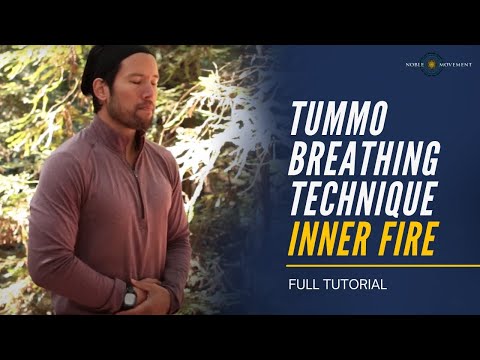
A complete tutorial on tummo inner fire breathing, covering the breath sequence, belly placement, visualization of warmth, and full practice guidance. This is the clearest public demonstration of the core physical technique underlying the belief change framework in this article. Watch for the moment the instructor describes the sensation of warmth arriving - this is the physiological state you are learning to generate and use.
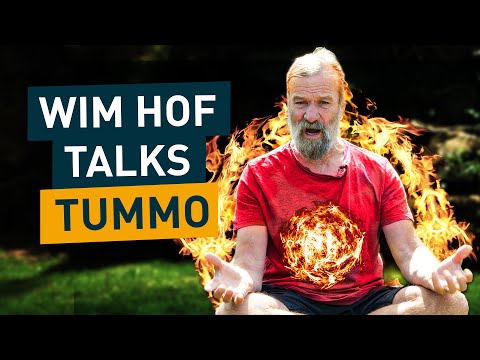
Wim Hof himself discusses the similarities and differences between his method and tummo in a direct, accessible way. Useful for understanding how the secular and traditional frameworks for the same underlying physiology relate to each other, and how identity change through resilience demonstration differs from identity change through visualization.
❓ FAQ ABOUT TEMPERATURE-BASED BELIEF CHANGE
Question: Is the warmth in these practices real or imagined, and does the distinction matter?
Answer: The warmth is physiologically real in the sense that it activates the same neural pathways as real heat. Research on tummo meditators has confirmed measurable increases in core body temperature. Research on TRPV1 receptors confirms that capsaicin produces identical neural signals to actual heat. Research on hypnotic suggestion shows that some people show peripheral vascular changes - real blood flow increases - under suggestion of warmth. Whether the initial trigger is breath, chemistry, or suggestion, the downstream signal is the same. For the purposes of belief change, the physiological reality matters less than the subjective reality: the nervous system experiences warmth, and that experience is the lever.
Question: How is this different from just doing deep breathing exercises?
Answer: Deep breathing without intention produces relaxation. The practices here use breathing specifically to generate thermogenic arousal - a different state than simple calming. The addition of heat visualization, breath retention, and muscular engagement in vase breathing or kundalini sequences creates a state of elevated arousal that is simultaneously focused and warm, distinct from the neutral calm of slow breathing. That specific combination - arousal plus warmth plus directed attention - is what creates the window for belief change.
Question: What if I don’t feel any warmth at all?
Answer: Some people have lower initial sensitivity to the internal warmth signal, particularly those who are primarily visual rather than kinesthetic in their NLP representational preferences. Two adjustments help: first, complete more repetitions before expecting the signal - some people need ten to twelve breath cycles before warmth registers clearly; second, use external warmth to prime the system - a warm shower, a heating pad on the belly for two minutes before practice, or even a cup of warm tea held with both hands. The external warmth gives the nervous system a reference point that makes the internal warmth easier to locate.
Question: Can I do this for any belief, or only certain kinds?
Answer: The most responsive beliefs are those that live in the body as a somatic contraction - coolness, tightening, held breath, weight. Beliefs that manifest somatically can be influenced somatically. Abstract conceptual beliefs with no clear body signature are harder to reach this way, though they often do have a body component that just has not been located yet. If you cannot find a somatic location for the belief you want to change, spend a session purely on body mapping before attempting the heat sequence.
Question: Is this safe for everyone?
Answer: Breath retention practices are contraindicated during pregnancy, and with cardiovascular conditions, epilepsy, or neurological disorders. The Wim Hof method explicitly advises against practice near water or while driving due to the risk of loss of consciousness. Extreme heat exposure (sweat lodge, ice bath) should always be supervised by an experienced guide. The internal visualization and capsaicin-awareness approaches described in this article are considerably lower intensity and have minimal physical risk for healthy adults. When in doubt, consult a medical professional before beginning any intense breath or heat practice.
Question: How long does it take to notice a change in a persistent belief?
Answer: Research on neuroplasticity and habit formation suggests that meaningful structural change in learned patterns typically requires somewhere between two and eight weeks of daily practice, depending on how deeply the original pattern is held and how consistently the new practice is applied. The first session often produces a noticeable immediate shift - the belief feels different after the sequence. That shift is real but fragile. Repetition over several weeks is what consolidates it into a durable new default.
Question: How does this relate to NLP submodality work?
Answer: The relationship is close and practical. In NLP terms, the target belief has a kinesthetic submodality signature - its temperature, location, size, weight, and texture. The heat-breath process changes those submodalities directly through physiological means rather than purely through imagined manipulation. The warmth generated by breath is an external agent that enters the submodality space of the belief and alters it through actual felt experience. Combining standard submodality techniques with heat-breath practices typically produces faster and more durable change than either approach alone.
Question: Can I use this with clients who are skeptical about spiritual frameworks?
Answer: Yes. The Wim Hof Method and simple pranayama sequences are entirely secular and carry robust physiological explanations. Present the framework as a body regulation practice - you are learning to generate a specific physiological state and then use that state as a context for examining a thought pattern. Most skeptics find this completely acceptable. The deeper mechanism is the same regardless of how it is framed. The tradition does not have to travel with the technique.
😆 JOKES ABOUT TEMPERATURE-BASED BELIEF CHANGE
-
“I did tummo breathing for thirty days to overcome my fear of failure. I now run so hot that my limiting beliefs are afraid of me.” - Anonymous
-
“Tried the vase breath for the first time. Got confused about which end to breathe through.” - Anonymous
-
“My therapist recommended somatic work. I thought she said ‘sauna work.’ I showed up with a towel. Either way, something shifted.” - Anonymous
-
“The sweat lodge ceremony promised I would leave a different person. True. I left a person who was significantly damper.” - Anonymous
-
“Capsaicin for belief change sounds unusual until you’ve eaten something spicy and accidentally decided you were invincible. Same mechanism, fewer life changes.” - Anonymous
-
“Visualization of inner fire is powerful until you’re in the middle of a breath hold imagining flames and someone asks if you’ve turned the oven off.” - Anonymous
🦋 METAPHORS FOR TEMPERATURE-BASED BELIEF CHANGE
-
The forge: A belief that has hardened over years is like metal cooled into a fixed shape. Heat does not destroy it; it makes it workable. Breath-generated heat applied to a limiting belief does the same thing - it does not erase the metal, it makes it responsive. The new shape has to be formed while the metal is warm. This is why visualization and intention must meet the physiological state at its peak rather than after it has passed.
-
The wax seal: Old wax seals on letters had to be melted before they could be stamped with a new image. A limiting belief is a seal that was set in a moment of intensity - perhaps childhood, perhaps crisis - and has hardened since. Heat-breath work softens the wax without dissolving the letter. The new stamp is the new belief, pressed in while the wax is warm and before it re-sets.
-
The slow thaw: Some beliefs do not change all at once. They are more like permafrost - ice that has been frozen for so long that the ground has organized itself around it, and nothing can grow in that area. A single intense heat session can crack the surface, but the real change happens gradually as the practice is repeated: a few degrees warmer each time, the ground slowly becoming available. Eventually flowers appear in places that were ice only months before.
-
The pressure cooker: Breath retention creates internal pressure. The feeling of pressure building during a hold is not discomfort to be avoided; it is the energy of change looking for direction. The visualization provides the valve - a specific outlet for where the pressure will go and what it will become when released. Without the valve, the pressure dissipates. With it, it does work.
-
The pilot light: A pilot light is a permanent small flame that is kept burning so a larger fire can be lit at any moment. The daily practice of five minutes of heat-breath work is like maintaining a pilot light. You are not performing the full transformation every day. You are keeping the access warm, so that when you need to use it - when an old belief is triggered by circumstances - the flame is already there, already available.
-
Pyrotherapy and the reset: Fever has long been associated with clearing - the idea that a high temperature burns through what is wrong and allows the body to start fresh. At the metaphorical level, heat-breath work does something similar for belief structures. The old pattern does not simply update rationally; it runs hot, reaches a point of disruption, and then reorganizes. What emerges is not the same as what went in.
🧑🦲 AXEL MAGNUS’S EXPERIENCE WITH TEMPERATURE-BASED BELIEF CHANGE
I learned the hard way that a trick is only a trick until your body makes it true.
The capsaicin episode in Basque Country - which I described earlier in this article - was the crack in my certainty as a performer. I had spent years creating experiences for audiences, learning to manipulate attention and expectation, understanding that the mind could be directed by carefully placed signals. I was proud of how clearly I understood the mechanism. That pride had a temperature. It ran cool and controlled, the way pride often does.
The volunteer that night - the middle-aged skeptic with the comfortable walk - shook something loose in me. Not because what happened was supernatural. Because it wasn’t. Because I knew exactly why his arm was warm, and watching him look at it with open astonishment reminded me that I had never let myself be astonished by my own body in quite the same way.
I had spent years directing other people toward experiences of awe and uncertainty while standing behind the curtain with my hand on the mechanism. Competent. Controlled. Never quite inside the experience myself.
Two years after I stopped performing the routine, I attended a breathwork weekend in the mountains. Not tummo in any formal sense - a modern adaptation using extended breath cycles, cold plunge pools, and somatic bodywork. I went as a skeptic-adjacent practitioner: interested in the mechanism, mildly suspicious of the framing, expecting to learn something I could use.
On the second morning, during an extended breath sequence in which I had been lying on a mat for about forty minutes, something happened in my chest that I still find difficult to describe with precision. A warmth arrived that was not coming from the breath. Or rather, it was coming from the breath, but it felt as if the breath was returning something to me that I had not noticed I had given away - some ongoing tightness around my sternum that I had attributed for years to posture.
I started crying, which I had not expected and could not immediately explain. Not sad crying. More like the tears that come when something has been held at tension for a long time and is suddenly released. The instructor, who was experienced enough to say nothing, simply placed a warm hand on my shoulder and left it there.
The belief I had not known I was carrying was this: that being moved by something was the same as being fooled by it. That astonishment was a vulnerability to be managed rather than a capacity to develop. That standing behind the mechanism was safer than being inside the experience.
I understand now that the coolness I had confused for clarity was a protective contraction. And that the warmth that arrived on that mat was simply my body demonstrating that it had another option.
I did not return to stage magic. I returned to this: sitting across from someone who is carrying a cold belief in their chest, helping them generate warmth, and watching what happens in the gap between what the body reports and what the limiting story predicted.
The heat is still the gap-maker. It still works the same way. I just stopped standing behind it.
🕳️ THE LIMITATIONS OR UNCERTAINTIES IN TEMPERATURE-BASED BELIEF CHANGE
Not a universal method. People who are predominantly visual or auditory in their primary representational system may find purely somatic approaches frustrating or unconvincing. The same applies to individuals with alexithymia - difficulty identifying and describing internal body states - for whom the foundational step of locating a belief in the body simply does not produce clear signal. For these individuals, pairing heat-breath work with visual or narrative approaches produces better results.
Physiological contraindications exist. Breath retention practices carry real risk for people with cardiovascular conditions, neurological disorders, epilepsy, or during pregnancy. Extreme heat exposure in sweat lodges or hot therapies requires careful preamble medical screening and experienced facilitation. These are not theoretical cautions. Near-water accidents have occurred during Wim Hof style breath holds. Dehydration and heat stroke are documented risks of improperly facilitated sweat lodge ceremonies. Neither the technique nor the intention removes the physiological risk.
Intensity is not the same as depth. A very intense heat or breath experience can produce powerful altered states without producing durable belief change. The installation step - the deliberate pairing of the altered state with a new meaning frame - is what determines whether the experience changes the person or simply changes their afternoon. Many participants in extreme heat or breath experiences report feeling transformed in the moment and returning to prior patterns within days. The repetition practice is not optional; it is the entire second half of the method.
Cultural protocols deserve respect. The sweat lodge and shamanic practices in this article belong to living traditions with specific protocols, lineages, and ethical guidelines. Using their structures outside their cultural context - particularly in commercial or informal settings - risks harm to participants and disrespect to the traditions. This is not only an ethical concern; it is a practical one. The cultural container of a traditional practice carries knowledge about safety and depth that is not always visible from the outside.
Chemical shortcuts have limits and risks. Capsaicin can genuinely facilitate the heat state when used appropriately and with full consent, but it should not be used without explicit informed consent and without clear safety protocols. It is also not appropriate to depend on chemical facilitation for a practice whose goal is endogenous capacity. The whole point of heat-breath work is that you can generate the state yourself.
Research is partial. The science on tummo and related practices is real but limited in sample size and methodology. Most studies involve highly trained practitioners measured over short periods. The extrapolation from “expert meditators show measurable thermogenic effects” to “anyone can significantly alter core beliefs through five weeks of vase breathing” involves more clinical distance than the current evidence can support confidently. These approaches are promising and consistent with what we know about state-dependent learning and neuroplasticity - but the specific claim requires continued research.
Boundaries between practitioner and client. Working with someone in a highly aroused, physiologically open state creates significant relational responsibility. People in altered states have reduced ordinary defenses and may disclose more than they intend or attribute more authority to the practitioner than is warranted. The practitioner’s job is to hold the container, not to fill it with their own content. Clear boundaries and proper training in somatic facilitation are prerequisites, not options.
✏️ CONCLUSION
Heat does not argue. It simply changes the conditions.
That is the plain teaching inside every tradition in this article - whether it arrives wrapped in Tibetan visualization, Lakota ceremony, Dutch ice baths, or the subtle chemistry of a capsaicin cream applied in a small coastal theatre. The body in a heated, aroused, present state holds its stories differently. Not gone. Not disproven. Just held with less grip. And in that loosening, something new can be offered and received.
The framework is old and the physiology is real: generate warmth through breath, through visualization, or through the body’s encounter with intensity; bring the limiting belief into contact with that warmth; install the new belief while the window is open; repeat until the new pattern is ordinary. Simple enough to describe in a sentence. Demanding enough in practice to have generated a thousand years of accumulated teaching in the traditions that take it seriously.
What strikes me most, after years of working with this - both on the stage and in the consulting room - is how much the method trusts the body. Not as something to overcome or manage, but as the primary instrument. The breath is the lever. The warmth is the signal. The body’s own capacity for heat is the evidence that something more is possible.
You already carry the fire. The practice is just remembering how to find it.
📚 REFERENCES
-
George Lakoff & Mark Johnson, 1980; Metaphors We Live By
-
Steve & Connirae Andreas, 1987; Change Your Mind and Keep the Change: Advanced NLP Submodalities Interventions
-
Julian Jaynes, 1976; The Origin of Consciousness in the Breakdown of the Bicameral Mind
-
Andreas, S. (2002). Transforming yourself: Becoming who you want to be. Real People Press.
-
Connirae Andreas & Steve Andreas, 1989; Heart of the Mind: Engaging Your Inner Power to Change with Neuro-Linguistic Programming
-
Bandler, R., & Grinder, J. (1981). Tranceformations: Neuro-linguistic programming and the structure of hypnosis. Real People Press.
-
Connirae Andreas & Tamara Andreas, 1994; Core Transformation: Reaching the Wellspring Within
-
video DVD Transforming Yourself Complete 3-day Training with Steve Andreas
-
Kozhevnikov, M., Elliott, J., Shephard, J., & Gramann, K. (2013). Neurocognitive and somatic components of temperature increases during g-Tummo meditation: legend and reality. PLOS ONE. https://pmc.ncbi.nlm.nih.gov/articles/PMC3612090/
-
Benson, H., Lehmann, J. W., Malhotra, M. S., Goldman, R. F., Hopkins, J., & Epstein, M. D. (1982). Body temperature changes during the practice of g-Tum-mo yoga. Nature, 295(5846), 234–236.
-
Caterina, M. J., & Julius, D. (2001). The vanilloid receptor: a molecular gateway to the pain pathway. Annual Review of Neuroscience. https://pmc.ncbi.nlm.nih.gov/articles/PMC4752590/
-
Lee, H., et al. (2019). Salt-ice challenge: a burns emergency. Burns & Trauma. https://pubmed.ncbi.nlm.nih.gov/30672899/
-
Wikipedia: Pyrotherapy. https://en.wikipedia.org/wiki/Pyrotherapy
-
Wikipedia: Tummo. https://en.wikipedia.org/wiki/Tummo
-
Wim Hof Method: A guide for tummo meditation. https://www.wimhofmethod.com/blog/a-guide-for-tummo-meditation
-
Lama Thubten Yeshe, 1998; The Bliss of Inner Fire: Heart Practice of the Six Yogas of Naropa. Wisdom Publications.
-
Raichlen, D. A., et al. (2012). Wim Hof Method influences autonomic nervous system: Radboud University study.
-
Image credit Perplexity - TEMPERATURE-BASED BELIEF CHANGE: BREATH, HEAT, AND VISUALIZATION
🎬 MOVIES ABOUT TEMPERATURE, HEAT, INNER FIRE, AND BELIEF CHANGE
- Into the Wild (2007) - Sean Penn’s film about a young man who subjects himself to extreme environmental conditions as a form of self-transformation. The cold and hunger he encounters are involuntary intensities that mirror deliberate heat-based practices in their effect on identity and belief.
- The Revenant (2015) - Alejandro González Iñárritu’s film turns extreme cold and physical survival into a study of what happens to identity under conditions of physiological extremity. The body’s relationship to warmth and cold as a driver of meaning runs throughout.
- Baraka (1992) - Ron Fricke’s documentary essay includes footage of Tibetan Buddhist practice and sweat lodge ceremony alongside fire rituals from several traditions, presenting heat and breath as cross-cultural constants of human experience without commentary.
📺 TV SHOWS ABOUT INNER HEAT AND BELIEF TRANSFORMATION
- Limitless with Chris Hemsworth (2022, National Geographic) - The cold exposure episode features Wim Hof and examines what happens when physiological extremity challenges existing beliefs about the body’s capacity.
- The Mind, Explained (Netflix) - The episode on mindfulness covers breathwork research including material on how altered states produced by meditative practice interact with belief and self-perception.
🎭 DOCUMENTARIES ABOUT TEMPERATURE, HEAT PRACTICES, AND MIND-BODY BELIEF CHANGE
- Becoming Superhuman with Ice Man (Vice, 2015) - Profiles Wim Hof and his method, with attention to the way cold exposure functions as a demonstration-based identity change rather than a cognitive one.
- Inner Worlds, Outer Worlds (2012) - Andrew Khoo’s documentary explores the relationship between internal energy practices - breath, visualization, subtle body work - and the reconfiguring of the practitioner’s experience of reality.
📚 NOVELS ABOUT HEAT, FIRE, AND THE TRANSFORMATION OF IDENTITY
- Siddhartha - Hermann Hesse. The protagonist’s journey includes fire, river, and sensory intensity as stations on the path toward a radically altered understanding of self. The somatic nature of his awakening is unusually concrete for a philosophical novel.
- The Alchemist - Paulo Coelho. The Soul of the World and the Personal Legend framework map closely onto the belief-change structure of this article: internal fire as the organizing metaphor, with states of intensity and clarity as waypoints toward a transformed identity.
- Shantaram - Gregory David Roberts. Contains extended descriptions of yoga and heat practice in the context of a narrator who is actively rebuilding his identity through the body after the destruction of his earlier self-concept.