WHY YOUR 'GUT FEELING' IS MORE THAN A METAPHOR: HOW HEAT, HEART RATE, AND HAPTIC CUES SHAPE EVERY CHOICE YOU MAKE
🌡️ THE TEMPERATURE OF TRUTH: DECODING PHYSICAL SENSATIONS IN DECISION-MAKING

Tools - is part of Series
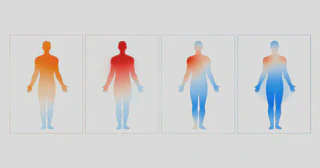
My therapist told me I need to get in touch with my body’s signals when making choices. So now, before I decide on dessert, I check my internal temperature. If it’s hot, I know it’s a “yes” for the molten chocolate cake. It’s science, really. - Anonymous
The temperature of truth is a tangible phenomenon rooted in how our bodies process information during decision making. Rather than viewing decisions as purely cognitive processes, emerging neuroscience reveals that physical sensations such as warmth in the chest, coolness in the extremities, changes in heart rate, and shifts in muscle tension serve as crucial information streams that guide our choices. These bodily signals, called somatic markers, create a physical map of past experiences that influences future decisions before conscious thought can fully engage. By learning to read these temperature shifts, pressure changes, and rhythmic variations in our bodies, we can access a sophisticated guidance system that has been refined through millions of years of evolution.
THE BENEFITS OF TRACKING BODY SENSATIONS IN DECISION MAKING - FROM CHAOS TO CLARITY
“Tried following my gut. Turns out my gut was just anxiety wearing a fake mustache. Now I’m learning to tell the difference between ‘wisdom warmth’ and ‘panic heat.’ Progress.” - Anonymous
The benefits of consciously tracking physical sensations during decision making extend far beyond improved choices:
Faster decision processing: When you learn to recognize that gentle warmth spreading through your chest signals alignment while coldness in your fingertips indicates withdrawal, you can bypass hours of mental rumination. Your body already knows the answer.
Enhanced accuracy in complex situations: Traditional cognitive approaches fail when facing decisions with too many variables. Your body integrates information from multiple sources simultaneously, creating composite sensations that reflect the total picture.
Early warning system activation: Physical sensations arise milliseconds to seconds before conscious awareness. A subtle tightening in your throat or quickening of your pulse can alert you to danger before your conscious mind identifies the threat.
Reduced decision fatigue: Making choices through body awareness requires less cognitive energy than endless mental analysis. Your nervous system handles the processing while your conscious mind stays fresh for other tasks.
Access to implicit learning: Your body stores patterns from experiences you cannot consciously recall. A specific temperature shift or pressure sensation may reflect wisdom accumulated over thousands of similar situations.
Improved stress resilience: When you trust your body’s signals rather than fighting them, the nervous system remains more regulated. This creates a positive feedback loop where better decisions generate calmer body states, which enable even better decisions.
Greater life satisfaction: People who make decisions aligned with their body’s wisdom report higher fulfillment. They feel they are living authentically rather than following shoulds and supposed-tos.
ORIGINS OF SOMATIC DECISION MAKING ACROSS CULTURES AND HISTORY
The recognition that bodies guide choices appears across human traditions, though the specific mechanisms have only recently been mapped by neuroscience.
Indigenous wisdom traditions: Many Native American, Aboriginal, and First Nations practices emphasize feeling into the body for guidance. The Lakota concept of “listening to the heart” or the Aboriginal practice of “reading country” through bodily sensations acknowledges this ancient knowing.
Eastern philosophical systems: Traditional Chinese Medicine maps emotions to specific organs and their associated physical sensations. Heat in the liver indicates anger, coldness in the kidneys suggests fear. Ayurvedic medicine similarly tracks doshas through physical temperature and texture changes.
Stoic body awareness: While often mischaracterized as emotion-denying, Roman Stoics like Marcus Aurelius practiced observing physical reactions to events. They distinguished between the initial body sensation (which was natural) and the stories added afterward (which were optional).
Medieval mystical traditions: Christian mystics described “consolations” and “desolations” as physical experiences felt in the body. Ignatius of Loyola developed detailed protocols for discernment based on warmth, lightness, and expansion versus coldness, heaviness, and constriction.
Modern neuroscience: In the 1990s, Antonio Damasio formalized observations that patients with damage to emotion-processing brain regions made catastrophically poor decisions despite intact logical reasoning. His somatic marker hypothesis proposed that body states create markers that guide choices, a process refined through the ventromedial prefrontal cortex and insular cortex.
PRINCIPLES OF SOMATIC DECISION MAKING - THE BODY AS NAVIGATION SYSTEM
Principle 1: Sensation precedes cognition
Before your thinking mind processes information, your body responds. Heart rate shifts, temperature changes, muscle tension variations these occur 300 to 500 milliseconds before conscious awareness. Learning to notice these first-response sensations gives you access to earlier, often more accurate information.
Principle 2: Temperature carries meaning
Warmth and coolness are not arbitrary. Approach states (desire, interest, alignment) typically generate warmth in the chest, face, or hands. Avoidance states (fear, disgust, misalignment) create coolness or coldness, particularly in extremities. Fever-like heat often signals false urgency or inflammation in thinking.
Principle 3: Rhythm reveals readiness
Your body operates in rhythms: heartbeat, breath, peristalsis, circadian cycles. Decisions made in harmony with these rhythms feel smoother. When your breath naturally deepens or your heart settles into steady rhythm, your system indicates readiness. Arrhythmic sensations suggest the timing is off.
Principle 4: Pressure patterns point direction
Expansion, lightness, and opening sensations generally indicate yes or forward movement. Contraction, heaviness, and closing typically signal no or pause. These are not absolutes but tendencies your specific body has developed through experience.
Principle 5: Composite sensations hold complexity
Real decisions rarely produce pure sensations. You might feel warmth in your heart but coldness in your gut, or expansion in your chest but tightening in your shoulders. These composite patterns reflect the genuine complexity of choices and provide nuanced guidance.
Principle 6: Context shapes interpretation
The same sensation means different things in different contexts. Increased heart rate before public speaking may indicate excitement or terror. Only by tracking the full constellation of sensations can you decode the message. Your body speaks in sentences, not single words.
Principle 7: Body wisdom requires trust to develop
If you repeatedly override body signals or interpret them through mental filters, the signal deteriorates. The neural pathways that connect body awareness to conscious decision making actually weaken. Building somatic intelligence requires consistently honoring the information your body provides.
GUIDING CLIENTS IN SOMATIC DECISION MAKING - WORKING WITH TEMPERATURE AND SENSATION
Observation and Presence
- Position yourself at the Client’s side to unobtrusively observe subtle shifts in facial expressions, gestures, and skin tone while ensuring you do not interfere with their imaginative process or metaphor creation.
Vocal Modulation
- Use a gentle, melodic, and unhurried tone when speaking, allowing your voice to foster calm and receptivity.
Genuine Engagement
- Demonstrate active interest in the Client’s process by listening attentively and supporting their exploratory journey.
Reflective Communication
- Echo the Client’s words and delivery style. For example, if the Client describes an exciting moment with a bright expression, quicker speech, and a higher tone, mirror these qualities in your response. As a practitioner, strive to match their affective cues, or consider formal training in expressive techniques to enhance these skills.
Connecting Experience and Inquiry
- Seamlessly link questions and reflections to the Client’s experiences using coordination (e.g., and, as, when), ensuring a smooth and empathetic flow throughout the interaction.
When guiding someone to develop somatic decision wisdom, begin with establishing baseline body awareness:
Step 1: Map the current body state
“Before we explore this decision, let’s notice where your body is right now. Starting at the crown of your head, slowly scan down through your body. What temperature sensations do you notice? Is your forehead cool or warm? What about your cheeks, your neck? Notice your chest is there warmth, coolness, or neutral temperature there? Your belly? Your hands and feet? Just observe, no need to change anything.”
Step 2: Introduce the decision gently
“Now, while maintaining that body awareness, bring the decision to mind. Don’t think about it deeply just let the question float into your awareness. Notice what happens in your body. Do any temperatures shift? Does your heart rate change? Do any areas tighten or relax?”
Step 3: Track the temperature signature
“Where do you feel the warmest response to this decision? And the coolest? If you were to give that warmth a number from 1 to 10, what would it be? And the coolness? Does the temperature stay steady or does it pulse or wave?”
Step 4: Explore directional pulls
“When you think ‘yes’ to this option, what happens in your body? Notice temperature, pressure, rhythm. Now when you think ’no’ to this option, what shifts? And when you think ‘maybe’ or ‘wait,’ what does your body do?”
Step 5: Decode composite patterns
“Sometimes our bodies give mixed signals warmth in one place, coolness in another. This isn’t confusion, it’s complexity. Can you describe the full constellation of sensations? What might the warm part be saying? And what information might the cool area be offering?”
Step 6: Test with time-shifting
“Imagine yourself one year after making this decision and notice your body’s response. Does the warmth increase or decrease? Now imagine five years later. What shifts? Your body knows how different timeframes will likely feel.”
Step 7: Integrate the body wisdom
“Based on all these sensations the temperatures, the rhythms, the pressures what is your body’s overall message? Remember, this isn’t about what you should do or what makes logical sense. This is about what your nervous system, with its millions of years of evolutionary wisdom, is telling you.”
The practitioner watches for: flushing or paling of skin, changes in breathing depth and rhythm, pupil dilation or constriction, subtle movements toward or away from the decision, and shifts in vocal tone when describing different options.
THE TEMPERATURE OF TRUTH AXEL MAGNUS SCRIPT BASED ON NLP PRINCIPLES
“Started listening to my body’s temperature cues for decisions. Discovered I’ve been mistaking ‘impending doom cold’ for ’exciting opportunity chills.’ Winter coat sales make so much more sense now.” - Anonymous
Preparation: Establishing thermal baseline awareness
Client sits comfortably. Axel Magnus positions himself slightly to the client’s side, maintaining a gentle, observing presence.
Axel Magnus: “Maria, before we explore this career decision, I’d like you to become aware of your body’s current temperature map. Close your eyes if that feels comfortable, and begin scanning from your head downward. Notice where you feel warmth, and where you might feel coolness or neutral temperature. Just observe, as if you were a curious scientist discovering your body’s climate for the first time.”
Maria closes her eyes. Axel observes subtle changes in her facial muscles, the rhythm of her breathing.
Maria: “My face feels warm, almost flushed. My hands are cold, definitely cold. And my chest… it’s sort of neutral, maybe slightly warm?”
Axel Magnus: “Excellent. And as you notice those sensations, do they stay constant, or do they shift and change?”
Maria: “They’re shifting a little. The warmth in my face is spreading down into my neck.”
Core process: Submodality exploration of decision options
Axel Magnus: “Perfect. Now, keeping that awareness of temperature and sensation, I’d like you to bring to mind the first option staying in your current corporate role with the promotion they’ve offered. Just let that scenario rest in your awareness, and notice what happens in your body. Where does temperature shift?”
Maria’s brow furrows slightly. Axel notices her shoulders rise just a fraction.
Maria: “The warmth in my face gets hotter. Like… uncomfortable hot. And my chest gets tight. My hands stay cold.”
Axel Magnus: “And if that heat in your face had a quality, would it be like sunshine warmth, or more like… something else?”
Maria: “More like… fever? Like inflammation. It’s not pleasant warmth.”
Axel Magnus: “Excellent distinction. Your body knows the difference between pleasant warmth and inflammatory heat. Now, when you notice that fever warmth and the tightness in your chest, and you stay with it for just a moment longer, does any other information arise?”
Maria: “Yeah… there’s this pressure, like something pressing down on my chest. And my jaw is clenching.”
Axel Magnus: “Beautiful awareness. Thank you for tracking all of that. Now, let that scenario fade, and take a breath. Notice what happens as you release it.”
Maria’s shoulders drop slightly, and her exhale is audible.
Maria: “The heat reduces. The pressure lifts a bit.”
Axel Magnus: “Good. And now, when you’re ready, bring to mind the second option taking the teaching position at the smaller organization. Same process just notice what happens in your body’s temperature and sensations.”
Axel observes Maria’s face soften. Color shifts from flushed to a more natural glow.
Maria: “Oh. This is different. There’s warmth, but it’s gentle. It starts in my heart and spreads outward. My hands… they’re getting warmer. The coldness is leaving them.”
Axel Magnus: “And as that gentle warmth spreads, and your hands warm, what else changes?”
Maria: “My breathing deepens. It’s like my ribs can expand more fully. And there’s this feeling of… space. Like my chest has more room.”
Axel Magnus: “More room. And when you notice that space, and the gentle warmth spreading from your heart, and your hands warming, if you were to imagine yourself one year into this teaching position, what happens to those sensations?”
Maria: “They strengthen. The warmth becomes more solid, more steady. And there’s this feeling of… rightness. Like everything aligns.”
Mapping across: Transferring resources
Axel Magnus: “Maria, I’m curious and trust your body’s wisdom here. That feeling of rightness, that steady warmth, that sense of alignment can you remember any time in your past when you felt something similar?”
Maria’s eyes move as she searches internally. Axel notices her breathing pattern shift.
Maria: “Yes! When I was in grad school, working on my thesis. I’d get lost in the research for hours. There was this warmth and this sense of… purpose.”
Axel Magnus: “And when you recall that grad school experience, with its warmth and purpose, notice what happens in your body right now.”
Maria: “The warmth comes back. It’s like my body remembers.”
Axel Magnus: “Your body remembers. And that resource, that capacity for warmth and purpose that your body knows so well, I wonder if you could imagine bringing that same quality to this teaching decision. Not thinking about it, but feeling what happens when that grad school warmth and this teaching position warmth meet.”
Axel watches as Maria’s posture shifts. Her spine lengthens slightly, her head tilts upward just a degree.
Maria: “They’re the same warmth. It’s the same feeling. Like my body is saying, ‘Yes, this is the path.’”
Testing and ecological check
Axel Magnus: “And as your body says yes with that warmth, I want to check something. When you imagine telling your current employer about your decision to leave, what happens to the sensations?”
Maria’s face tenses briefly, then relaxes.
Maria: “There’s a flash of coolness, like anxiety. But underneath it, the warmth stays. The coolness feels like normal nervousness about change, not like wrongness.”
Axel Magnus: “Excellent distinction. Your body differentiates between change-nervousness, which passes, and wrongness-cold, which persists. And when you imagine yourself five years from now, having made this teaching choice, what temperature and sensations arise?”
Maria: “Deep warmth. Satisfaction. My whole body feels more relaxed, more at home.”
Axel Magnus: “And if there were any part of you that had concerns about this decision, any part that wanted to speak, what might it say?”
Maria pauses, checking inward.
Maria: “There’s a small voice worried about money. When I think about that, my stomach gets cool, a little queasy.”
Axel Magnus: “Thank you for noticing that. And when you acknowledge that part’s concern about money, and you ask it what it most wants for you, what does it say?”
Maria: “It wants me to be secure. To be safe.”
Axel Magnus: “And if you were to imagine creating financial security while also following this path of warmth and alignment, what happens to that coolness in your stomach?”
Maria: “It warms up. Like… the worry doesn’t have to be either-or. I can honor both.”
Integration: Anchoring the somatic decision
Axel Magnus: “Maria, take a moment now to scan your entire body. Notice the temperature map, the sensations, the overall felt sense. This is what clarity feels like in your body. This is what alignment generates. I’d like you to place your hand somewhere on your body where you feel that warmth most strongly.”
Maria places her hand over her heart.
Axel Magnus: “Perfect. And as you feel that warmth under your hand, take three deep breaths. Let your body memorize this state. This is your truth signal. Anytime you need to check a decision, you can return to this felt sense and ask: Does this generate the inflammatory fever heat, or does it create this steady, spreading warmth? Your body knows the difference, and now you can trust it.”
Maria: “I’ve been ignoring this signal for so long. I didn’t even realize my body was trying to tell me.”
Axel Magnus: “Your body has been speaking all along. Now you’ve learned its language.”
MEDITATION FOR TEMPERATURE OF TRUTH - A DAILY PRACTICE
10-minute body temperature mapping meditation
Find a comfortable seated position, spine naturally upright but not rigid. Close your eyes or maintain a soft downward gaze.
Minutes 1-2: Establishing baseline awareness
Begin by scanning your body from crown to feet. Notice areas of warmth and areas of coolness. Don’t try to change anything just observe. Where is heat concentrated? Where does coolness dwell? Notice your breath’s natural rhythm and its effect on body temperature as you inhale, coolness enters; as you exhale, warmth spreads.
Minutes 3-4: Amplifying temperature sensitivity
Now bring your attention to your hands. Notice their current temperature. Imagine that with each breath, you can slightly increase or decrease the warmth in your palms. Not through force, but through attention. Notice how intention alone can shift sensation. This is your nervous system responding to focus.
Minutes 5-6: Decision temperature practice
Bring to mind a small, low-stakes decision you’re currently facing perhaps what to have for dinner, which route to take home, or what to do this weekend. Hold the first option in your awareness and notice where warmth arises or diminishes in your body. Note the temperature signature. Now release that option and notice what shifts. Bring the second option to mind and track the temperature changes. Different options create different thermal patterns.
Minutes 7-8: Decoding composite patterns
If you noticed mixed signals warmth in some areas, coolness in others, that’s perfect. This is your body’s nuanced wisdom. Breathe into the warm areas. What might they be indicating? Now breathe into the cool areas. What information might they hold? Your body rarely speaks in absolutes. It speaks in symphonies of sensation.
Minutes 9-10: Integration and gratitude
Return to whole-body awareness. Notice how your temperature map has shifted during this practice. Perhaps you’re warmer overall, or more evenly distributed, or more aware of subtle variations. Thank your body for its constant communication. This temperature guidance system is always available, always operating, always offering wisdom if you remember to listen.
Completion: Before opening your eyes, set an intention to notice one moment today where your body’s temperature shifts in response to a choice. You’re building a relationship with your somatic wisdom.
VIDEO ABOUT BODY SENSATIONS AND DECISION MAKING
FAQ ABOUT SOMATIC DECISION MAKING
Question: Don’t body sensations just reflect anxiety or other emotions that might cloud judgment?
Answer: This is a common misunderstanding. Anxiety creates specific sensations (usually rapid, scattered, high-arousal states), while wisdom generates different patterns (often steady, deep, rooted sensations). Learning to distinguish between them is part of developing somatic literacy. Your body can experience both emotional reactions and deeper knowing simultaneously, and learning to parse them improves rather than impairs decision making.
Question: What if my body gives me conflicting signals warmth in my chest but coldness in my gut?
Answer: Conflicting signals aren’t confusion; they’re complexity. Your chest warmth might be indicating authentic desire while gut coldness flags a practical concern. Both pieces of information are valid. The question becomes: How do I honor both? Often the answer isn’t either-or but finding a way to address the concern while pursuing the desire.
Question: How can I trust body sensations when they seem irrational? My body wants pizza but I need to eat healthy.
Answer: This confuses cravings with somatic wisdom. Cravings are typically sharp, urgent, and located in specific areas (mouth, throat, stomach). Deeper body wisdom is quieter, steadier, and more diffuse. Also, true body wisdom wouldn’t ignore health; it would integrate it. If your body genuinely needs nutrients, the felt sense of eating vegetables would carry its own satisfaction signal.
Question: I’m very disconnected from my body due to trauma. Can I still develop this skill?
Answer: Yes, and this may be especially valuable for trauma recovery. Start with extremely small doses spending just 30 seconds noticing body sensations. Work with a trauma-informed therapist who understands somatic approaches. Your system may need to re-learn that it’s safe to feel. Building this capacity slowly and carefully can be part of healing.
Question: How long does it take to become fluent in reading body sensations for decisions?
Answer: Most people notice significant improvement within 4-6 weeks of daily practice. Basic literacy develops in 2-3 months. True fluency where you can quickly read complex somatic patterns typically takes 6-12 months of consistent practice. However, even beginners report better decisions almost immediately because they’re incorporating previously ignored information.
Question: What if I use this approach and still make a bad decision?
Answer: Somatic wisdom improves the average quality of decisions over time; it doesn’t guarantee perfect outcomes. Sometimes the best choice still leads to difficulty. What changes is that when you’ve made a body-informed decision, you typically have fewer regrets because you honored all available information, including wisdom your conscious mind couldn’t access.
Question: Can medication or physical illness interfere with body signal accuracy?
Answer: Yes, both can affect interpretation. Some medications dampen emotional and physical signals. Illness creates its own sensations that can obscure decision-related signals. In these situations, you may need to adjust your approach using longer observation periods, tracking patterns over days rather than moments, and combining body wisdom with other decision-making tools.
JOKES ABOUT BODY SENSATIONS IN DECISION MAKING
-
“My body: sends clear warmth signal when I think about the new job. My brain: ‘But what if the warmth is just indigestion?’ My body: leaves the chat.” - Anonymous
-
“Tried using body sensations for decisions. My body said yes to quitting my job and adopting seven cats. Turns out my body is impulsive and doesn’t understand rent.” - Anonymous
-
“Life hack: Your gut feeling is actually just your vagus nerve trying to slide into your prefrontal cortex’s DMs with urgent information.” - Anonymous
-
“Me: Okay body, should I take this opportunity? My body: sends mixed signals of warmth, cold, expansion, and contraction. Me: This is why I ignore you. My body: shocked Pikachu face.” - Anonymous
-
“Science: Your body knows things before your conscious mind. My body: Can’t tell the difference between public speaking and being chased by a tiger. Me: Some evolutionary update would be appreciated.” - Anonymous
METAPHORS FOR SOMATIC DECISION MAKING
-
The internal thermometer metaphor: Your body is like a precise thermometer that measures the temperature of truth. Some decisions raise your temperature (inflammatory, urgency-based, forced), while others create gentle, sustainable warmth (aligned, right-timing, authentic). Just as you wouldn’t ignore a thermometer reading when checking for fever, you shouldn’t ignore your body’s temperature feedback on decisions.
-
The orchestra tuning metaphor: Before an orchestra plays, each instrument tunes to find its pitch. Your body does something similar with decisions. When you’re considering the right choice, the various instruments of sensation your heartbeat, your breath, your muscle tension, your temperature all gradually tune into harmony. The wrong choice creates dissonance you can feel.
-
The weather system metaphor: Your body is like a weather system, with high-pressure and low-pressure zones, warm fronts and cold fronts. Good decisions create favorable weather patterns steady warmth, gentle breezes, clear skies. Poor decisions generate storm conditions agitation, turbulence, temperature extremes. You can learn to read these patterns before the storm arrives.
-
The compass metaphor: Traditional compasses point north through Earth’s magnetic field. Your body has an internal compass that points toward alignment through temperature and sensation. Warmth and expansion generally point toward your true north. Coldness and contraction suggest you’re heading off course. Unlike mental reasoning, which can be talked into any direction, your bodily compass is harder to manipulate.
-
The root system metaphor: Trees make decisions about where to send roots based on sensing water, nutrients, and obstacles information they gather through physical sensation. Your body similarly extends feelers into potential futures, sensing which directions offer nourishment and which contain obstacles. The warmth and ease you feel is like sensing water; the coolness and resistance is like encountering rock.
-
The tuning fork metaphor: A tuning fork resonates at its specific frequency. Your body is a tuning fork that resonates with choices aligned to your authentic frequency. When you encounter a resonant decision, your body literally vibrates differently warmth spreads, rhythm steadies, breath deepens. Dissonant choices create a jangling sensation, arrhythmic heart rate, or held breath.
AXEL MAGNUS’S EXPERIENCE WITH TEMPERATURE OF TRUTH
“My relationship with body sensations and decision making has been a journey of humbling re-education. For decades, I prided myself on rational analysis. I believed the body was something to be managed, overridden when necessary, trained to comply with mental decisions.
The shift began during a career crossroads. I had been a position that made perfect logical sense better compensation, expanded influence. Every logical framework I applied said yes. Yet every time I contemplated accepting, my chest would grow uncomfortably hot, my hands would turn cold, and a heaviness would settle into my gut.
I tried to dismiss these signals as fear of change or imposter syndrome. But the sensations persisted, becoming more pronounced. Finally, I sat quietly and simply asked my body: What are you trying to tell me? The answer came not in words but in a clear temperature map. The heat in my chest was inflammation, not inspiration. The coldness in my hands was my system withdrawing life force from the decision. The gut heaviness was dread.
I declined the position. Within weeks, a different opportunity arose one that generated completely opposite sensations: gentle warmth spreading from my heart, comfortable tingling in my hands, a sense of lightness and rightness throughout my torso. I accepted that offer, and it led to the most fulfilling chapter of my career.
Now I teach others what my body taught me: We have ignored our most sophisticated decision-making technology, one that processes vastly more information than our conscious minds can handle. The temperature shifts, the pressure changes, the rhythmic variations these are not noise to be overcome. They are signal to be honored.
I’ve learned to distinguish between fear-cold (sharp, located in specific areas, often accompanied by racing thoughts) and wisdom-cold (steady, whole-body, accompanied by clear knowing that something isn’t right). I’ve learned that fever-heat differs from hearth-heat, that urgent pressure differs from excited anticipation.
Most surprisingly, I’ve discovered that the more I trust these somatic signals, the calmer my nervous system becomes. It’s as if my body relaxes when it knows I’m finally listening, as though it can stop screaming because I’m paying attention to its whispers.
This doesn’t mean I’ve abandoned logical analysis. It means I now understand that analysis is one input among many. My body’s temperature map, its pressure patterns, its rhythmic communications these deserve equal consideration. The decisions I make integrating all these streams are consistently superior to those made through cognition alone.
The temperature of truth is real. Your body knows it before your mind does. The question is whether you’re willing to learn its language.” - Axel Magnus
THE LIMITATIONS OR UNCERTAINTIES IN SOMATIC DECISION MAKING
Trauma can distort signals: Individuals with complex trauma may have nervous systems that generate inaccurate or overwhelming somatic signals. For them, body sensations may reflect traumatic conditioning rather than present-moment wisdom. Healing trauma is often necessary before somatic decision making becomes reliable.
Chronic illness creates interference: Conditions involving chronic pain, inflammatory diseases, or autonomic dysfunction can generate constant body signals that obscure decision-related information. People with these conditions may need modified approaches or longer observation periods to distinguish illness sensations from decision wisdom.
Cultural conditioning affects interpretation: Different cultures teach different relationships with body sensations. Some emphasize suppression, others amplification. These conditioned patterns can make it difficult to read signals accurately without first understanding and working with cultural influences.
Developmental windows matter: Children who were shamed for body sensations or emotions may have underdeveloped interoceptive awareness as adults. Building this capacity later requires patience and often professional support.
Medication effects can be significant: Psychotropic medications, beta-blockers, and other pharmaceuticals that affect the autonomic nervous system can dampen or alter somatic signals. This doesn’t make the approach useless, but it requires awareness and adjustment.
Not a replacement for information gathering: Body wisdom synthesizes information you already have, consciously or unconsciously. It cannot substitute for research, expert consultation, or gathering facts. It’s one essential input, not the only input.
Timing considerations: Some decisions benefit from immediate body response, while others require allowing sensations to develop over days or weeks. Expecting instant clarity on complex choices may lead to misinterpretation.
Individual variation is substantial: Some people are naturally high in interoceptive awareness, others quite low. While everyone can improve, baseline abilities vary significantly. What’s easy for one person may require extensive practice for another.
Risk of over-reliance: Just as over-reliance on logic creates problems, over-reliance on body signals can too. The most effective approach integrates somatic wisdom with appropriate rational analysis, social input, and ethical consideration.
Interpretation requires skill: Raw sensations don’t come with labels. Distinguishing excitement from anxiety, inspiration from inflammation, or intuition from fear requires practice and calibration. Misinterpretation is common during the learning process.
CONCLUSION - THE WISDOM BENEATH WORDS
The temperature of truth reveals a fundamental insight: You are more than your thinking mind. Your body, with its intricate network of sensory neurons, its autonomic nervous system constantly monitoring internal states, its evolutionary heritage spanning millions of years, processes information in ways your conscious awareness never could.
Every decision generates a physical signature. Warmth or coolness, expansion or contraction, quickening or steadying these aren’t random fluctuations. They’re your nervous system’s verdict on whether this choice serves your wellbeing, integrating data from countless similar situations stored as somatic memories.
The practice of noticing these signals doesn’t require mystical beliefs or complicated techniques. It requires only willingness to pay attention to what you’ve perhaps been taught to ignore. That warmth spreading through your chest when you think about calling an old friend. That coolness in your hands when you contemplate a business deal that looks good on paper. That subtle shift in heart rhythm when you’re about to say yes to something that deserves a no.
Start small. Before your next minor decision what to have for lunch, which route to take home, whether to answer that email now or later pause. Close your eyes for three seconds. Scan your body. Notice temperature, notice pressure, notice rhythm. Don’t analyze it, just observe. Then choose, and later reflect on whether the choice satisfied you.
Over time, this becomes automatic. Your body’s voice gets clearer because you’re finally listening. Decisions that once required hours of mental spinning resolve in moments of bodily knowing. Not because you’re abandoning reason, but because you’re finally allowing reason to partner with the deeper intelligence that has kept humans alive and thriving long before we developed language to talk ourselves into questionable choices.
The temperature of truth is your birthright, a guidance system more ancient and reliable than any app or algorithm. You don’t need to acquire it. You only need to remember how to read it.
REFERENCES - THE TEMPERATURE OF TRUTH
- George Lakoff & Mark Johnson, 1980; Metaphors We Live By
- Steve & Connirae Andreas, 1987; Change Your Mind and Keep the Change: Advanced NLP Submodalities Interventions
- Julian Jaynes, 1976; The Origin of Consciousness in the Breakdown of the Bicameral Mind
- Andreas, S. (2002). Transforming yourself: Becoming who you want to be. Real People Press.
- Connirae Andreas & Steve Andreas, 1989; Heart of the Mind: Engaging Your Inner Power to Change with Neuro-Linguistic Programming
- Connirae Andreas & Tamara Andreas, 1994; Core Transformation: Reaching the Wellspring Within
- Antonio Damasio, 1994; Descartes’ Error: Emotion, Reason, and the Human Brain
- Antonio Damasio, 1999; The Feeling of What Happens: Body and Emotion in the Making of Consciousness
- Antonio Damasio, 2003; Looking for Spinoza: Joy, Sorrow, and the Feeling Brain
- Bessel van der Kolk, 2014; The Body Keeps the Score: Brain, Mind, and Body in the Healing of Trauma
- Peter Levine, 2010; In an Unspoken Voice: How the Body Releases Trauma and Restores Goodness
- Eugene Gendlin, 1978; Focusing
- Pat Ogden, 2006; Trauma and the Body: A Sensorimotor Approach to Psychotherapy
- Stephen Porges, 2011; The Polyvagal Theory: Neurophysiological Foundations of Emotions, Attachment, Communication, and Self-regulation
- Bud Craig, 2015; How Do You Feel? An Interoceptive Moment with Your Neurobiological Self
- Lisa Feldman Barrett, 2017; How Emotions Are Made: The Secret Life of the Brain
- Richard Bandler & John Grinder, 1979; Frogs into Princes: Neuro Linguistic Programming
- Steve Andreas & Charles Faulkner, 1994; NLP: The New Technology of Achievement
- Milton H. Erickson & Ernest Rossi, 1979; Hypnotherapy: An Exploratory Casebook
- video DVD Transforming Yourself Complete 3-day Training with Steve Andreas
- The Wholeness Work
- Core Transformation
Image credit - PERPLEXITY - THE TEMPERATURE OF TRUTH, DECODING PHYSICAL SENSATIONS IN DECISION-MAKING
FILMS
- Arrival (2016) - Explores how body sensations and temporal awareness shift with language and decision making
- Her (2013) - Examines the relationship between emotional and physical connection in decision processes
- Inside Out (2015) - Illustrates how emotions create physical states that guide choices
- The Matrix (1999) - “Your mind makes it real” explores how body sensations reflect deeper truths about reality
- Eternal Sunshine of the Spotless Mind (2004) - Shows how body memory persists even when conscious memory is erased
TELEVISION SERIES
- The OA (2016-2019) - Explores movements and body sensations as gateways to other dimensions of knowing
- Sense8 (2015-2018) - Characters share physical sensations across distances, making decisions through collective somatic wisdom
- Maniac (2018) - Examines how physical sensations in controlled environments reveal unconscious decision patterns
DOCUMENTARY EXAMPLES
- The Connection (2014) - Documents mind-body links in healing and decision making
- Heal (2017) - Explores how body awareness influences health choices
- The Mind, Explained: Mindfulness (2019) - Covers interoception and body awareness practices
NOVELS
- The Gift of Fear by Gavin de Becker - Though nonfiction, uses narrative to explore how body signals warn of danger before conscious awareness
- The Alchemist by Paulo Coelho - The protagonist learns to read omens through physical sensations and heart wisdom
- Blink by Malcolm Gladwell - Explores rapid cognition and the body’s role in snap decisions (nonfiction with narrative elements)
- The Overstory by Richard Powers - Characters make life decisions guided by sensory connection to the natural world
- My Grandmother’s Hands by Resmaa Menakem - Explores racialized trauma as it lives in the body and affects decisions (nonfiction narrative)