LEARN THE SCIENCE OF 'REMEMBERING' YOUR FUTURE SUCCESS TO ELIMINATE PROCRASTINATION AND MAKE GOAL ATTAINMENT FEEL AUTOMATIC (THE 'FUTURE MEMORY' METHOD)
🔮 FUTURE PACING MAKING YOUR GOALS FEEL LIKE PAST MEMORIES

Tools - is part of Series
Future pacing is a transformational practice in neuro-linguistic programming that rewires how your nervous system relates to desired outcomes. Rather than treating goals as distant possibilities generating anxiety and resistance, future pacing leverages the brain’s inability to distinguish between vividly imagined and actual experiences. By creating detailed sensory rich mental rehearsals of already achieved goals, you generate the same neural activation, emotional states, and somatic confidence that accompany genuine success. This isn’t visualization in the conventional sense it’s experiential time travel, where you embody future victories as completed memories. The body responds with physiological shifts: muscles relax into competence rather than tensing with anticipation, breathing deepens with certainty rather than shallowing with doubt, and the nervous system shifts from preparation mode to integration mode. When practiced with full sensory engagement, future pacing eliminates the gap between intention and action, transforming procrastination into momentum and aspiration into inevitability.
✅ THE BENEFITS OF FUTURE PACING: HOW REMEMBERING SUCCESS TRANSFORMS PERFORMANCE
“Started future pacing my goals. Now my brain thinks I’ve already done everything. Productivity through time fraud highly recommend.” - Anonymous
The benefits of future pacing extend far beyond mental preparation:
Neurological rewiring: When you vividly imagine completing a goal with full sensory detail, your brain activates the same neural pathways used in actual performance. The hippocampus, which constructs both memories and imagined futures, cannot distinguish between richly detailed imagination and lived experience. This creates genuine neural learning without physical practice.
Somatic confidence: Your body knows the difference between “I need to do this” and “I have done this.” Future pacing shifts your physiology from anticipatory tension to embodied competence. Shoulders drop, jaw unclenches, breathing settles into the rhythm of someone who has already succeeded.
Elimination of resistance: Procrastination often stems from the nervous system’s response to uncertainty and potential failure. When you’ve already “experienced” success through detailed future pacing, your system has less to resist. The task feels familiar rather than foreign, known rather than unknown.
Dopamine priming: Mental rehearsal of positive outcomes activates reward centers in the brain, releasing dopamine before you’ve taken physical action. This creates motivation from anticipation rather than requiring motivation to start anticipating.
Automatic execution: Athletes use future pacing to create what they call “muscle memory” though it’s actually neural memory. When the moment arrives in physical reality, your body simply repeats what it has already practiced mentally dozens of times.
Reduced performance anxiety: Stage fright, test anxiety, and social nervousness diminish dramatically when you’ve mentally lived through the event multiple times with successful outcomes. Your nervous system recognizes the situation as safe and familiar.
Timeline integration: Future pacing places desired outcomes on your internal timeline as events that will happen, not possibilities that might happen. This subtle shift changes how you relate to time and commitment.
🏛️ ORIGINS OF FUTURE PACING ACROSS CULTURES AND PRACTICES
The concept of mentally rehearsing future success appears across multiple traditions, though the specific somatic application emerges from modern psychology and performance science.
Ancient practices: Stoic philosophers like Marcus Aurelius practiced premeditatio malorum premeditation of adversity mentally rehearsing challenging future events to prepare emotionally. Buddhist practitioners visualize future scenarios in meditation to cultivate equanimity. Indigenous vision quests often involve experiencing future identity before returning to ordinary life.
Sports psychology: Soviet sports scientists in the 1970s discovered that athletes who combined physical training with detailed mental rehearsal outperformed those who only trained physically. Olympic athletes began integrating visualization protocols, mentally experiencing every sensation of perfect performance.
Performance arts: Actors and musicians have long used mental rehearsal, feeling performances in their bodies before stepping on stage. Method acting specifically trains practitioners to embody future performances somatically.
Clinical hypnosis: Milton Erickson pioneered techniques where clients experienced therapeutic change as if it had already occurred, creating expectation that made the change inevitable. His “pseudo-orientation in time” method had patients mentally move into the future after problems were resolved.
NLP formalization: In the late 1970s, Richard Bandler and John Grinder codified future pacing as an essential component of every change technique. They recognized that change isn’t complete until the client can experience it in future contexts. Steve and Connirae Andreas refined the practice in “Heart of the Mind,” emphasizing the importance of full sensory engagement and testing.
The technique draws power from a neurological reality: your brain constructs both memories and imagined futures using the same equipment. The hippocampus, medial temporal lobe, and default mode network activate whether you’re remembering yesterday or imagining tomorrow. Future pacing exploits this architecture deliberately.
📜 PRINCIPLES OF FUTURE PACING: YOUR BRAIN DOESN’T KNOW THE DIFFERENCE
Principle 1: The brain treats vivid imagination as experience
Neuroimaging studies reveal that mentally rehearsing an action activates nearly identical brain regions as physically performing it. The motor cortex, cerebellum, and basal ganglia all fire during detailed visualization. Your nervous system learns from imagined experience when the imagery is sufficiently rich.
Principle 2: The body follows mental blueprints
Your physiology responds to imagined scenarios as if they’re happening. Heart rate changes, muscles engage or release, breathing patterns shift. When you future pace success, your body practices the somatic state of competence, creating cellular memory that transfers to actual performance.
Principle 3: Timeline structure organizes experience
Humans organize experience along an internal timeline past behind or to the left, future ahead or to the right. Future pacing places goals on this timeline as events that will occur rather than possibilities that might occur, fundamentally changing your relationship to commitment and action.
Principle 4: Repetition strengthens neural pathways
Just as physical repetition builds skill, mental repetition builds neural pathways. Each time you future pace an outcome with full sensory detail, you strengthen the connections that will fire during actual performance. This is genuine practice, not mere daydreaming.
Principle 5: Success must feel real to become real
Intellectual understanding of goals creates minimal motivation. Embodied experience of goals creates powerful momentum. Future pacing works because it generates the feeling of success before the achievement, and your nervous system then works to match external reality to internal experience.
Principle 6: Ecology testing prevents self-sabotage
Not all imagined futures are desirable when fully experienced. Future pacing allows you to test whether you actually want what you think you want. If the imagined future creates physical contraction rather than expansion, your body is giving you information.
🗨️ GUIDING CLIENTS IN FUTURE PACING: INSTALLING EXPERIENTIAL SUCCESS
Observation and Presence
Position yourself at the Client’s side to unobtrusively observe subtle shifts in facial expressions, gestures, and skin tone while ensuring you do not interfere with their imaginative process or metaphor creation.
Vocal Modulation
Use a gentle, melodic, and unhurried tone when speaking, allowing your voice to foster calm and receptivity.
Genuine Engagement
Demonstrate active interest in the Client’s process by listening attentively and supporting their exploratory journey.
Reflective Communication
Echo the Client’s words and delivery style. For example, if the Client describes an exciting moment with a bright expression, quicker speech, and a higher tone, mirror these qualities in your response. As a practitioner, strive to match their affective cues, or consider formal training in expressive techniques to enhance these skills.
Connecting Experience and Inquiry
Seamlessly link questions and reflections to the Client’s experiences using coordination (e.g., and, as, when), ensuring a smooth and empathetic flow throughout the interaction.
When guiding someone through future pacing, begin with full sensory immersion:
Step 1: Establish the desired outcome
“What specifically do you want to have happen? Not what you want to feel about it, but what will be true when it’s complete?” Guide the client to define success in observable, sensory terms.
Step 2: Identify the future timeline position
“When do you want this to have happened? Point to where that time lives in your awareness.” Most people gesture unconsciously toward their future timeline. Work with their natural spatial organization.
Step 3: Move into the future moment after completion
“Imagine moving into that time, just after you’ve accomplished this. You’re standing there, it’s done. Notice what’s different now that it’s complete.”
Step 4: Build sensory richness from inside the experience
“What do you see from this place of having accomplished this? What do you hear what are people saying, what sounds are present? What do you feel in your body, knowing this is done? What’s your posture like? How are you breathing?” Guide them through all five senses.
Step 5: Notice somatic markers of authenticity
Watch the client’s physiology. Do shoulders drop? Does breathing deepen? Does facial tension release? These signs indicate genuine embodiment. If tension increases, the imagined future may not be ecological return to Step 1.
Step 6: Strengthen the neural pathway through repetition
“Return to now, and let’s move into that future moment again. This time notice even more detail.” Repetition deepens the neural encoding. Three to five repetitions create robust pathways.
Step 7: Test automaticity
“Now think about taking the first step toward this goal. What happens in your body?” If future pacing worked, thinking about action should feel easier, lighter, more obvious. If resistance remains, additional work may be needed.
The practitioner observes micro expressions: Does mentioning the goal create expansion or contraction? Do eyes brighten or dull? Does the body lean forward or pull back? These somatic cues reveal whether the future pacing is generating genuine motivation or surface compliance.
💧 FUTURE PACING AXEL MAGNUS SCRIPT BASED ON NLP PRINCIPLES
“Future paced my presentation. Felt great. Then realized I’d mentally presented to the wrong audience. Now I have to future pace learning to read calendars.” - Anonymous
Preparation: Establishing sensory baseline
“Sit comfortably and bring your awareness fully into your body. Notice your current state how you’re breathing, where you’re holding tension, the quality of your energy. This is your baseline.
Now bring to mind something you want to accomplish, something that matters to you but hasn’t happened yet. Don’t analyze it just notice what happens in your body when you think about it. Where does sensation arise? Does your chest tighten? Does your stomach flutter? Does excitement mix with uncertainty?
This somatic response tells you how your nervous system currently relates to this goal as possibility mixed with doubt, aspiration mixed with anxiety. We’re going to change that relationship by letting your body experience this goal as something that has already happened.”
Core practice: Living in the accomplished future
“Now imagine that time has passed. This goal you’ve been thinking about it’s done. Complete. Behind you in time. You accomplished it.
Move forward on your timeline into the moment just after completion. Not before, not during after. You’re standing there, and it’s finished. Let yourself arrive fully in that moment.
From this place of having accomplished this, what do you notice? Look around through your own eyes what do you see that’s different now that this is complete? What details tell you that you succeeded?
What sounds are present? Are people speaking? What are they saying? Is there music, laughter, silence? Let your ears tell you about this moment.
And in your body, how do you feel knowing this is done? Not how you think you should feel how do you actually feel? What’s your posture like? How are you breathing? Is there lightness? Relief? Satisfaction? Pride? Let the sensations be specific.
What’s the quality of the air? Any tastes? Any scents associated with this success?
Make this experience as rich and detailed as your most vivid memory. Because that’s what you’re creating a future memory.”
Deepening: Strengthening the neural pathway
“Return to the present moment. Take a breath. Notice you’re here, now, in your current body.
And now move forward again into that moment after accomplishment. This time notice even more. What are you wearing? Who’s there with you? What did you do right before this moment? What will you do right after?
Experience this from the inside you’re not watching yourself succeed, you’re standing in the experience of having succeeded. Feel it in your muscles, in your bones, in your breath.
Your nervous system is learning. Each time you experience this future moment with full sensory richness, you’re building the neural pathways that will fire when you take action toward this goal. Your body is practicing success.
Stay here a moment longer. Let this feeling of accomplishment settle into your tissue. This is what ‘done’ feels like. Remember it.”
Integration: Connecting future to present
“Now, keeping the sense of that accomplished future with you, return to the present moment. You’re here, now, and simultaneously you carry the memory of that future success.
From this place, think about taking the first small step toward that goal. What action would move you in that direction? Notice what happens in your body when you consider this step.
If the future pacing worked, that step should feel less heavy, less resistant. Not effortless necessarily but familiar. Known. Like something you’ve already done, because in a sense, you have.
What specific action will you take, and when? Commit while you’re still holding this embodied sense of future completion.”
Completion: Ecological verification
“Take a final moment in that future place of accomplishment. As you stand there with this goal complete, scan your whole life from this vantage point. Does anything feel off? Is there any part of you that wishes you hadn’t done this? Any unexpected consequences?
If there’s complete congruence if every part of you feels aligned with this success then this future is ecological for you. Your nervous system will support movement toward it.
If there’s hesitation or concern, that’s valuable information. We can adjust the goal or address what’s creating resistance before you invest energy moving toward something that isn’t truly aligned.
Return to present awareness. You’ve just practiced success. Your brain has learned. Now let your body show you what comes next.”
🗣️ AXEL MAGNUS’S EXPERIENCE WITH FUTURE PACING
I first encountered future pacing in Germany when hot metal piece flew into my eye and I have lost the sight. I heared the voice with absolute conviction who had told me “In 48 hours it’ll be all right.” Second time during my NLP training when a facilitator had our group mentally rehearse teaching our first workshop. I sat in the chair, closed my eyes, and moved myself into a classroom six months hence. I could hear specific voices asking questions, feel the marker in my hand, smell the coffee brewing in the corner.
What struck me wasn’t the visualization itself I’d done plenty of that. What struck me was how my body responded. My breathing changed. My posture shifted. The chronic tension I carried in my solar plexus when thinking about public speaking simply dissolved. From inside that future moment, teaching felt natural. Obvious. Something I had clearly done many times.
When I opened my eyes and returned to present time, something fundamental had changed. The workshop was no longer a thing I needed to do it was a thing I was going to do, as inevitable as yesterday. The anxiety that usually accompanied preparation was replaced by quiet competence.
Six months later, standing in front of my first actual group, my body knew what to do. The nervousness I’d expected never came. I’d already taught this workshop dozens of times in detailed mental rehearsal. My nervous system recognized the situation and responded with practiced ease rather than panic.
I began using future pacing with clients immediately. A woman paralyzed by fear of job interviews moved into her timeline to experience sitting in an office after being hired. From that vantage point, she looked back at the interview that had gone well. When the actual interview arrived weeks later, she reported feeling like she was repeating something familiar rather than facing something terrifying.
The most powerful application I’ve found: future pacing the moment after a difficult conversation you’re avoiding. People consistently report that experiencing the relief and resolution on the other side of the conversation makes having it feel less like jumping off a cliff and more like walking through a door you’ve already opened.
Your future is not set. But your nervous system will move more readily toward futures it recognizes than futures it fears. Future pacing gives your body experience with success before you’ve physically succeeded. This isn’t delusion it’s strategic neural preparation. Your brain is learning what competence feels like in specific contexts, and that learning transfers to physical performance.
The body keeps the score, as trauma research reminds us. But the body also keeps the rehearsal. Give it enough richly detailed experience of future success, and it will guide you there with surprising reliability.
👣 THE BASIC PROCESS OF FUTURE PACING
Step 1: Define the specific outcome
Identify exactly what you want to accomplish. Not vague aspirations—specific, observable outcomes. “I want to be confident” becomes “I’ve delivered the presentation to 200 people and they’re applauding.” Make it concrete enough to experience.
Step 2: Locate the timeline position
Find where this accomplished goal lives in your awareness of time. People naturally gesture toward their future when discussing it. Ask yourself: “Where is the moment after I’ve completed this?” Trust your first spatial intuition.
Step 3: Move into the future moment
Imagine yourself standing in that time, just after the goal is accomplished. Not working toward it past it. It’s finished. You’re on the other side. Associate fully into this moment—experience it from inside, not watching yourself from outside.
Step 4: Build multi-sensory richness
Systematically engage all five senses. What do you see? What do you hear? What physical sensations tell you this is real? Any tastes or smells? The more sensory detail, the more your brain treats this as genuine experience rather than abstract fantasy.
Step 5: Notice the somatic state of completion
Pay attention to how your body feels in this accomplished future. What’s your breathing like? Your posture? The quality of energy in your muscles? This is what success feels like physiologically. Let your nervous system learn this state.
Step 6: Repeat the experience
Return to present, then move back into the accomplished future. Each repetition strengthens the neural pathway. Three to five detailed repetitions create robust encoding. You’re not daydreaming you’re practicing.
Step 7: Test the bridge to present action
From inside the accomplished future, look back at the path you took to get there. What were the key steps? Then return to present and think about taking the first small action. Notice if resistance has decreased. If it hasn’t, return to earlier steps and add more sensory detail.
Step 8: Establish ecological congruence
From the accomplished future, scan your whole life. Does anything feel off? Are there unexpected consequences? Any internal resistance? If complete alignment exists, proceed. If not, adjust the goal or address the source of internal conflict.
💪 MEDITATION FOR FUTURE PACING: A DAILY PRACTICE
10-minute somatic future pacing meditation
Find a comfortable seated position where you can remain alert but relaxed.
Minutes 1-2: Present moment awareness
Close your eyes and scan your body from crown to toes. Notice areas of ease and areas of holding. Observe your breath without changing it. This is your current state the beginning point of your timeline.
Minutes 3-4: Identify desired future
Bring to mind something you want to accomplish. Something specific and important. Notice what happens in your body when you think about it. Where does sensation arise? Just observe this is how your nervous system currently relates to this goal.
Minutes 5-7: Experience accomplished future
Now imagine time has passed and this goal is complete. Move forward on your internal timeline into the moment just after accomplishment. You’re there now it’s done. From inside this experience, notice everything. What do you see around you? What sounds are present? How does your body feel, knowing this is complete? What’s your breathing like? Your posture? Make this as real and detailed as the room you’re actually sitting in. Let your body experience success.
Minutes 8-9: Strengthen the neural pathway
Return briefly to present awareness, then move back into that accomplished future. This time notice even more detail. Who’s with you? What happened just before this moment? What will happen next? Feel the satisfaction, the relief, the pride whatever authentic emotions arise from completion. Your nervous system is learning. Each moment here builds the pathway.
Minute 10: Bridge to present action
Keeping the felt sense of that accomplished future with you, return to the present moment. You’re here now, and simultaneously you carry the memory of that future success. From this place, what’s one small action you can take today toward that goal? Notice that the action feels less foreign, less heavy. You’ve already succeeded now you’re just walking the path your future self knows well.
Open your eyes. Carry this embodied sense of future completion with you. Your brain has practiced. Your body knows. Now move.
Repeat this meditation daily. Each repetition strengthens the neural pathways that connect your current self to your accomplished future self. Over time, the gap between aspiration and action dissolves. Goals stop feeling like mountains and start feeling like memories you’re walking toward.
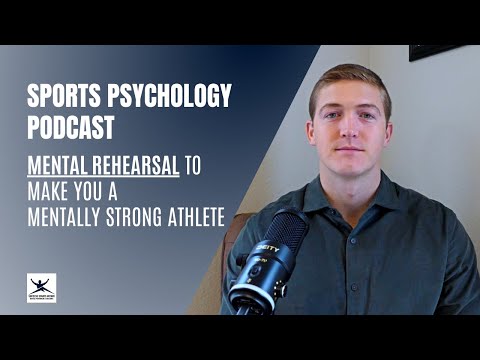
▶️ VIDEO ABOUT FUTURE PACING
❓ FAQ ABOUT FUTURE PACING
Question: Isn’t this just positive thinking or “manifesting”? How is it different?
Answer: Future pacing is fundamentally different from positive thinking because it’s experiential rather than conceptual. Positive thinking involves telling yourself “I can do this” or “This will work out.” Future pacing involves your nervous system experiencing having already done it with full sensory detail. Your brain treats richly imagined experiences similarly to real experiences, activating the same neural pathways. This creates genuine learning and somatic preparation, not just hopeful thoughts.
Question: What if I imagine the future but it doesn’t happen? Won’t I be disappointed?
Answer: Future pacing doesn’t guarantee outcomes it optimizes your nervous system’s readiness and removes internal resistance. You’re not predicting the future; you’re preparing your neurology for success. Even if external circumstances prevent the exact outcome, you’ve built neural pathways, reduced anxiety, and practiced competence. These benefits transfer to similar situations. The practice itself has value independent of specific outcomes.
Question: How is this different from regular visualization?
Answer: Most visualization involves watching yourself succeed from outside like viewing a movie of yourself. Future pacing requires full association experiencing success from inside your body in the future moment. The difference is crucial. Associated imagery activates motor circuits and creates somatic memory. Dissociated imagery creates intellectual understanding but minimal neural encoding. Future pacing also specifically places the experience on your timeline as an event that will happen, not just a possibility you’re considering.
Question: Can you future pace something you’ve never done before?
Answer: Yes, and this is where future pacing becomes especially powerful. Your brain constructs imagined futures by recombining elements from past experiences. Even if you’ve never given a TED talk, you’ve spoken, stood in front of groups, and felt confident in other contexts. Future pacing allows you to synthesize these elements into a new scenario. Athletes mentally rehearse Olympic performances they’ve never physically done. The key is sensory detail the more richly you imagine it, the more your brain treats it as experience.
Question: How many times do I need to future pace something for it to work?
Answer: Research on mental rehearsal suggests 3-5 detailed repetitions create measurable neural encoding. Daily practice over weeks creates robust pathways. Think of it like physical practice one repetition creates minimal learning, consistent repetition builds skill. For high stakes events, athletes often future pace dozens of times. For everyday goals, 3-5 immersive sessions usually generate noticeable shifts in confidence and reduced resistance.
Question: What if I can’t visualize clearly? I don’t “see” pictures in my mind.
Answer: Future pacing doesn’t require visual imagery. Many people’s primary representational system is kinesthetic (feeling), auditory (sound), or even conceptual. Focus on whatever sensory modality is strongest for you. If you can’t “see” the accomplished future, can you feel how your body would feel? Can you hear what you’d hear? Can you sense the spatial qualities? The brain constructs future scenarios through multiple channels use whichever ones are accessible to you.
Question: Is there anything I shouldn’t future pace?
Answer: The ecology check (Step 8) addresses this. Sometimes when people fully experience an imagined future, they discover they don’t actually want it there are hidden costs or misalignments with values. This is valuable information. If future pacing creates contraction rather than expansion, your body is telling you something. Also avoid future pacing outcomes that depend entirely on others’ behavior focus on your own performance and responses within situations, not on controlling others.
Question: Can future pacing backfire and create performance anxiety?
Answer: Only if you’re associating into future failure rather than future success. Some people accidentally practice anxiety by vividly imagining things going wrong. This creates the same neural encoding as future pacing success it just encodes the wrong thing. The practice must involve experiencing successful outcomes with positive somatic states. If anxiety arises during future pacing, return to present awareness, release the tension, and re enter the future scenario with a successful outcome.
😆 JOKES ABOUT FUTURE PACING
-
“Future paced being organized. Now I remember tidying the house but it’s still a mess. Time travel has glitches.” - Anonymous
-
“My therapist taught me future pacing. Now I procrastinate by ‘remembering’ all the future work I’m going to do.” - Anonymous
-
“Future paced my workout routine so vividly that my brain thinks I’ve already exercised. Fitness through false memory revolutionary.” - Anonymous
-
“Did future pacing wrong and accidentally practiced past regrets. Now I’m anxious about things that haven’t happened yet but feel like they already did.” - Anonymous
-
“Future pacing is wild. Like gaslighting yourself into competence. ‘I’ve definitely done this before.’ (I have not.)” - Anonymous
🦋 METAPHORS FOR FUTURE PACING
-
The neural blueprint metaphor: Future pacing is like giving your nervous system architectural drawings before construction begins. Your brain reads the blueprint, prepares the resources, and when building time comes, it follows plans it already knows. Without the blueprint, you’re improvising. With it, you’re executing a design your body has already studied.
-
The time traveler metaphor: Imagine you could travel to next year, live through an event successfully, then return to the present carrying that experience. Future pacing is exactly this mental time travel that leaves neural traces as if the journey actually occurred. Your body returns from the future knowing what competence feels like there.
-
The muscle memory metaphor: Musicians practice passages hundreds of times until their fingers know them automatically. Future pacing creates the same automaticity for any performance your nervous system practices until the neural pathways are so well worn that execution becomes obvious rather than uncertain.
-
The movie rehearsal metaphor: Actors don’t just memorize lines they live in character during rehearsal, feeling the emotions, inhabiting the body language. By opening night, they’re not performing for the first time; they’re repeating something they’ve already done dozens of times. Future pacing lets you rehearse life events with the same depth actors bring to character work.
-
The GPS metaphor: Your nervous system navigates toward futures it recognizes. Future pacing is like visiting a destination before the actual trip when you drive there later, the route feels familiar even though you’ve never physically taken it. Your system knows the way because it has preview experience.
-
The landing metaphor: Pilots practice landings in simulators until their bodies know the sequence automatically. During actual landings, they’re not figuring it out they’re repeating trained responses. Future pacing gives you simulator experience for life events, so when the moment arrives, your body knows what to do.
🧑🦲 FUTURE PACING AXEL MAGNUS SESSION: SUBMODALITY MAPPING ACROSS
Context: Client Sarah wants to feel confident about an upcoming job interview but experiences anxiety when thinking about it.
Axel: Sarah, when you think about this job interview, where do you notice sensation in your body?
Client: My chest gets tight and my stomach clenches.
Axel: And when you imagine being in that interview room, where is that image? Point to it.
Client (gestures toward space slightly to the right and at eye level): It’s right here, kind of in front of my face.
Axel: Notice how that feels. Now, can you think of something you do easily, something you’re genuinely confident about? Maybe something at your current job?
Client: Um, yes I run our team meetings every week. I’m actually really good at those.
Axel: Perfect. When you think about running a team meeting, where is that image?
Client (gestures to a space slightly lower and more centered): It’s more down here, sort of in my center.
Axel: And in your body?
Client: My shoulders are relaxed. There’s this warm feeling in my chest, like openness.
Axel: Beautiful. So we have two different experiences with very different locations and feelings. Now, we’re going to do something interesting. I want you to take that confident team meeting feeling the warmth, the openness, the relaxed shoulders and I want you to imagine the job interview happening in that same location where the team meetings live. Can you move the interview image from up here (gestures to where she indicated interview) to down here (gestures to confident location)?
Client (closes eyes, slight shift in breathing): Okay, I’m trying.
Axel: Good. And as you have the interview in that confident location, notice what changes. How does it feel different?
Client (breathing deepens, shoulders drop slightly): It feels… less scary. Like it’s something I actually do.
Axel: Exactly. Your brain is learning that this is familiar territory. Now let’s go further. I want you to move forward in time to the moment just after the interview is over. You’re walking out of the building, and it went well. You’re pleased with how you showed up. You’re standing there with that warm, open feeling from the team meetings, and the interview is behind you. Can you step into that moment?
Client (face softens, hint of a smile): Yes. I’m outside. I can feel the sun.
Axel: What else do you notice? What do you hear?
Client: Traffic. And I’m breathing differently like relief, but also satisfaction.
Axel: What are you saying to yourself?
Client: “I did it. I actually showed up the way I wanted to.”
Axel: Feel that in your body. What’s your posture like?
Client: Taller. My chest is open. There’s this feeling of lightness.
Axel: Perfect. Stay there a moment. Let your nervous system learn what this feels like the interview complete, you walking away satisfied. This is a memory you’re creating in advance. Your body is practicing success.
Client (breathing rhythmically, body visibly more relaxed): This feels good.
Axel: Now, keeping that feeling with you, come back to the present moment. And from here, think about the interview again.
Client (opens eyes, slight surprise in expression): It feels different. Less like this huge scary thing and more like… something I’m going to do.
Axel: Exactly. What we’ve done is map the submodalities the qualities of your confident experience onto the interview. Your brain now has neural pathways connecting the interview to the same competence you feel in team meetings. And you’ve future paced the successful completion, so your nervous system has experience with it going well.
Client: So when the actual interview comes…
Axel: Your body will recognize it. You’ve already been there mentally. It won’t feel foreign it’ll feel like something you’re repeating. Not guaranteed to be perfect, but your nervous system will be significantly calmer because it’s done this before in detailed mental rehearsal.
Client: That’s actually really reassuring.
Axel: One more thing. Between now and the interview, I want you to do what we just did at least three more times. Move into that moment after the successful interview, feel yourself walking out satisfied, and let your body remember that state. You’re building the neural pathway. The more you practice this mentally, the easier the actual performance becomes.
Client: I can do that.
Axel: You already have. That’s what your brain knows now.
🕳️ THE LIMITATIONS OR UNCERTAINTIES IN FUTURE PACING
Not a substitute for skill development: Future pacing optimizes your nervous system’s readiness but doesn’t replace actual practice and skill acquisition. A pianist can mentally rehearse a concerto, reducing performance anxiety and strengthening neural pathways, but finger dexterity still requires physical practice. Future pacing prepares your neurology; it doesn’t create abilities you don’t have.
External circumstances remain unpredictable: Future pacing prepares your internal state for success, but it cannot control external variables. You can mentally rehearse delivering a perfect presentation, and your body will be more prepared, but audience reactions, technical difficulties, and unexpected events remain beyond mental rehearsal’s reach. The practice optimizes your performance within circumstances, not the circumstances themselves.
Risk of bypassing necessary emotion: Some people use future pacing to skip over fear or grief that carries important information. If your body contracts when imagining a future scenario, that’s data perhaps the goal isn’t aligned with your values, or preparation is needed first. Forcing yourself into an “accomplished future” that your system resists can create internal conflict rather than resolution.
Cultural and individual variation: Not everyone organizes time spatially in the same way. Western cultures typically place the future ahead and the past behind, but some cultures organize time differently. Additionally, people with aphantasia (inability to visualize) may struggle with traditional future pacing instructions, though they can often access the practice through other sensory modalities.
Potential for avoidance behavior: Some people become so skilled at future pacing that they spend more time mentally rehearsing success than taking physical action toward goals. The practice should increase motivation and reduce resistance, not become a substitute for actual movement toward outcomes.
Trauma considerations: For individuals with complex trauma, imagining positive futures can trigger protective parts that associate hope with disappointment. Future pacing requires sufficient nervous system regulation to tolerate positive anticipation. Some clients need preliminary work building capacity before they can safely engage in detailed future rehearsal.
The ecology question: Not every imagined future is desirable when fully experienced. Sometimes future pacing reveals that a goal you thought you wanted actually creates contraction or misalignment when you imagine having achieved it. This is valuable information, not a failure of the technique but it can be disappointing to discover you’ve been pursuing something that doesn’t actually fit your deeper values.
Neurological differences: Conditions affecting executive function, working memory, or mental imagery (ADHD, certain types of brain injury, some forms of autism) may make traditional future pacing more challenging. The technique often needs modification to accommodate different neurological profiles.
Does not address systemic barriers: Future pacing prepares your nervous system for success, but it doesn’t dismantle structural inequalities, discrimination, or systemic barriers. Someone can be perfectly neurologically prepared for a job interview and still face bias. The technique optimizes internal readiness; it doesn’t eliminate external obstacles.
✏️ CONCLUSION: YOUR NERVOUS SYSTEM FOLLOWS WHERE YOU’VE ALREADY BEEN
Future pacing isn’t visualization dressed up with neuroscience terminology. It’s strategic exploitation of how your brain constructs experience across time. The same neural architecture that allows you to remember yesterday allows you to pre experience tomorrow. When you engage that architecture deliberately, with full sensory richness and somatic detail, your nervous system treats imagined futures as memories. And your body moves far more readily toward memories than toward uncertainties.
The practice works because your brain cannot reliably distinguish between vividly imagined and actually lived experience when sensory detail is sufficient. The motor cortex fires during mental rehearsal. The amygdala responds to imagined threats and successes. The hippocampus encodes richly detailed future scenarios alongside actual memories. This isn’t metaphor it’s measurable neurology.
What transforms future pacing from daydreaming into genuine preparation is specificity. Vague hopes create minimal neural activation. Detailed, multi-sensory, embodied experiences of already accomplished goals create robust neural pathways. You’re not wishing for success you’re practicing it in the only laboratory where you have complete control: your nervous system.
Start with something modest. Don’t begin by trying to future pace Olympic performance or radical life transformation. Pick a conversation you’ve been avoiding, a presentation you’re nervous about, a habit you want to establish. Move into the timeline position after it’s complete. Experience what success feels like in your body the posture, the breathing, the quality of ease. Notice how different this is from anxiously anticipating.
Practice this daily. Each repetition strengthens the pathway between your current self and your future self who has already succeeded. The gap between intention and action narrows. Procrastination loses its grip because your nervous system recognizes the task as familiar rather than foreign. The resistance that used to feel like a wall becomes simply information about what preparation is needed.
Your body has always been moving you toward futures it recognizes. Future pacing gives you conscious authorship of which futures your body recognizes. You’re not predicting what will happen you’re preparing your neurology for what you want to happen. Then your system does what it was designed to do: execute familiar patterns with practiced competence.
The future isn’t fixed, but your nervous system’s readiness for it can be. Give your body rich, detailed, somatic experience of success, and it will navigate toward that success with surprising reliability. Not because you’ve controlled the universe, but because you’ve prepared the instrument your nervous system that must perform within it.
This is the gift: You can stand in your future, feel yourself having succeeded, and bring that embodied knowledge back to inform present action. Goals stop being distant mountains and become memories you’re walking toward. Your body knows the way because it’s already been there.
The practice is simple. The neurology is sound. The results speak through reduced anxiety, increased follow through, and the strange sensation of meeting your future self and discovering they were waiting for you all along.
📚 REFERENCES: FUTURE PACING
- George Lakoff & Mark Johnson, 1980; Metaphors We Live By
- Steve & Connirae Andreas, 1987; Change Your Mind and Keep the Change: Advanced NLP Submodalities Interventions
- Julian Jaynes, 1976; The Origin of Consciousness in the Breakdown of the Bicameral Mind
- Andreas, S. (2002). Transforming yourself: Becoming who you want to be. Real People Press.
- Connirae Andreas & Steve Andreas, 1989; Heart of the Mind: Engaging Your Inner Power to Change with Neuro-Linguistic Programming
- Connirae Andreas & Tamara Andreas; 1994; Core Transformation: Reaching the Wellspring Within
- Bandler, R., & Grinder, J. (1979). Frogs into Princes: Neuro-Linguistic Programming
- Dilts, R. (1990). Changing Belief Systems with NLP
- James, T., & Woodsmall, W. (1988). Time Line Therapy and the Basis of Personality
- Schacter, D. L., Addis, D. R., & Buckner, R. L. (2007). Remembering the past to imagine the future: the prospective brain. Nature Reviews Neuroscience, 8(9), 657-661
- Jeannerod, M. (2001). Neural simulation of action: A unifying mechanism for motor cognition. NeuroImage, 14(1), S103-S109
- Taylor, S. E., Pham, L. B., Rivkin, I. D., & Armor, D. A. (1998). Harnessing the imagination: Mental simulation, self-regulation, and coping. American Psychologist, 53(4), 429-439
- Pascual-Leone, A., Nguyet, D., Cohen, L. G., Brasil-Neto, J. P., Cammarota, A., & Hallett, M. (1995). Modulation of muscle responses evoked by transcranial magnetic stimulation during the acquisition of new fine motor skills. Journal of Neurophysiology, 74(3), 1037-1045
- Addis, D. R., Wong, A. T., & Schacter, D. L. (2007). Remembering the past and imagining the future: Common and distinct neural substrates during event construction and elaboration. Neuropsychologia, 45(7), 1363-1377
- Gilbert, D. T., & Wilson, T. D. (2007). Prospection: Experiencing the future. Science, 317(5843), 1351-1354
- Szpunar, K. K., Spreng, R. N., & Schacter, D. L. (2014). A taxonomy of prospection: Introducing an organizational framework for future-oriented cognition. Proceedings of the National Academy of Sciences, 111(18), 6632-6636
- Erickson, M. H., & Rossi, E. L. (1979). Hypnotherapy: An Exploratory Casebook
- video DVD Transforming Yourself Complete 3-day Training with Steve Andreas
- The Wholeness Work
- Core Transformation
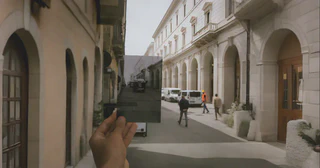
Image credit - Riccardo Vespa - FUTURE PACING MAKING YOUR GOALS FEEL LIKE PAST MEMORIES
🎬 FILMS FEATURING FUTURE PACING CONCEPTS
- Arrival (2016) - Explores non-linear time perception and experiencing the future as memory, showing how knowing future events changes present behavior
- Minority Report (2002) - Pre-crime unit “remembers” future crimes, demonstrating how experiencing future events creates present action
- About Time (2013) - Time travel allowing the protagonist to live futures before they happen, optimizing choices through experiential knowledge
- The Matrix (1999) - Training programs where Neo downloads skills and experiences them as memories, preparing his nervous system for actual performance
📺 TELEVISION SERIES
- Westworld (2016-2022) - Hosts experience programmed futures as memories, showing how pre-loaded experience shapes behavior
- Russian Doll (2019-present) - Time loops create multiple experiential rehearsals of the same events, allowing refined performance
- Doctor Who (1963-present) - The Doctor frequently experiences time non-linearly, carrying memory of events that haven’t occurred yet
- The Good Place (2016-2020) - Characters repeatedly practice moral scenarios, creating neural pathways through experiential repetition
🎭 DOCUMENTARY EXAMPLES
- The Weight of Gold (2020) - Olympic athletes describe detailed mental rehearsal practices, experiencing competition success before physical performance
- Free Solo (2018) - Alex Honnold mentally rehearses every move on El Capitan hundreds of times, creating somatic memory before the climb
- Icarus (2017) - Explores performance optimization including mental rehearsal techniques used by elite athletes
📚 NOVELS FEATURING FUTURE PACING THEMES
- Slaughterhouse-Five by Kurt Vonnegut - Billy Pilgrim becomes “unstuck in time,” experiencing past and future as simultaneous memories
- The Time Traveler’s Wife by Audrey Niffenegger - Characters navigate relationship with non-linear time experience, carrying future knowledge into present
- Replay by Ken Grimwood - Protagonist relives his life repeatedly, using future knowledge to optimize present choices
- Life After Life by Kate Atkinson - Main character experiences multiple timelines, each iteration informed by “memories” of previous futures