CHANGING DIRECTION OF LOOP & CLOCKWISE VS COUNTERCLOCKWISE ROTATION FOR BELIEF RELEASE & INTEGRATION
LOOP DIRECTION CHANGES BELIEFS: SHAMANIC SPINNING & SOMATIC RELEASE

Belief - is part of Series

Across traditions spanning thousands of years and dozens of cultures, human beings have used rotation - physical spinning, mental spiraling, and directional movement - as a tool for shifting internal states. The direction of that spin turns out to matter: counterclockwise tends to unwind, release, and dissolve; clockwise tends to build, integrate, and align. What looks like ritual becomes, on closer examination, a remarkably consistent somatic technology.
This article draws on practices from Sufi whirling, Navajo sand painting ceremonies, Chinese Qigong, Norse Seiðr, West African Vodun dance, NLP submodality work, and NLP spinning technique to map the common mechanisms beneath these varied forms. The body is the instrument. The direction of spin is the dial. The belief - or the pain, or the emotion - is what changes when you reverse the loop.
You will leave with a clear understanding of why direction matters somatically, how to apply spin reversal to your own limiting beliefs, and a step-by-step process you can use immediately or guide clients through with precision.
🎯 THE BENEFITS OF LOOP DIRECTION CHANGE FOR BELIEF WORK
“I tried turning my anxiety counterclockwise. Now it just spins the other way - but somehow that’s better.” - Anonymous
Working with rotational direction as a tool for belief change offers several advantages over purely verbal or cognitive approaches.
Direct access to somatic encoding. Beliefs are not stored as text files. They live in the body as patterns of tension, temperature, movement, and location. When you engage with the spiral quality of a sensation and consciously reverse it, you are working at the level where the belief actually exists - not where you think it exists.
Speed. Verbal reframing takes time and often stalls when the belief fights back logically. Rotational change works below that threshold. Many people report a noticeable shift within minutes, sometimes within a single slow reversal of direction.
Universality. Because the mechanism is somatic rather than linguistic, it bypasses cultural and language barriers. A child, an elder, someone in acute distress, or someone unfamiliar with therapy terminology can all engage with the simple question: “If this feeling were spinning, which way would it go?”
Portability. Once you understand the basic principle, you can apply it anywhere - in a session, on a walk, lying awake at 3 a.m. when the inner critic is loud and the ceiling offers no answers.
Neurological plausibility. Vestibular stimulation - the kind produced by physical spinning - activates circuits closely tied to emotional regulation. Even imagined rotation appears to engage similar processes, which may explain why mental spin reversal can produce physical relief without any actual movement.
Integration rather than suppression. The process does not push the belief away or argue it out of existence. It transforms the rotational quality of the experience, and in doing so opens space for something new to emerge - a gift, a resource, a different understanding.
Cross-cultural validation. When more than ten distinct cultural and spiritual traditions independently arrive at the same tool - rotation - across thousands of years and without contact with each other, that convergence is worth taking seriously.
🏛️ ORIGINS OF LOOP DIRECTION CHANGE ACROSS CULTURES AND HISTORY
The idea that spinning direction carries meaning is not modern, not Western, and not invented by any single lineage. It appears, independently and persistently, wherever human beings have worked with altered states of consciousness.
Sufi whirling emerged from the Mevlevi Order, founded in thirteenth century Turkey by followers of the poet Rumi. The whirling ceremony - the Sema - is a structured practice in which the right arm faces upward to receive and the left faces downward to transmit. The spin is clockwise, mirroring the planets orbiting the sun. Hours of continuous rotation produce vestibular stimulation, endorphin release, and a shift in consciousness that practitioners describe as ecstatic peace - the dissolution of the personal self into something larger.
Navajo healing ceremonies use the Whirling Log - a pre-Columbian symbol predating any association with the swastika - as the central image in sand paintings created on the hogan floor. The patient sits at the center while the spinning motion is designed specifically to whirl sickness outward and into dissolution. Similar symbols appear in ancient India, Tibet, and across Asia, suggesting convergent discovery rather than cultural borrowing.
West African Vodun traditions, particularly among the Fon people of Benin and Togo, use the Zangbeto - the Night Guardian - a towering figure of palm leaves and hay whose costume expands and contracts with spinning speed, inducing collective trance and spiritual cleansing of the community. The constant swirling is understood as the vehicle through which invisible spirits enter and act.
Norse Seiðr practitioners used a drop spindle and walked backwards in circles to induce trance and contact spirits. The spinning was not metaphorical. The physical rotation was the technology, and it was understood to allow the practitioner’s free soul to leave the body and travel.
Chinese Qigong and Tai Chi formalize rotational direction in waist circles and the Girdle Vessel - a meridian that runs horizontally around the torso. Clockwise and counterclockwise rotations of the waist are understood to release different qualities of stagnation. Shaking and torso twisting are seen as detoxification practices that physically pump the lymphatic system and stimulate organ meridians.
NLP, developed in the late twentieth century from the modeling work of Richard Bandler, John Grinder, and colleagues, arrived at the same mechanism through a different route: by carefully observing what people do internally when they change beliefs. One consistent finding was that sensations associated with beliefs have a directionality - a spin - and that changing the direction of the spin changes the belief.
Tim and Kris Hallbom formalized this into Dynamic Spin Release in 2008, drawing on Carl Jung’s work on archetypes and metaphor, Milton Erickson’s hypnotic language, and NLP submodality work. The result is an eight-step process that typically produces significant change in under fifteen minutes.
The pattern across all of these traditions is consistent: rotation is a technology, direction carries meaning, and reversing direction produces transformation.
📜 PRINCIPLES OF LOOP DIRECTION CHANGE
Principle 1: Beliefs are embodied, not merely cognitive
A limiting belief is not a thought floating in abstract space. It has a location in your body, a temperature, a texture, a movement quality, and - when you look closely enough - a directionality. You might feel it as a tight clockwise pull in your chest, or a slow counterclockwise drag in your belly. This physical reality is not metaphor. It is where the belief actually lives, and it is where change actually happens.
Principle 2: Every sensation has a spin quality
Even sensations that feel static - a block, a heaviness, a numbness - have an implicit rotational tendency. If you asked the sensation which way it would turn if it were spinning, it will answer. This is not imagination in the dismissive sense. It is perception of a quality that is already present but usually unnoticed. The moment you identify the direction, you have a handle on the pattern.
Principle 3: Reversing direction interrupts the pattern
The nervous system maintains beliefs partly through repetition of the same internal configuration. A limiting belief spins in one direction, and that spinning reinforces the emotional encoding. When you reverse the direction - deliberately, with attention - the pattern cannot continue in its current form. This is the mechanism behind the Providence Health spiral technique, Dynamic Spin Release, and the counterclockwise clearing work found in multiple energy healing traditions.
Principle 4: Direction carries consistent meaning across traditions
With significant individual and cultural variation, counterclockwise rotation tends to be associated with releasing, dissolving, clearing, and undoing - across shamanic traditions, chakra work, Western magical practice, and NLP. Clockwise tends to be associated with building, integrating, consolidating, and aligning with natural rhythms. Neither is inherently better. The appropriate direction depends on what the work requires at that moment.
Principle 5: Dissociation enables transformation
It is easier to change something you can observe than something you are inside of. NLP spinning technique begins by externalizing the problem - removing it from the body, placing it at a comfortable distance, and giving it visual form. This is not detachment in the avoidant sense. It creates an observer position from which transformation becomes possible. The same principle underlies NLP approaches to working with difficult memories.
Principle 6: The reception completes the transformation
Releasing an old belief leaves a space. Transformation is not complete until something enters that space. In NLP spinning technique, this takes the form of a “reception” - a new image, symbol, or understanding that appears in the space where the problem was. In Navajo ceremony, healing is received after the sickness is whirled out. In Sufi practice, the dissolution of ego opens the practitioner to divine presence. The pattern is consistent: release followed by reception.
Principle 7: The body confirms the change
You will know something has shifted when the body says so - not when you decide intellectually that it should have. Physical indicators include a softening in areas that were tense, a sense of spaciousness in the chest or belly, an exhale that arrives on its own, warmth spreading through previously contracted areas, or simply the absence of what was there before. These are not side effects. They are the change itself.
🗨️ GUIDING CLIENTS IN LOOP DIRECTION CHANGE
Observation and presence
Position yourself at your client’s side so you can observe subtle changes in facial color, muscle tension around the jaw and eyes, breathing rhythm, and postural shifts. These micro-signals tell you whether the process is moving or stuck, often before the client can articulate it verbally. Do not lean in or hover - your task is to be present without interfering with the client’s internal experience.
Vocal modulation
Slow your speech considerably when guiding this work. The body responds to pace, and a measured, slightly lower pitched voice helps the nervous system settle into the process rather than staying at the surface. Pause after questions. Let silence do some of the work.
Genuine engagement
Your genuine curiosity about the client’s experience is not incidental - it is part of the therapeutic container. When a client describes what their sensation looks like or which way it spins, receive that information as meaningful and interesting, because it is.
Reflective communication
Mirror the client’s language and energetic tone. If they describe their sensation with hesitancy, respond with matching care. If they describe a sudden shift with brightness in their face, let your response carry some of that quality. Parroting words is not the goal - tracking the texture of the experience is.
Connecting experience and inquiry
Use coordinating language to link questions to what the client is already experiencing: “And as you notice that spinning sensation, when you let it move in the opposite direction…” This keeps the work feeling continuous rather than punctuated by interruption.
Practitioner guidance for the session:
- Begin by inviting the client to identify a specific belief or problem state rather than a general complaint. “I always self-sabotage before the finish line” is workable. “I just feel bad” needs more specificity.
- Ask where they feel it in the body. Chest, belly, jaw, and back of the neck are common locations. Wait for a precise answer - “around there” is not precise enough.
- Ask them to describe the sensation: temperature, texture, density, whether it moves. This elicitation builds a working relationship with the sensation rather than just noting its existence.
- Ask about spin direction: “If this sensation were spinning, which direction would it go - clockwise or counterclockwise? And if you’re not sure, just notice which direction it seems to want to turn.”
- Guide the reversal slowly. Ask them to begin turning it the opposite way, in their mind. Watch for changes in the client’s face and posture.
- Check in: “On a scale of one to ten, how disturbing does this feel now?” Repeat the reversal if the number has reduced but not yet resolved.
- Ask what has arrived in the space where the sensation was. This prompts the gift reception phase.
- Guide re-integration: “Take a moment to bring whatever has arrived back into your body, and notice what feels different now.”
💧 LOOP DIRECTION CHANGE AXEL MAGNUS SCRIPT BASED ON NLP PRINCIPLES
Technique: NLP spinning technique combined with Submodality Belief Change
Axel sits beside his client, Sarah, a woman in her early forties who describes a persistent belief that she is fundamentally undeserving of success - a belief she traces to adolescence. Her arms are crossed loosely in her lap. Her jaw is slightly set.
Axel Magnus: Before we go anywhere complicated, I’m curious - when you say “I don’t deserve success,” where do you feel that in your body right now?
Sarah: (pauses, pressing a hand to her chest) Here. It’s heavy. Like a stone, almost.
Axel Magnus: A stone in your chest. (gently) What’s its temperature - warm, cool, neutral?
Sarah: Cold. Definitely cold. And it’s not just sitting there - there’s something slightly… turning about it. Does that make sense?
Axel Magnus: Perfect sense. And if that turning had a direction - clockwise, counterclockwise - which way would it go?
Sarah: (pauses, eyes slightly unfocused as she attends inward) Counterclockwise. Slowly. Like it’s winding down, almost. But not in a good way.
Axel Magnus: I notice as you say that, your shoulders dropped a little. (softly) How disturbing would you say this feels right now, on a scale of one to ten?
Sarah: Seven.
Axel Magnus: Good. (pause) I’d like to try something with you. You don’t have to do anything difficult - just stay with what you’re already noticing. Would that be okay?
Sarah: Yes.
Axel Magnus: Take a moment… and let that cold, slowly counterclockwise stone stay exactly as it is for a moment. (beat) Now - I’d like you to imagine reaching in and very gently taking that sensation out of your chest. You don’t need to get rid of it. Just… place it in front of you, at a comfortable distance. Like setting something on a table. Can you do that?
Sarah: (slight forward movement in her posture, as if placing something) …Yes.
Axel Magnus: Good. Now that it’s out there - what does it look like? Any shape, color, texture?
Sarah: It’s dark gray. Round, I think. Dense. And it’s still turning counterclockwise - slowly.
Axel Magnus: Dark gray, round, slowly counterclockwise. (nodding) Here’s what I’d like you to do with it. With just your attention - no effort, no forcing - begin to slow that rotation. Just… let it slow. And then stop it completely, just for a moment.
Sarah’s breathing slows. A slight softening appears around her eyes.
Sarah: Okay. It’s stopped.
Axel Magnus: And now - very gently - let it begin to turn in the opposite direction. Clockwise. As slowly or as quickly as feels natural.
A pause of fifteen seconds. Sarah’s hands open slightly in her lap.
Sarah: (quietly) It’s… lighter. The color is changing. It’s more like gray-blue now. And it’s speeding up a little on its own.
Axel Magnus: Let it go as fast as it wants to go. (pause) And as it spins faster, notice what happens to the density of it, the coldness…
Sarah: It’s thinning out. The cold is going. (a small exhale) It’s almost… fizzing?
Axel Magnus: Let it fizz. (softly) And let it spin as fast as it needs to, until it completes whatever it needs to complete…
Sarah’s face relaxes noticeably. Her shoulders drop another centimeter. A longer exhale.
Sarah: It’s gone.
Axel Magnus: (gently) What’s in the space where it was?
Sarah: (pause, looking mildly surprised) There’s… warmth. Just warmth. And something that looks like light, I think. Soft gold.
Axel Magnus: Take a moment with that. And when you’re ready, let that warmth and soft gold come back into your chest - exactly where the stone was. Let it take as much space as it needs.
Sarah places her hand back on her chest, but differently now - open palm rather than braced. Her expression has shifted.
Sarah: That’s strange. It feels like there was never supposed to be a stone there.
Axel Magnus: (nodding) And what does your body say now when you think about deserving success?
Sarah: (long pause) It’s quiet. The pull isn’t there. (looking up) What just happened?
Axel Magnus: You changed the direction of something that was spinning in a way that kept the belief in place. And when the direction changed, the belief had nowhere left to live in that form. (pause) On your one to ten scale - where is it now?
Sarah: Two. Maybe one and a half.
Axel Magnus: Let’s give that residual something to do. Think forward - six months from now, carrying this warmth and soft gold instead of that cold stone. What do you notice?
Sarah: (slowly) I think I’d say yes to more things. I’d stop apologizing before I’ve even begun.
Axel Magnus: (quietly) Let that land in your body too. Where do you feel that possibility?
Sarah: My shoulders. They just… opened.
Axel makes a brief note. The session continues.
💪 MEDITATION FOR LOOP DIRECTION CHANGE
Find a comfortable position - seated or lying down - and allow your body to settle against whatever surface is supporting it. There’s no particular way this needs to look from the outside.
And you might notice, as you begin to arrive in this moment, that your breathing is already doing something useful. Perhaps it’s deepening just slightly, or slowing in a way that happens when attention turns inward. You don’t need to change it. It already knows.
There may be a particular belief, or a feeling, or something you carry that you’ve been curious about bringing into this space. Or perhaps you’re not sure yet, and that’s fine too - you might find that the body has its own sense of what needs attention.
As you rest here, you might become curious about a sensation somewhere in your body. It might be obvious - a heaviness, a tightness, a familiar pressure. Or it might be subtle, a quality you haven’t named before. You don’t need to label it correctly. Just notice where your attention wants to land.
And when you find it… you might let yourself become curious about its qualities. Perhaps you notice its temperature - whether there’s warmth, or cool, or something in between. Perhaps you notice whether it seems dense or light. Whether it has edges, or whether it’s more diffuse. Whether it seems still, or whether there’s movement of some kind.
And if there is movement - and there may or may not be - you might wonder: if this sensation were spinning, which direction would it go? Clockwise, like the hands of a clock moving to the right… or counterclockwise, moving the other way? There’s no correct answer. Your body already knows.
Spend a moment with that direction. You might even let the spin become a little more visible to your inner sense - noticing its speed, its size, its texture as it turns.
And now - gently, without force, without any sense of fighting what’s there - you might begin to slow that spinning. As if you placed a gentle hand on the outside of it, and it simply responded to your attention. Slower. And slower. Until it pauses, just for a breath.
In that pause, something becomes possible.
And now, when you’re ready - which might be right now, or in a moment - you might let it begin to turn in the other direction. Opposite to where it was. The same sensation, turning differently.
Notice what happens. Perhaps the temperature shifts. Perhaps the density changes. Perhaps the sensation itself begins to transform into something else entirely - something lighter, or warmer, or softer, or smaller. You don’t have to decide what it should do. Your nervous system is already making adjustments.
You might let that new spin accelerate, just as fast as it wants to go, until whatever needed to shift has shifted. And when it reaches its natural completion - perhaps it fades, or disperses, or becomes something you hadn’t expected - you simply notice.
What is in the space where the sensation was?
There may be warmth. There may be lightness. There may be a color, or an image, or simply a quality of openness that wasn’t there before. Whatever has arrived in that space - whether it’s dramatic or subtle - let yourself receive it. Let it move back into your body, into exactly the place where the old sensation lived.
And as it settles there, you might allow yourself a slow, full breath. And another.
Carrying this new quality forward - into the rest of this day, into next week, into the moments that used to feel smaller than they need to be - you might find that your body already knows what to do with it.
When you’re ready, let your awareness begin to include the room again. The sounds around you. The surface beneath you. Take as long as you need.
🗣️ ANECDOTE ABOUT LOOP DIRECTION CHANGE
Marcus came to the session wearing the particular expression of someone who has already decided nothing will work. He was thirty-eight, a project manager with a talent for building things that other people then led - a pattern he’d noticed, objected to, and reproduced reliably for the past decade. His stated belief: “I’m the builder, not the leader. That’s just who I am.”
He mentioned it the way someone might state a shoe size. Factual. Fixed.
When I asked where he felt “builder, not the leader” in his body, he looked at me with the polite skepticism that technically oriented people often bring to body-based questions. But he tried. He pressed two fingers to the side of his neck, just below his left ear. “Here,” he said. “Tight. Like something’s being held back.”
I asked him to describe the holding. He thought about it longer than I expected. “It spins,” he finally said, sounding mildly surprised at himself. “Clockwise. Fast. Like it’s keeping a lid on something.”
We stayed with that for a moment. A fast clockwise spin at the left side of the neck, holding something down.
I asked him to imagine reaching in and gently removing that spinning sensation - not destroying it, just placing it somewhere he could see it. He set it in the air in front of him, about arm’s length away. He described it as a dark metallic disc, roughly the size of a large coin, spinning rapidly clockwise and giving off a faint hum.
“What would happen,” I asked, “if it turned the other way?”
He looked at the space where he’d placed it. Something flickered in his face - a mixture of resistance and curiosity.
“Try it,” I said. “Just let it slow, and when it stops, let it start again in the opposite direction.”
The silence that followed was about twenty seconds. Long enough to be meaningful.
“It doesn’t want to,” he said quietly. “It keeps trying to snap back.”
“That’s normal,” I said. “Let it try. And each time it tries to snap back, just gently return it to the counterclockwise direction. No force. Just redirection.”
Another silence. His jaw softened. The tightness at the side of his neck, which I’d been watching, visibly released - the skin relaxed, and a small pulse became visible at his temple.
“It’s going counterclockwise now,” he said. “And the hum stopped.”
“What does it look like now?”
“The disc is… thinner. Less metallic. More like silver. And it’s bigger, actually - it expanded when the direction changed.”
I asked what was in the space behind the disc. He sat with that question for a long time.
“There’s words,” he said slowly. “Not words I was expecting.” A pause. “It says something like: you’ve been leading all along. You just called it something else.”
The shift in his posture was immediate and visible. His chest opened. He sat half an inch taller.
What followed was not a dramatic conversion. He didn’t leave and immediately apply for a VP role. But three weeks later, he sent a message describing a meeting where, for the first time, he’d stayed in the room during the strategy conversation instead of leaving once the technical scope was agreed. He’d said something. People had listened. He’d stayed.
“The disc hasn’t come back,” he wrote. “Or if it has, it’s turning the right way now.”
👣 THE BASIC PROCESS OF LOOP DIRECTION CHANGE
Step 1: Identify the belief or problem state
Begin with something specific. “I always self-sabotage before the finish line” is workable. “I feel bad about myself” is too broad to navigate somatically. The more precisely you can name what you’re working with, the more precisely you can locate it in the body.
Somatic check: Say the belief aloud or in your mind. Notice where in your body something responds - a tightening, a heaviness, a change in temperature, a subtle movement.
Step 2: Locate the sensation precisely
Place your attention on the area that responded. This might be your chest, your throat, your belly, the back of your neck, or somewhere less obvious. Give it a moment to become more defined. Notice whether it has edges or whether it bleeds into surrounding areas.
Common experiences: The sensation may be obvious or faint. If you find more than one, begin with whichever feels most central to the belief.
Step 3: Describe its qualities
Without trying to change anything yet, describe the sensation as precisely as possible. Temperature. Density - heavy or light, dense or diffuse? Texture. Color, if it has one. Size. Movement.
Common experiences: Many people discover that what felt like a static sensation actually has a subtle movement when they pay close attention. Others notice color or imagery spontaneously.
Step 4: Identify the spin direction
Ask yourself: if this sensation were spinning, which direction would it go? Clockwise or counterclockwise? If you’re genuinely uncertain, just notice which direction it seems to want to tend toward. There is no wrong answer - your system already knows.
Troubleshooting: If you truly cannot determine a direction, choose one, notice how it feels, then try the other and compare. The difference is usually perceptible.
Step 5: Externalize the sensation
Imagine gently lifting the sensation out of your body and placing it in front of you at a comfortable distance - perhaps arm’s length. Allow it to take whatever form it takes: a shape, a color, an abstract movement, an object. This creates just enough distance to work with it without fighting it.
Somatic check: You may notice a subtle shift in the area of your body where the sensation was - a brief intensification or a slight lightening. Both are normal.
Step 6: Reverse the direction
With your attention - no effort, no force - begin to slow the spinning. Let it slow to a stop. Then gently allow it to begin turning in the opposite direction. Notice what happens to its qualities: color, density, temperature, size.
Common experiences: Many people report a spontaneous color change, a lightening of density, a warming of temperature, or a sense of the sensation thinning as the direction reverses. Allow whatever happens to happen.
Step 7: Accelerate until completion
Let the reversed spin increase in speed as much as it wants to, until whatever process is happening reaches its natural completion. This might mean the sensation fades, disperses, changes form entirely, or simply stills into something new.
Somatic check: Watch for a sense of release - a breath that arrives on its own, a softening of tension, warmth spreading into the area, or the absence of what was there before.
Step 8: Receive what arrives
Ask yourself: what is in the space where the sensation was? Stay open to whatever appears - a quality, an image, warmth, spaciousness, a new understanding. Whatever arrives is meaningful.
Step 9: Re-integrate into your body
Bring whatever has arrived back into your body - into the exact space where the original sensation lived. Let it settle. Breathe. Notice what has changed in how your body holds the original belief.
Step 10: Test and future pace
Think forward. Imagine a future situation where the old belief would previously have activated. What is different now? Notice where in your body you feel that difference. Anchor the new state by breathing into it fully.
If the rating has reduced but not resolved: Some beliefs layer. Work the remaining sensation with the same process until it resolves.
▶️ VIDEO ABOUT LOOP DIRECTION CHANGE
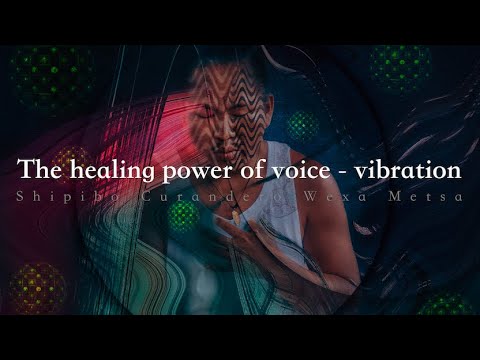
This video documents Shipibo curandero practice from Peru, in which voice is directed onto the patient’s energy body as a vehicle for healing. It illustrates how directional application of vibration - a principle closely related to spin direction - operates in one of the oldest documented healing traditions. Watch particularly for the relationship between the healer’s intention, the direction of movement, and the patient’s physical response.

Paul McKenna guides a confidence-building exercise where you recall a sincere compliment, replay it in your mind, and then look at yourself in the mirror while repeating it to condition a better self-image.
❓ FAQ ABOUT LOOP DIRECTION CHANGE
Question: What if I can’t feel any sensation when I think about my limiting belief?
Answer: This is common, particularly for people who have learned to bypass body awareness. Try making your belief statement with slightly more intensity - say it aloud rather than thinking it, or bring to mind a specific recent situation where it showed up. Even a faint or uncertain sensation is enough to begin. You can also scan the body systematically: jaw, throat, chest, solar plexus, belly, lower back, hips. Something will respond somewhere.
Question: Does it matter whether I do the physical spinning or just the mental version?
Answer: Both appear to work, through somewhat different pathways. Physical spinning produces vestibular stimulation that directly affects emotional regulation circuits in the brain. Mental spinning engages similar imagery-based processes that activate overlapping neural networks. If you are physically capable of gentle spinning and find it easier to connect to the somatic experience that way, use it. If the mental version is more accessible, that is entirely sufficient.
Question: Isn’t this just placebo? I’m just telling myself the belief is changing.
Answer: The “just placebo” framing underestimates what placebo mechanisms actually are - they involve real neurological changes. Beyond that, the process asks you to notice what is already in your body, not to tell it something new. You are perceiving and then modifying a quality of an existing sensation. The change in that quality is something you observe happening, not something you decide. That phenomenological distinction matters.
Question: What if the sensation gets more intense when I reverse the spin?
Answer: A temporary intensification before release is common and usually indicates the process is working. Stay with it, keep the spin moving in the reversed direction, and allow the intensification to complete. If the discomfort reaches a level that feels genuinely overwhelming rather than simply uncomfortable, slow the process down or pause and ground yourself by pressing your feet firmly into the floor and focusing on your breath.
Question: Can I use this to install a positive belief, not just release a negative one?
Answer: Yes. Clockwise rotation, in most traditions and in NLP submodality work, is associated with building, integrating, and consolidating. Once you have released a limiting belief using the counterclockwise reversal, you can consciously spin a new, preferred belief clockwise to support its integration. The reception phase in process naturally initiates this process.
Question: How many sessions does this take?
Answer: Some beliefs shift substantially in a single session of eight to fifteen minutes. Others layer, and you may work the same general theme across several sessions as different aspects surface. The process itself does not require a set number of repetitions - you work until the somatic signal resolves and the future-paced scenario feels genuinely different in your body.
Question: Is this appropriate for trauma?
Answer: Approach trauma-associated material with care. The externalization step in NLP spinning technique offers a degree of protective dissociation that can make the process gentler than direct exposure approaches. However, if working with material connected to significant trauma, the support of a trained practitioner is advisable. This process is not contraindicated with trauma, but it should not be attempted in an uncontained context if the material is destabilizing.
Question: My spin keeps snapping back to the original direction. What do I do?
Answer: This is a sign of a robust belief, not a sign the process is failing. Each time the spin reverts, simply redirect it - gently and without force, as many times as needed. Think of it as tending a fire rather than winning a fight. The repeated redirections are themselves part of the change process.
😆 JOKES ABOUT LOOP DIRECTION CHANGE
-
“I tried to reverse the spin on my belief that I’m disorganized. I’m now disorganized counterclockwise.” - Anonymous
-
“My inner critic is still talking, but now it’s doing it while spinning in the wrong direction, which at least makes it harder to take seriously.” - Anonymous
-
“Therapist: Where do you feel that belief in your body? Me: Somewhere between my shoulder blade and my complete inability to take a vacation.” - Anonymous
-
“The good news is my limiting belief now spins clockwise. The bad news is my left knee has opinions about that.” - Anonymous
-
“I asked my sensation which direction it was spinning. It said: the direction you least expect. I said: that’s not one of the options. It said: welcome to my world.” - Anonymous
-
“After reversing the spin on my imposter syndrome, I still feel like an imposter. But now I’m an imposter who is very comfortable with rotational motion.” - Anonymous
🦋 METAPHORS FOR LOOP DIRECTION CHANGE
-
The jar lid: A belief that will not shift is like a jar lid tightened past the point of easy removal. Every attempt to force it in the same direction makes it more stuck. The moment you reverse the motion - even briefly - the seal releases. The direction itself is the key, not the force.
-
The whirlpool and the eddy: Water draining in one direction forms a whirlpool that deepens and accelerates, pulling everything in its vicinity into the same pattern. Reverse the flow and you create an eddy - a counterrotation that disrupts the pattern at its source rather than at its surface. A limiting belief is the whirlpool. Spin reversal creates the eddy.
-
The unscrew: Picture a screw driven deep into wood - a belief held in place by hundreds of repetitions. You cannot pull it out; you can only turn it the other way. Counterclockwise releases what clockwise embedded. The rotational logic of the screw applies precisely to the rotational logic of the belief.
-
The spinning top running down: A belief given energy spins with apparent stability. But nothing maintains that spin without ongoing input. When you reverse the direction, you are not adding new energy - you are withdrawing the structure that kept the old pattern coherent. The top runs down. Something else begins.
-
The canal lock: A canal lock raises and lowers water by opening gates in a specific sequence - always the same direction to move water the same way. Change the sequence and water moves differently. A belief is the lock setting. Spin reversal is reaching in and changing the gate configuration, which changes what the water does next.
-
The film run backwards: A belief is a film loop playing in one direction - same images, same sequence, same emotional outcome every time. Reversing the spin is like running the film backwards: the images are identical but their emotional logic dissolves. What was a conclusion runs in reverse to become a beginning.
🧑🦲 AXEL MAGNUS’S EXPERIENCE WITH LOOP DIRECTION CHANGE
I came to this work through the body, not through a book.
I had been training in NLP for several years when I first encountered the idea that sensations have a rotational quality. My immediate response was skepticism dressed as open-mindedness - I nodded and filed it away as an interesting metaphor. I did not take it literally. I was wrong to do that.
The belief I was carrying at the time was something I had convinced myself was self-awareness rather than limitation: the deep certainty that I was better at understanding people than at being understood by them. I framed it as insight. In practice, it meant I kept relationships at arm’s length with the hands of someone who believed he was drawing them closer.
I noticed this in my chest - a specific sensation just to the right of center, about the size of a closed fist. I had known it for years. I had named it and reframed it and journaled about it and discussed it in supervision. It remained. Exactly the same size, temperature, and position. Slightly cold, slightly dense, completely unmoved by everything I had thrown at it conceptually.
When a colleague asked me - during a practice session I agreed to partly out of courtesy - what direction the sensation was spinning, I almost laughed. Instead, I actually looked. And it was spinning. Slowly, counterclockwise, with a quality I can only describe as reluctant - as if it was maintaining its rotation against some small opposing force.
Reversing it took about forty seconds of sustained attention. I remember it fought at first. The rotation kept pulling back toward counterclockwise, and I kept gently redirecting it. Not force. Just redirection. Redirection. Redirection.
And then it stopped pulling back.
What happened in my chest as the clockwise spin established itself was nothing like what I expected. I expected warmth, the way these processes are sometimes described. What I actually felt was spaciousness. A quality of room. As if the sensation had been taking up more space than I realized, and now that space was available for something else.
What arrived in that space - and I report this plainly, without drama - was the phrase: you already belong. Not as a thought I generated. As something I received. The distinction felt real, even if it is philosophically difficult to defend.
I sat with it for several minutes. My colleague waited, which was generous. When I finally spoke, I said something about how strange it was to have carried something for that long and then have it simply reorganize.
What changed in practice was subtle but consistent. I started finishing explanations without checking whether the other person was still following. I started allowing conversations to be incomplete without finding the silences distressing. I started, very occasionally, being understood - and not retreating from it.
The sensation has not returned in its original form. Something is there when I check - most deep patterns leave a trace - but it now turns clockwise and at low speed, more like a compass needle finding north than a wheel grinding in the wrong direction.
I work with this process not because I believe it is magic, but because I have experienced what it is: a remarkably direct route to the place where a belief actually lives. And once you are there - actually there, not thinking about it from a respectful distance - change becomes much simpler than it looked from the outside.
🕳️ THE LIMITATIONS OR UNCERTAINTIES IN LOOP DIRECTION CHANGE
Not a universal mechanism. The experience of rotational direction in body sensations is reported widely but not universally. Some people, particularly those with lower interoceptive awareness, may not identify a spin quality in their sensations at all. For these individuals, other submodality approaches - working with temperature, location, color, or size - may be more accessible entry points.
Cultural directionality is not fixed. The association of counterclockwise with release and clockwise with building is consistent across many traditions, but not all. Bönpo Tibetan practice reverses the conventional Buddhist circumambulation direction. Some Native American traditions associate counterclockwise with receiving rather than releasing. When working across cultural contexts, check the meaning with the individual rather than assuming a universal map applies.
Dissociation has limits. The externalization step in NLP spinning technique creates helpful working distance from a difficult belief or emotion. For people with dissociative tendencies, however, this step can sometimes reinforce a pre-existing pattern of disconnection from experience. Use the externalization briefly and ensure the re-integration step receives equal attention.
Physical spinning contraindications. Anyone with vestibular disorders, vertigo, inner ear conditions, or balance difficulties should avoid physical spinning and work with the mental version of the process exclusively. The mental process appears to engage comparable mechanisms without the physical risk.
Trauma material requires containment. This process can surface material that is more significant than the presenting belief suggests. If working with someone whose history includes trauma, have containment and grounding practices available, and do not pursue material that begins to destabilize before the integration phase is complete.
The gift reception is not guaranteed. Most people find that something arrives in the space after release - a new quality, an image, a feeling, a phrase. Some find nothing identifiable. “Nothing” is not failure; it may itself be the gift - the experience of spaciousness without new content to fill it immediately. Do not force an image or interpretation.
Duration of effect varies. Some belief changes using this process are lasting within a single session. Others require repetition as the belief structure layers. There is no reliable way to predict in advance which pattern will apply to a given person or belief.
This is not psychotherapy. While the process draws on therapeutic mechanisms and may produce therapeutically significant change, it is not a replacement for clinical treatment of mental health conditions. For presentations involving significant anxiety disorders, depression, PTSD, or psychosis, this work should complement - not substitute - appropriate clinical care.
✏️ CONCLUSION
Something about the image of a spinning sensation changing direction is satisfying in a way that most belief-change frameworks are not: it is direct, physical, and improbably elegant. You don’t argue with the belief. You don’t trace it to its childhood origin and then decide to disagree with it. You find where it lives in your body, notice how it moves, and gently redirect that movement. The belief then has to reorganize around its new rotational reality.
That this principle appears independently across Sufi practice, Navajo ceremony, Qigong, Norse shamanism, West African Vodun, and late twentieth century NLP is not a coincidence, and it is not cultural borrowing. It is a convergent discovery - the kind that suggests the underlying phenomenon is real.
The body is not metaphor. The spin in your chest when you say “I’m not good enough” is not poetic language. It is information, available to your attention if you choose to pay it. And when you change it - gently, without fighting, by simply redirecting the motion that maintains the pattern - something in you reorganizes. The stone that was always there is not there in the same way. The space it occupied becomes available.
That space is yours. What enters it is, by definition, less limiting than what left.
📚 REFERENCES
- George Lakoff & Mark Johnson, 1980; Metaphors We Live By
- Steve & Connirae Andreas, 1987; Change Your Mind and Keep the Change: Advanced NLP Submodalities Interventions
- Julian Jaynes, 1976; The Origin of Consciousness in the Breakdown of the Bicameral Mind
- Andreas, S. (2002). Transforming yourself: Becoming who you want to be. Real People Press.
- Connirae Andreas & Steve Andreas, 1989; Heart of the Mind: Engaging Your Inner Power to Change with Neuro-Linguistic Programming
- Bandler, R., & Grinder, J. (1981). Tranceformations: Neuro-linguistic programming and the structure of hypnosis. Real People Press.
- Connirae Andreas & Tamara Andreas, 1994; Core Transformation: Reaching the Wellspring Within
- Video DVD: Transforming Yourself Complete 3-day Training with Steve Andreas
- The Wholeness Work
- Core Transformation
- Tim Hallbom & Kris Hallbom; Dynamic Spin Release™; developed 2008; introduced at NLP International Conference, London, 2009
- Providence Health & Services; The Spiral Technique; Behavioral Health resource
- Smith, A.; Switching submodalities on the inner critic; nlppod.com
- Penacho, V.; Clockwise or counterclockwise: the meaning of spinning in sacred practice; veronicapenacho.com
- UNESCO Intangible Cultural Heritage; Vimbuza healing dance; ich.unesco.org
- Wikipedia; Sufi whirling; en.wikipedia.org
- Wikipedia; Widdershins; en.wikipedia.org
- White Tiger Qigong; Qigong Rejuvenating Flow; whitetigerqigong.com
- Hallbom DSR process documentation; syncholistic.co
Image credit - Perplexity - LOOP DIRECTION CHANGES BELIEFS: SHAMANIC SPINNING & SOMATIC RELEASE
🎬 MOVIES ABOUT LOOP DIRECTION CHANGE AND SHAMANIC SPINNING
- Samsara (2011) - Ron Fricke’s non-narrative film explores sacred ritual and spinning ceremony across multiple cultures, including Sufi whirling and indigenous trance dance. No dialogue; the images carry the argument.
- The Cell (2000) - Psychological thriller that visualizes the interior landscape of belief and trauma as physical, navigable space; useful for understanding externalization and dissociation as therapeutic tools.
- Dances with Wolves (1990) - Depicts Lakota ceremony and the embodied transmission of cultural belief through movement and collective ritual.
📺 TV SHOWS ABOUT LOOP DIRECTION CHANGE AND SHAMANIC SPINNING
- Cosmos: A Spacetime Odyssey (2014) - Several episodes use rotational motion - planets, galaxies, electrons - as a framework for understanding change at multiple scales, directly relevant to the universal spin principle underlying DSR.
- The OA (2016–2019) - Dramatizes somatic movement practices as vehicles for state change and transformation; the movement sequences in particular are directly relevant to embodied belief work.
🎭 DOCUMENTARIES ABOUT LOOP DIRECTION CHANGE AND SHAMANIC SPINNING
- The Last Shaman (2016) - Documents an Amazonian healing journey and the role of ceremonial practice, including directional movement, in belief transformation and recovery.
- Doing Time, Doing Vipassana (1997) - Explores meditative practice and the role of body-based attention in releasing deeply held patterns, filmed inside an Indian prison.
- Other Worlds (2004, dir. Jan Kounen) - Follows filmmaker Jan Kounen’s experience with Shipibo shamanic practice in Peru; particularly relevant for the vocal and directional dimensions of curandero healing work.
📚 NOVELS ABOUT LOOP DIRECTION CHANGE AND SHAMANIC SPINNING
- The Teachings of Don Juan - Carlos Castaneda (1968) - Documents (in contested form) Yaqui shamanic practice, including altered states, directionality, and the topology of consciousness.
- Black Elk Speaks - John G. Neihardt (1932) - First-person account of Oglala Lakota ceremonial practice, including the sacred hoop, directional symbolism, and healing ritual.
- The Alchemist - Paulo Coelho (1988) - Allegorical novel in which the protagonist’s journey mirrors the spin-release-receive arc: the dissolution of a limiting belief, a period of disorientation, and the reception of a new understanding.
- Women Who Run with the Wolves - Clarissa Pinkola Estés (1992) - Explores archetypal patterns in the psyche through story, with particular attention to cycles of death and renewal that parallel the loop-reversal mechanism.
☸️ SUBMODALITY CHANGES FOR BELIEF CHANGE: CROSS-CULTURAL & HISTORICAL DOCUMENTATION
1. Voice Location
| Change Type | Effect on Belief | Cultural/Historical Source |
|---|---|---|
| Head → Left big toe/outside you | Reduces inner critic’s emotional impact nlppod+1 | NLP (1980s): Andy Smith’s technique; most people find location or cartoon voice has most positive effect by making voice seem “irrelevant or ridiculous” nlppod |
| Voice direction to patient’s energy body | Cleanses and fills with higher frequency patterns youtube | Shipibo Curanderos (Peru): Ayahuasca turns voice into instrument; directing vibration on patient’s energy body during ceremonies youtube |
| Voice as “greatest medicine” | Draws life force into body to become whole thriveannarbor+1 | Cherokee Ywahoo Lineage: Elder Dhani Ywahoo states “voice is our greatest medicine” thriveannarbor+1 |
| Chanting/toning | Alters state of consciousness; enhances ability to enter/sustain altered states alchemessence | Universal: Sanskrit mantras, Tibetan sutras, Monastic prayers, humming, toning alchemessence |
2. Voice Volume/Pitch/Tempo
| Change Type | Effect on Belief | Cultural/Historical Source |
|---|---|---|
| High-pitched voice | Alters belief’s emotional weight nlppod | NLP: Same words in high-pitched voice reduces impact nlppod |
| Volume up/down/off | Alters belief’s emotional weight nlppod | NLP: Turn volume up, down, or off nlppod |
| Cartoon character voice (Donald Duck, Eric Cartman, Stewie) | Makes voice seem ridiculous nlppod | NLP: Most people find this most positive effect nlppod |
| Humorous tone with chuckle | Transforms rejecting → interested nlppod | NLP: Commenter found chuckle turned initial tone from rejecting tasks to becoming interested nlppod |
| Kindly, nurturing tone | Alters emotional weight nlppod | NLP: Alternative nurturing quality nlppod |
| Rhythmic vocalizations | Synchronize brain activity via brainwave entrainment; transition into trance/meditative states youtube | Universal: Sanskrit mantras, Tibetan prayers, indigenous songs youtube |
| Power songs/otherworldly music | Induce/carry trance; evoke power; bind energies; communicate Otherworld experience; heal llewellyn | Nearly all cultures: Described globally in shamanic traditions llewellyn |
3. Sensation Spiral Direction
| Change Type | Effect on Belief | Cultural/Historical Source |
|---|---|---|
| Clockwise ↔ Counterclockwise | Clockwise: builds/integrates; Counterclockwise: releases/clears veronicapenacho | Spiral Technique (Providence Health): Change direction with mind; notice what happens as it moves opposite providence |
| Counterclockwise spinning | Unravels stagnant/heavy energy; dissolves old patterns; clears static veronicapenacho+1 | Shamanic/Indigenous traditions: Each rotation helps unwind stuck energy veronicapenacho+1 |
| Counterclockwise (1 min) | Clears dense energies; releases old limitations from past healthandnaturallife | Donna Eden (Chakra healing): Root chakra clockwise tangles energy; counterclockwise breaks density healthandnaturallife |
| Counterclockwise | Clears dense energy; disconnects from heavy energy beliefnet | Chakra clearing (general): Counterclockwise 1 min for root chakra beliefnet |
| Clockwise (standard) | More natural alignment with life’s current; aligns with natural rhythms veronicapenacho | Tibetan prayer wheels: Flow with mantra direction; align body with natural order veronicapenacho |
| Clockwise | Creates coherence; circulates prana smoothly veronicapenacho | Tibetan Five Rites (Rite 1): Aligns with natural rhythms veronicapenacho |
| Counterclockwise | More natural in Southern Hemisphere; aligns with local celestial movements veronicapenacho | Southern Hemisphere: More natural alignment veronicapenacho |
| Clockwise (sun-wise/deosil) | Align with Nature: gravity, sun rising/setting nlm.nih | Native American Medicine Wheel: Four directions with guiding spirits; symbolize four stages of life nlm.nih+1 |
| Counterclockwise | Traditional; counter to sun’s apparent movement wikipedia | Bönpo (Tibetan): Traditional direction opposite to sun wikipedia |
| Counterclockwise (×7) | Religious merit; unity among pilgrims wikipedia+1 | Islam (Hajj): Tawaf around Kaaba seven times wikipedia+1 |
| Counterclockwise | Processions around churches wikipedia | Eastern Orthodox Church: Anticlockwise processions wikipedia |
| Counterclockwise | Circumambulation around bimah wikipedia+1 | Judaism (Simchat Torah): Anticlockwise around bimah wikipedia+1 |
| Counterclockwise (×3) | Dissipate vortex; banishing/closing reddit | Golden Dawn magic: Walk widdershins three times to dissipate vortex reddit |
| Counterclockwise | Unlucky; banish/destroy reddit+1 | Celtic/British: Anticlockwise around churches reddit+1 |
| Counterclockwise | Bring in energies (opposite to clockwise banishing) reddit | Some Native American beliefs: Counterclockwise to bring in reddit |
4. Sensation Temperature
| Change Type | Effect on Belief | Cultural/Historical Source |
|---|---|---|
| Hot → Normal body temp | Reduces limiting belief intensity youtube | NLP Submodality Belief Change: Temperature change reduces intensity; demonstrated practice youtube |
| Everything is vibration | Powerful healing tools across generations awakenedspirityoga | Universal indigenous: Mantras (India), Gregorian chanting, Medicine songs (Americas) awakenedspirityoga |
5. Sensation Location
| Change Type | Effect on Belief | Cultural/Historical Source |
|---|---|---|
| Feet → Midline/tummy | Transforms belief’s physical anchor youtube | NLP Submodality Belief Change: Location change transforms physical anchor youtube |
| Identify sensations location | Accompanies disturbance; describe as temperature, texture, movement, color, density, sound, image providence | Spiral Technique: Where sensations located; 1-10 disturbing scale providence |
| Voice as “most important aspect” | Power of thought and voice wellbeing soundhealingresearchfoundation | Cherokee Ywahoo: Power of thought/voice for wellbeing soundhealingresearchfoundation |
| Sound/drum to journey to otherworld | Access spiritual, emotional, physical healing thriveannarbor | Native Americans/First Nation: Voice is greatest medicine; draw life force thriveannarbor |
| Drums as heartbeat of Mother Earth | Healing ceremonies; grief rituals thriveannarbor | !Kung & Shona Tribes (Southern Africa): Instruments/melodic songs for healing thriveannarbor |
| Dagara of West Africa | Healing ceremonies; grief rituals thriveannarbor | West Africa: Drums/melodic songs for healing thriveannarbor |
| Yadiki (didgeridoo) | Heal broken bones, torn muscles, illnesses thriveannarbor | Aboriginal Australians: Instrument for physical healing thriveannarbor |
| Northern European cultures | Healing ceremonies similar to Native Americans (pre-assimilation) thriveannarbor | Ancient Northern Europe: Sound in healing ceremonies thriveannarbor |
6. Driver Submodalities (Critical Changes)
| Driver Submodality | Effect | Source |
|---|---|---|
| Location | Critical submodality for difference between states | NLP Contrastive Analysis: Location, distance, associated/dissociated, brightness, focus are critical nlppod |
| Distance | If distance caused greatest change, move old belief further away landsiedel-seminare | NLP Changing a Belief: Transform unwanted belief submodalities into “wishy-washy” landsiedel-seminare |
| Associated/Dissociated | Critical for emotional impact | NLP: Associated = in experience; Dissociated = watching self nlppod |
| Brightness | Critical for visual importance | NLP: Bright colors more noticeable than dull nlppod+1 |
| Focus | Critical for attention prioritization | NLP: Moving objects noticed more than still nlppod+1 |